Suffering from Music Loss

This post follows an earlier post On Music in which I discuss how we are approaching music education for Sonya.

IMG_1378
Sonya points to her ears when she hears Yan practice piano. “Ee!” she says, meaning “I hear it!”

This afternoon as Sonya napped, I did something I hadn’t done in a long while, I listened to music for fun. As Radiohead’s Separator played, I concentrated on the first dense and complicated beat, which in its second half drops into a gorgeous guitar melody. It’s impossible to describe. I want you to listen to it. It suddenly hit me that Sonya may never love it as I do.* It might not be something I can share with her when she is older and it pains me to think that.

Music used to play an enormous role in my life. My dad plays the piano and guitar. To avoid having to clean up after dinner as a kid, I would sit in the rocking chair in our living room and listen to him play. I wanted to be like him so I took up the instrument too, and then, in high school, the guitar. In college, I continued to study classical piano, folk music, pop, alternative rock and (a bit embarrassed as I write this) underground/old school hip hop.

When I want to reminisce about the time I spent in France, I listen to Liszt’s Sonata in B Minor and De La Soul’s Three Feet High and Rising album. Scenes of my early days in New York City are forever coupled with the music of Bob Dylan, Rakim and Horowitz – playing Scriabin. For most of my life, I fell asleep and woke up to music.

This changed once I knew Sonya was deaf. When we incorporate music into our playtimes, we do so purposefully in order to help Sonya understand how to listen. For example, rather than just enjoy a song in the background, we play the song, dance to it, and then stop the music to help Sonya understand to listen for sound. Months ago, (to my naive delight) Sonya would dance to what I believe was music in her head. Now she knows that she must hear music aloud to dance. She will now point at the computer when she wants to hear it.

We also refrain from having music on in the background, as background noise can make it more difficult for people with hearing loss to perceive speech sounds.

I miss music but I also must remember that I don’t have a crystal ball. We don’t know whether Sonya will appreciate it when she is older. We don’t even know what she is hearing. She may hear the overall theme or rhythm, but she might miss the oftentimes subtle moments that make music so pleasurable.

For now, Sonya certainly appears to love it. Whenever Yan has a moment to practice piano, Sonya runs to living room pointing to her ears and shouting “EE!” her sign for “I hear it!”

*I do realize this might be the case regardless of Sonya’s hearing loss. Yan also hates Radiohead 🙂 


In Transit

One of the most difficult aspects so far of parenting a child with hearing loss, is figuring out how to get her on schedule, when one’s schedule is different every day. As I write this, Sonya is trying to fall asleep in her crib, but I know I will need to wake her in just 30 minutes so that we can get out the door in time for speech therapy downtown.

Three days a week I shlep Sonya to the Center for Hearing and Communication an hour commute each way. One day a week we have an in-home therapist. In New York City, such a commute is no easy feat. Getting out the door with a baby is always complicated. Add hailing a cab or Uber; maneuvering NYC traffic from the Upper West Side to Financial District within an hour; unloading the car seat; attaching the stroller; wheeling Sonya into Gregory’s Coffee (my vice!) and finally opening the extremely heavy bronze doors of 50 Broadway…it can be a bit much at times.

On good days, Sonya will take the hour ride as an opportunity to nap – leaving her refreshed for her speech therapy session. Other days, she needs to be entertained. I have tried books, toys but of course – I now just give her my iPhone. She watches Baby Einstein, HBO Classical Baby and Netflix story books. She also loves playing Peek-a-Boo Farm, Peek-A-Boo Wild, Peek-A-Boo Trick or Treat and Peek-a-Boo Fridge. I can almost see other parents cringe as they read this, but for us – the videos just help. She is interested and has even learned new words.

And thankfully, New Yorkers have also been extremely helpful. It’s not advertised as a trait amongst this population, but it is true. Someone always helps me. As I struggle to open the door, a passerby inevitably jumps out of his or her way to assist. The other morning, while trying to navigate across Broadway to get into an Uber, a kind man literally stopped traffic to help Sonya and I cross the street.

Of course, it could be worse. We are extremely lucky that the Deaf Infant Program at the Center for Hearing and Communication covers the bulk of our transportation costs, and these costs add up fast. A trip to the CHC and back to our apartment on the UWS can cost between  $60 – $120 per day, depending on traffic – as much as $360 per week! New York State’s Early Intervention Program used to cover transportation, but that is no longer the case as of recently. This means that  parents of children who have hearing loss, but who were not born deaf as was the case with Sonya, are not covered for transport!

It’s something I think about every day on our way to therapy. I think about it when I cancel play dates because Sonya is getting a rare nap at home and not in the car and I don’t want to disturb her. And I think about it again today as I get ready to wake up my sleeping baby in order to make it to CHC on time.

IMG_3062


Bath and Baby Works

IMG_0998

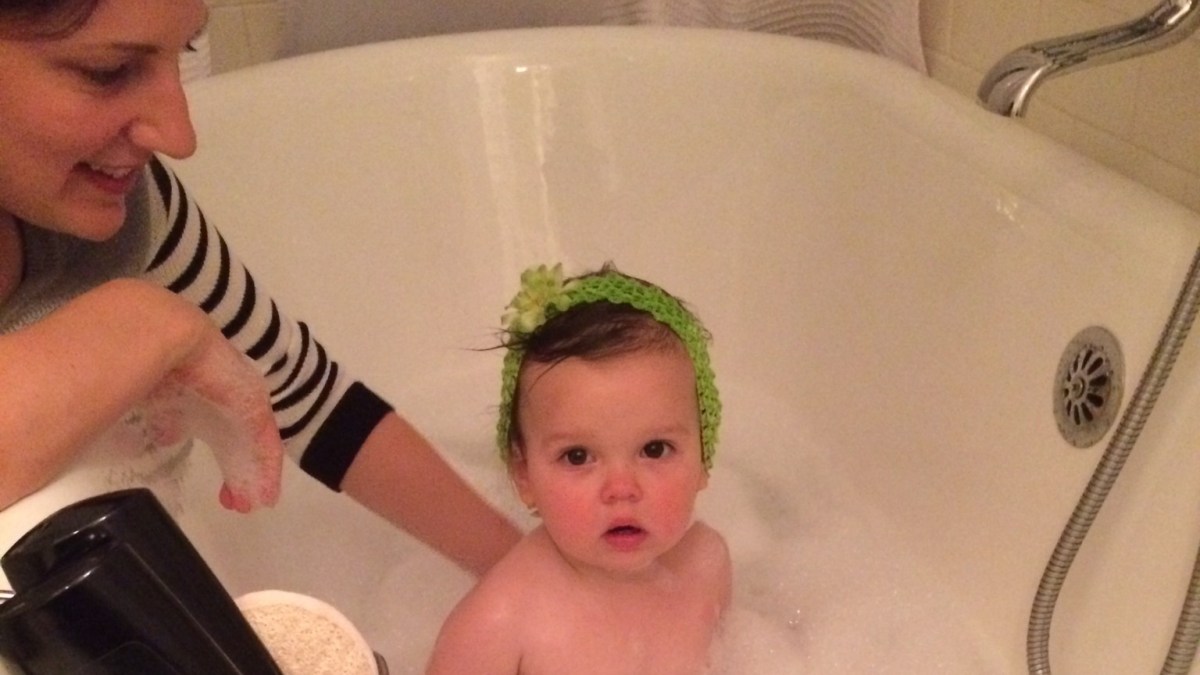
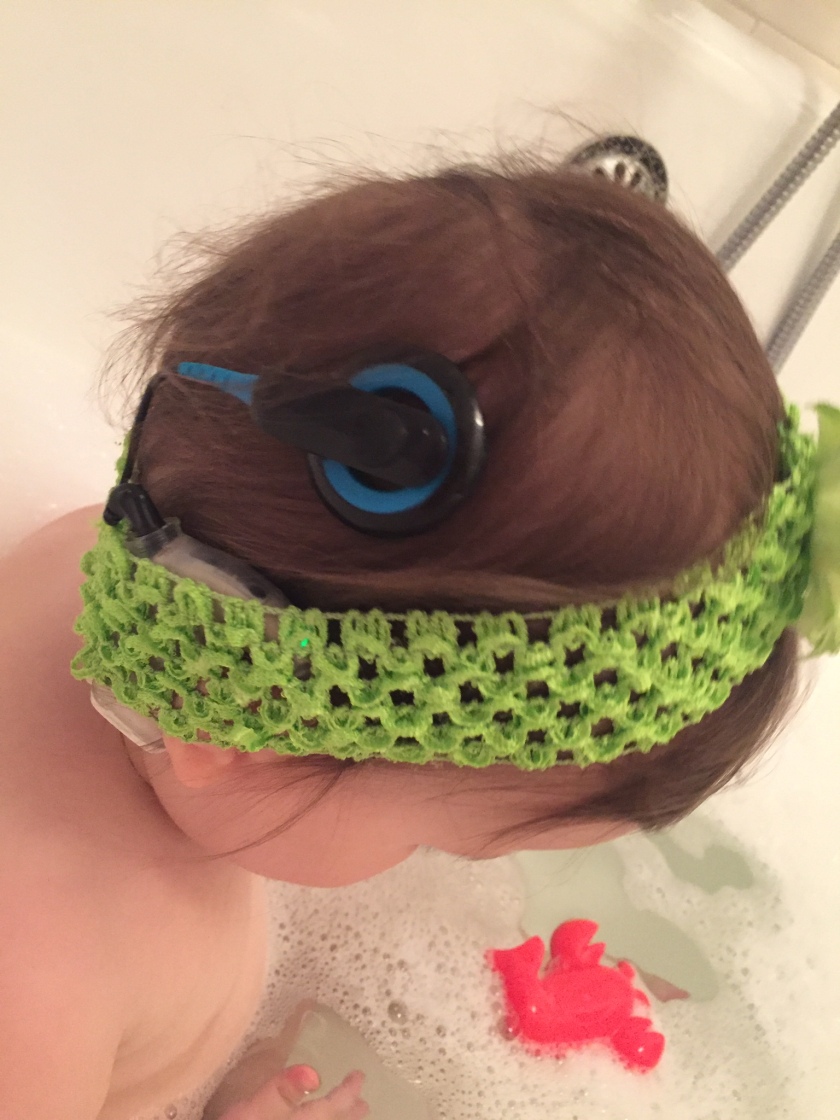
I am embarrassed to admit it, but it wasn’t until a couple months ago that Sonya finally began to wear her waterproof cochlear implants in the bath.

IMG_0043
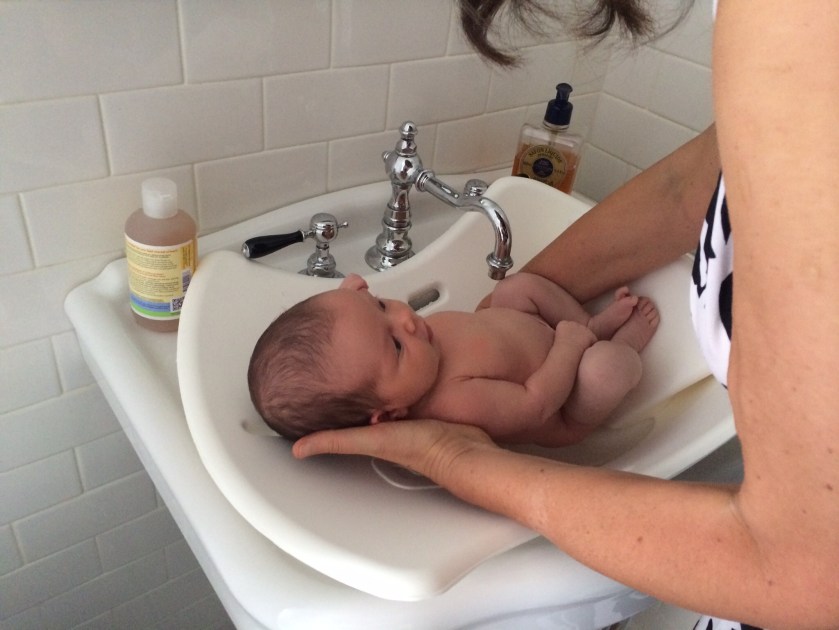
Sonya’s first bath at one week

Since we are in and out of Ubers and speech therapy sessions almost every day, taking a nightly bath has always felt like a necessity, and a frustrating one at that. Sonya kicks and screams her way in and out of the water. On our part, the goal has always been to complete the task quickly as possible.

When I told our speech therapist that Sonya had not yet been exposed to sound in the bath, her eyes widened. “How could you not let her wear her devices?! Bath time is a critical opportunity for her to explore sound!”

aqua
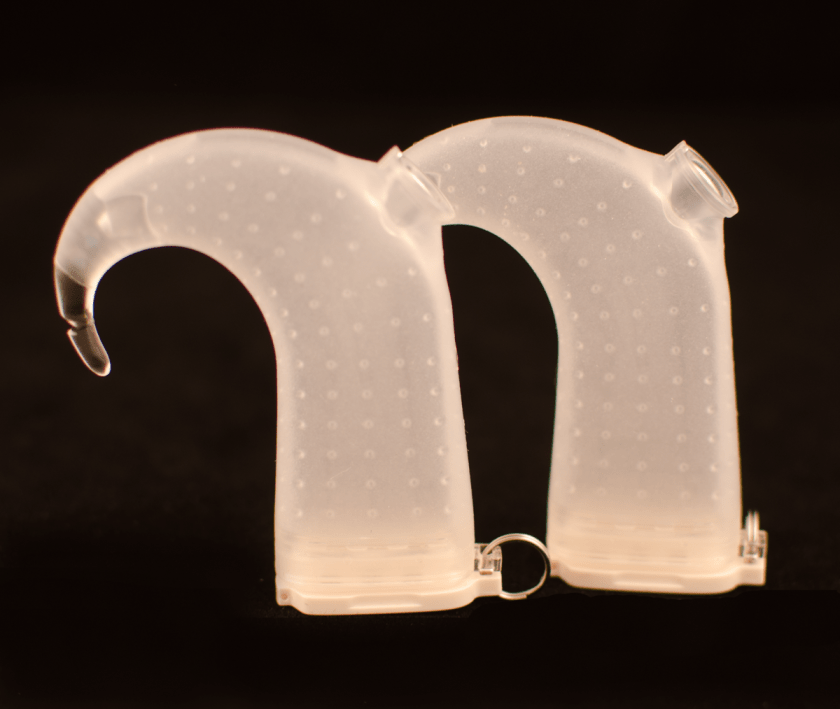
Cochlear Nucleus 6 water proof sleeves

It was the prompt I needed to get our act together. I dug through the contents of Sonya’s cochlear implant suitcases to find the water proof kit.  We placed her processors inside the water proof sleeves (a bit tricky to do actually…) inserted the coils and magnets.  We placed them on Sonya’s ears. Since the waterproof sleeves are quite large, we had to use the full-sized batteries (not the compact batteries, which fit Sonya’s small head). Sonya is back to her headbands in order to hold the very large devices in place.

IMG_1071

The first time she heard water, Sonya just stared blankly. Perhaps she was  stunned as she realized that water made noise. I playfully splashed her, causing her to scream in surprise.

Since then, Sonya has grown slightly more accustomed to bath time, though she still doesn’t love it. I even feel like I have to be careful about how loudly I speak in the bath, as the echo can be too much for her. I have noticed that she hates it when I dip her head in the bath water with the implants on. Perhaps it is the sound of the water that is overwhelming. Sonya does love bubbles, so I try to make sure there are plenty of bubbles in her bath water to keep her calm and interested. We do struggle with other ways of keeping her calm however.

Thankfully, friends of mine have been eager to help. My lovely friend Jane bought Sonya Tomy Do Rae Mi Dolphins. Each dolphin plays a different note when you tap them on their heads. Sonya loves them.

While I realize I need to expose Sonya to additional toys to encourage her to hear new sounds, I hesitate. Bath toys in general gross me out (these water flutes look kinda interesting, but also kinda yucky…). When Sonya was younger, we had her play with a rubber duck in the bath. The type that squirted water. A few weeks later, I realized how disgusting this toy was. Impossible to clean and never totally dry. I shudder thinking about the one time I squeezed it and brown water came out….

But I will attempt to stay open minded and to try other (sanitary!) toys that may be recommended….. Anyone? 🙂

In the meantime, hoping to make the most of bath time!


Sleep Training FAIL

A few weekends ago we celebrated Sonya’s first birthday! In preparation for the big day, I assembled a photo album highlighting my favorite photos over the past year. As I reviewed Sonya’s amazing growth and development, I couldn’t help but notice the dark circles that appeared under Yan and my eyes.

Sonya has been alive an entire year and we have not slept through the night since.

4-up on 10-13-14 at 4.16 PM #3
Early days, when I thought EVENTUALLY I would sleep. How silly I was…

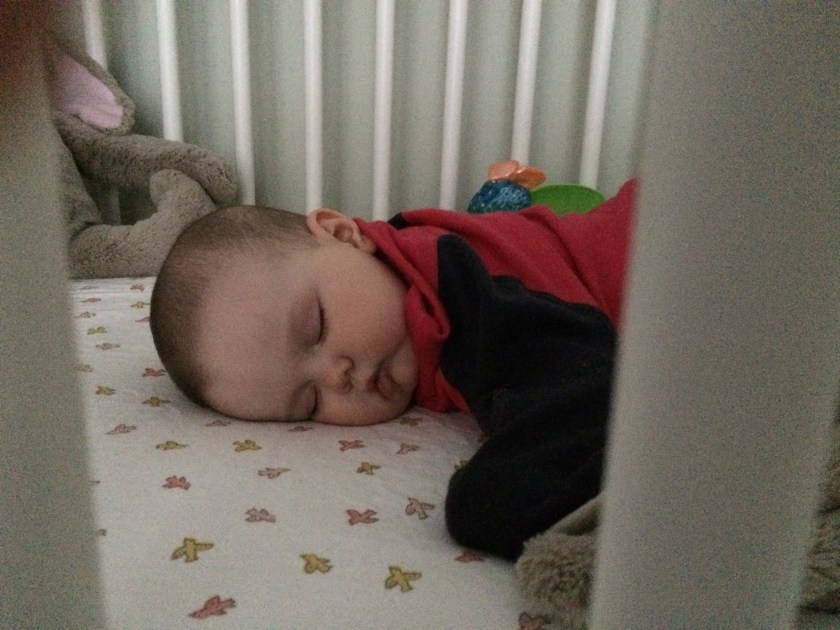
We used to put Sonya down wearing her cochlear implants. She is very connected to the hearing world, and would get upset when suddenly her sound was disrupted. But that decision reversed itself when I recently came into her room only to find her SUCKING on the battery! She had figured out how to remove it from the processor. I am trying not to imagine a scenario in which she swallowed it.

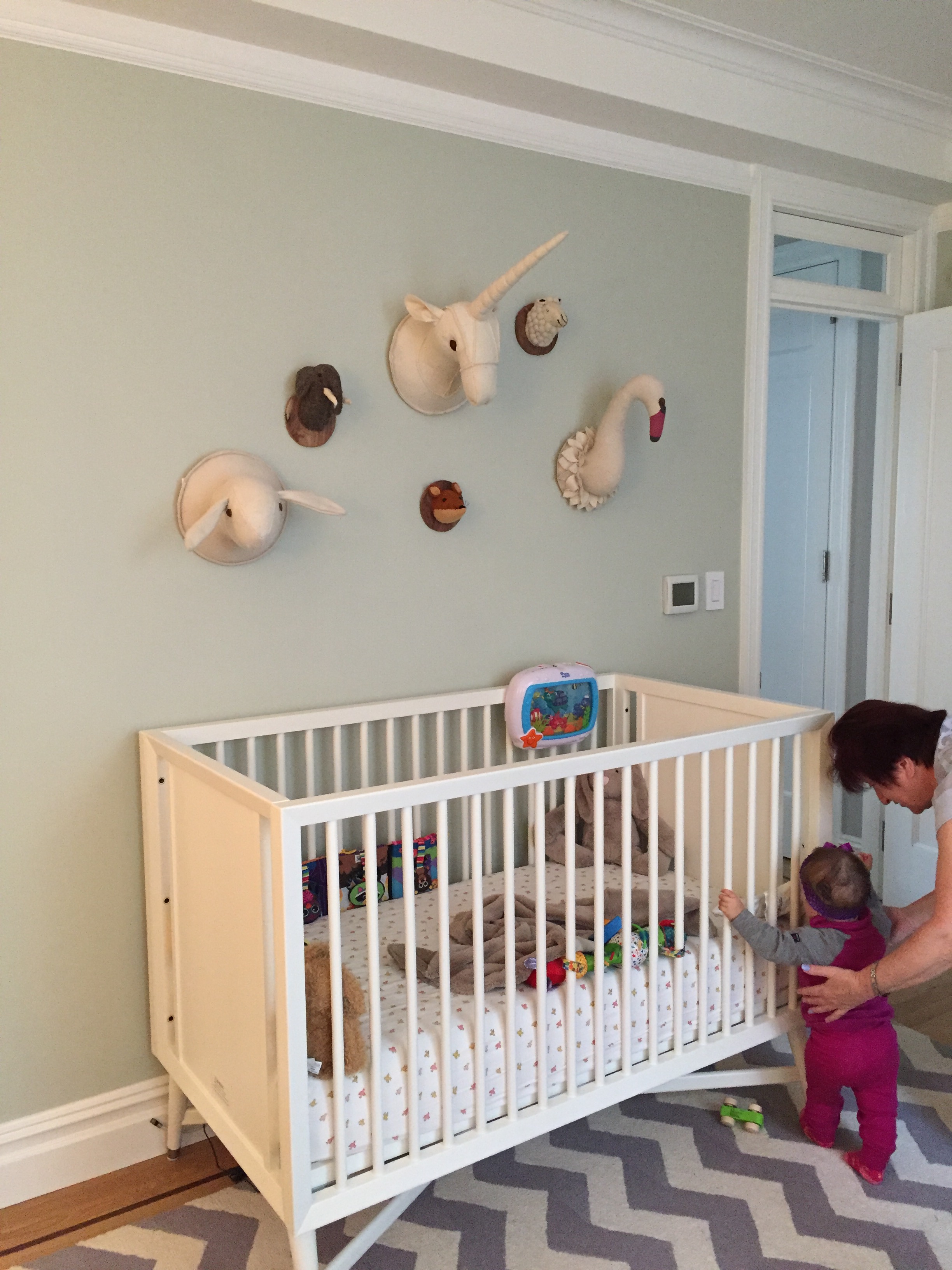
I needed a solution. I decided that maybe she would be comforted by something to look at. I decided the perfect spot would be above her crib. I purchased adorable animal “wall trophies” from Hannah Andersson. We bought a unicorn, bunny, swan, zebra, elephant, sheep, reindeer and fox (when you are sleep deprived, you have trouble making decisions I have learned).

We hung them up as soon as we could. I loved the way they looked. But that night, Sonya freaked out. Perhaps it was the shadows of the animals at night hovering above her. Maybe she wondered where the rest of their bodies had gone…It was the worst night sleep in a long while.

IMG_1236

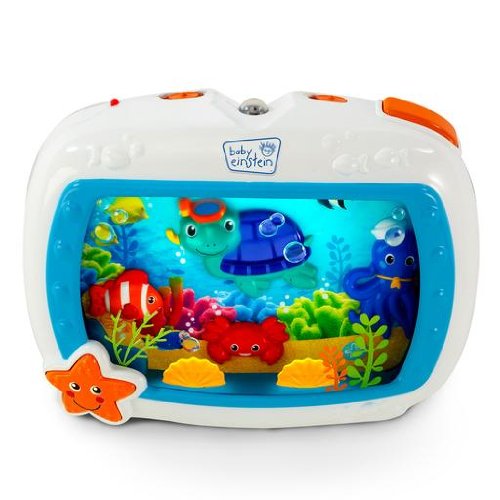
So (thanks to a wonderful suggestion by our speech therapist) I purchased the Baby Einstein Sea Dreams Soother. I am telling you – this product is amazing. As soon as I put her down in the crib, Sonya points at the aquarium, asking for me to turn it on for her. She smiles and laughs as soon as she sees the lights turn on and fish, crab, octopus and sea turtle begin to dance. She then turns to her side to watch the soft lights that look like ocean waves on her mattress. The combination of lights and movement seems to be enough stimulation to satisfy her. She doesn’t seem to miss not hearing.

51NFtTRIdWL

While great, it’s not a perfect solution. Sonya has learned how to adjust the settings which are on the top of the machine, and she uses it to wake us. In the middle of the night, when Sonya wakes up, she turns the machine on to full volume. I hear Chopin’s second Nocturne and then the sound of Sonya, singing “mama! mama!”

Now it is a beautiful sound to hear my child – who was born with profound hearing loss – to say my name, but less so when I hear it every three hours until I get her, every single night.

I know I am not the only parent in the world to suffer from sleep deprivation. I also realize we can do something about it – a.k.a. sleep training. Which we have tried – and failed at – numerous times in the past. And I know eventually we will stick to it, and it will be better.

Until then, look forward to reading any comments or suggestions you may have at midnight., 3 a.m. and probably around 6 a.m. tomorrow morning 🙂

A Unique Fish

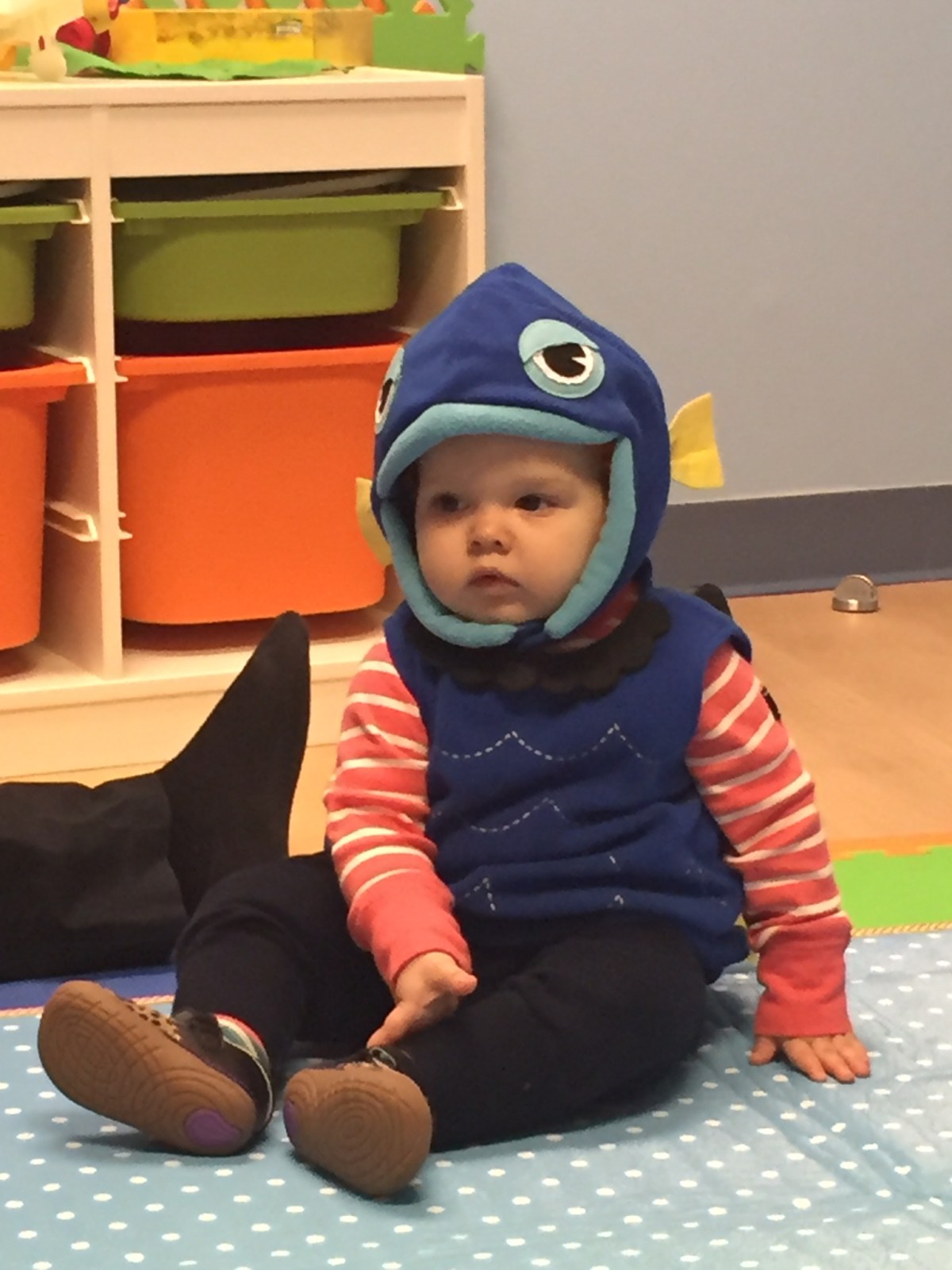
“She is so adorable!” Our neighbor exclaimed as we held open Sonya’s trick-or-treat bag. “What is she? Some sort of robot?”

“She is a fish,” I replied.

“Well I just love the blinking lights,” she said pointing to Sonya’s processors. “A unique fish you are!”

“Yes she is!” I laughed.

Deciding when to explain to people that Sonya is wearing cochlear implants has never been easy for me. Over the summer, in Central Park’s Great Lawn, a young girl sitting nearby on a blanket pointed to us and sneered, “What are those ugly black things on that baby’s head?” Her dad quickly told her to “shut it.” I didn’t respond. Instead, I packed up Sonya’s toys, rolled up our blanket and left. I was too upset. My biggest fear was that Sonya somehow sensed my emotion and thinks that it was because I was ashamed, which is not the case. I just didn’t know what to say.

From that moment on, I knew I needed to come up with some sort of response. I decided to ask other parents in my situation, and here are their suggestions.

As soon as they can understand, teach your child the language they need about themselves and in a loving way. For example, I should plan to use the word “deaf” and “cochlear implants” around Sonya – and explain that they are just a part of who she is. Explain to Sonya that she is different, but that we all have differences.

Teach your child to use these words as a defense against ignorance. Unfortunately, what the girl in Central Park said will not be the last derogatory remark Sonya will hear in her lifetime. But if I do my job and ensure she is as well-adjusted as possible, when someone says to Sonya on the playground “You’re deaf!” she will hopefully respond with something like, “Yes – I sure am. I use my CIs to hear just like you use your glasses to see.” Ultimately, I hope Sonya is able to teach people to open their eyes and to learn.

Speak up, but not in a defensive way. This past weekend, Sonya and I visited a bookstore where I overheard a child ask her mom what Sonya had on her head. “Oh, I am sure that is helping the baby in some way,” her mom responded. I decided that this time, I would say something. I turned around and asked nicely, “Oh, do you have a question about what she is wearing? I know it is different from what you have seen before, right? These help my baby to hear.” I then removed one device and let the child look at it more closely. The little girl was interested – as was her mother. I realize that very few people in the world have CIs – they are not something that people typically encounter.

In some instances, it just makes sense to say nothing. I have noticed that far more often than not, people are too polite to say anything. I never force the conversation. I only bring it up when it emerges organically.

Find humor, when possible. A question asked in a mean tone doesn’t always warrant a serious response. One parent at Sonya’s speech therapy encountered a rude person who one morning on the elevator asked curtly what those things were on her child’s head. Something about the person’s tone and the fact that it was just too early in the morning to dive into a lesson about the amazing benefits of cochlear implant technology led this parent to simply respond with, “Oh those? they are headphones. She just loves to listen to Howard Stern in the morning.” I love this.

I would love to hear other ideas for responses as well. Do let me know if you have any suggestions!

Letting Sonya Fall

Earlier this week, Sonya had a terrible therapy session. When presented with a toy, she refused to engage. Rather, she turned her body toward the shelves of other toys pointing and grunting. Not this toy, that one! she seemed to want to say. But nothing satisfied her. It was apparent that she was frustrated and we were too.

During our hour-long drive back from the therapy session, I felt as if I were the one who had failed. I should have made better sure that Sonya was well rested. I should have taken the time to make her a green smoothie this morning (the only way to get Sonya to ingest any vegetable is to hide it in a sweet fruit smoothie). I should have done a better job parenting her, and it was being reflected in her ability to acquire speech.

Sonya took a three plus hour nap that day – highly unusual for her. That evening, she picked herself off the floor and started to cruise around her nursery. She has been doing this for some time, but today she strutted with such confidence. She held on to one of our wooden cube trunks (which I am replacing, by the way, as they are not baby safe – so let me know if you want them!) with one hand waving in the air.

Sometimes she makes it the entire way around beaming with pride. Other times, she trips over her own feet and drops to her knees. On a couple of occasions she has flipped over backwards and landed smack on her head. It is equally exhilarating and terrifying for me to watch. I try not to think about her hitting her head where the CIs are implanted. I want to catch her before any fall, but it seems impossible. But I know that she can/will do it. I have confidence in her abilities when it comes to walking.

I am trying to translate this confidence into Sonya’s speech work as well. I know that not every therapy session will be great. But over time, she will learn and improve. Her falling is not necessarily my failing.

On a side note, we recently celebrated Sonya’s first birthday! What a year it has been. Sonya had the best time. She received numerous baby dolls and books – her favorite things. We feel so blessed to have had the amazing support this past year from friends and family. 🙂 ❤

You can check out our photos from the event here: http://iheartnyphotography.pixieset.com/sonyasbirthdayparty/

password: bpihny

Silent Steps

The B sound continues to be difficult for Sonya. She confuses B and D, saying “dye dye” rather than “bye bye.” In fact, she uses the D sound to say most words. Pointing to my shirt she looks up at me and asks, “da?”

“That’s a button.”

“duttah Sonya says.

According to our speech therapist, such confusion is common among children with hearing loss as both D and B are high frequency sounds, and can be difficult to discriminate initially.

While Da reigns supreme, Sonya definitely knows how to use the B sound. She said banana one time at lunch. She said buh buh for bubbles on numerous occasions. She refers to Yan’s mom as Baba, and turns toward our computer screen to look for her, as we typically FaceTime once a week with her.

While it is clear that Sonya’s understanding of words continues to grow, I have noticed that she seems quieter lately. At therapy this week, she made few sounds. She would point at the toys she wished to play with, rather than vocalize her want. She would grunt or whine when she didn’t get her way. It is discouraging to see this after several weeks of clear growth.

While she makes fewer sounds, she moves with greater ease and loves to dance!

In fact, Sonya’s physical development may be the underlying factor. Sonya is now actively cruising. It started a couple weeks ago during an in-home therapy session. We were sitting on the floor of the nursery as usual, when our speech therapist asked if Sonya had started walking around our apartment by holding on to furniture yet. While Sonya had pulled herself to stand weeks ago, she hesitated to move further. While every baby moves at their own speed, Sonya may also have been reading into my own fears about her moving around our apartment. I flinch every time she loses her balance. I grab her just before she falls (although she still manages to sport some bruises on her forehead from crawling too quickly on slick wooden floors). Our speech therapist showed us ways to help Sonya learn to cruise in a safe environment, between the couch and coffee tables in her nursery. Now Sonya crawls up to that area and pulls herself up, then steps from couch to table. Her face beams with pride.

As her brain focuses on perfecting this new milestone, it is not that surprising that her speech development will be placed on the back burner momentarily.

In the meantime, I will try to enjoy this moment of quiet focus.

Sonya Says DADA!

I believe this week was a turning point for Sonya. On Monday, Sonya watched our speech therapist with such focus as the therapist made the “la la la” sound, that even our therapist was surprised. Sonya moved her tongue back and forth, trying to understand how to emulate that sound. The “la la” game is one we play all the time these days. Sonya loves her little baby doll and will pretend it is her baby as she rocks it and sings to it. Our goal is for her to associate her baby with the sound “la la.”

On Thursday, however, Sonya was in no mood for speech therapy. It had been a long trek that morning down the CHC. Traffic on the West Side Highway was terrible. Sonya hates her car seat and complained the entire time. The only way I can soothe her these days is to put on Elmo’s World. She shouts with delight and shakes her fists wildly as soon as she realizes it is on. She even emulates Elmo’s laugh. I realize that I am the biggest hypocrite as I always judged parents who would stick videos in front of their kids to keep them quiet. But when you are stuck in an Uber for 50 minutes, and your baby is screaming her head off, Elmo’s World is a God send. I used to have a 5.0 rating with Uber. Almost unheard of. Sonya is quickly changing that.

Once we arrived to therapy, Sonya was very quiet. Her attention span was much shorter than usual, and for some reason, each time our speech therapist said the word “yes” Sonya would burst into tears. We couldn’t figure out why. But that night, while Sonya was fighting us putting her to sleep, she erupted with her first word “DADA!” She even pointed at Yan while she said it (although sometimes she points at her stuffed lion…) But it was the most amazing sound. I will never forget it. I caught it on camera the next day.

And while I was just slightly jealous she said “DADA” not “MAMA,” I can only blame myself. I recently bought the book “Your Baby’s First Word Will Be DADA” given the many farm animal sounds in it.

Over the weekend, Sonya has consistently produced the “DA” sound, the “GUH” sound and the “NAH” sound. We can tell she is listening better too. She always smiles when you whisper her name and will listen and follow directions even when Yan is playing piano quite loudly in the background.

Such incredible progress this week and so proud of my girl.

On Music

When Yan and I used to discuss having and raising kids, we knew music education would be a given. Both former musicians (Yan plays piano and I used to play piano and acoustic guitar), music is what brought us together. On our second date, Yan made me lunch and then played me a Chopin Etude.

But we disagreed on how we would pass our love of music on to our children. I would suggest introducing them to all sorts of musical genres. Classical, jazz, pop, whatever. Let the child decide what they enjoyed and how they would incorporate it into their life. Yan on the other hand had a different view. “Chain them to the piano!” he would say in a joking (but not really joking) way.

We even bought a grand piano a few years ago. It takes up a significant amount of real estate in our New York City apartment, and forced us to forego having a TV.

IMG_0115
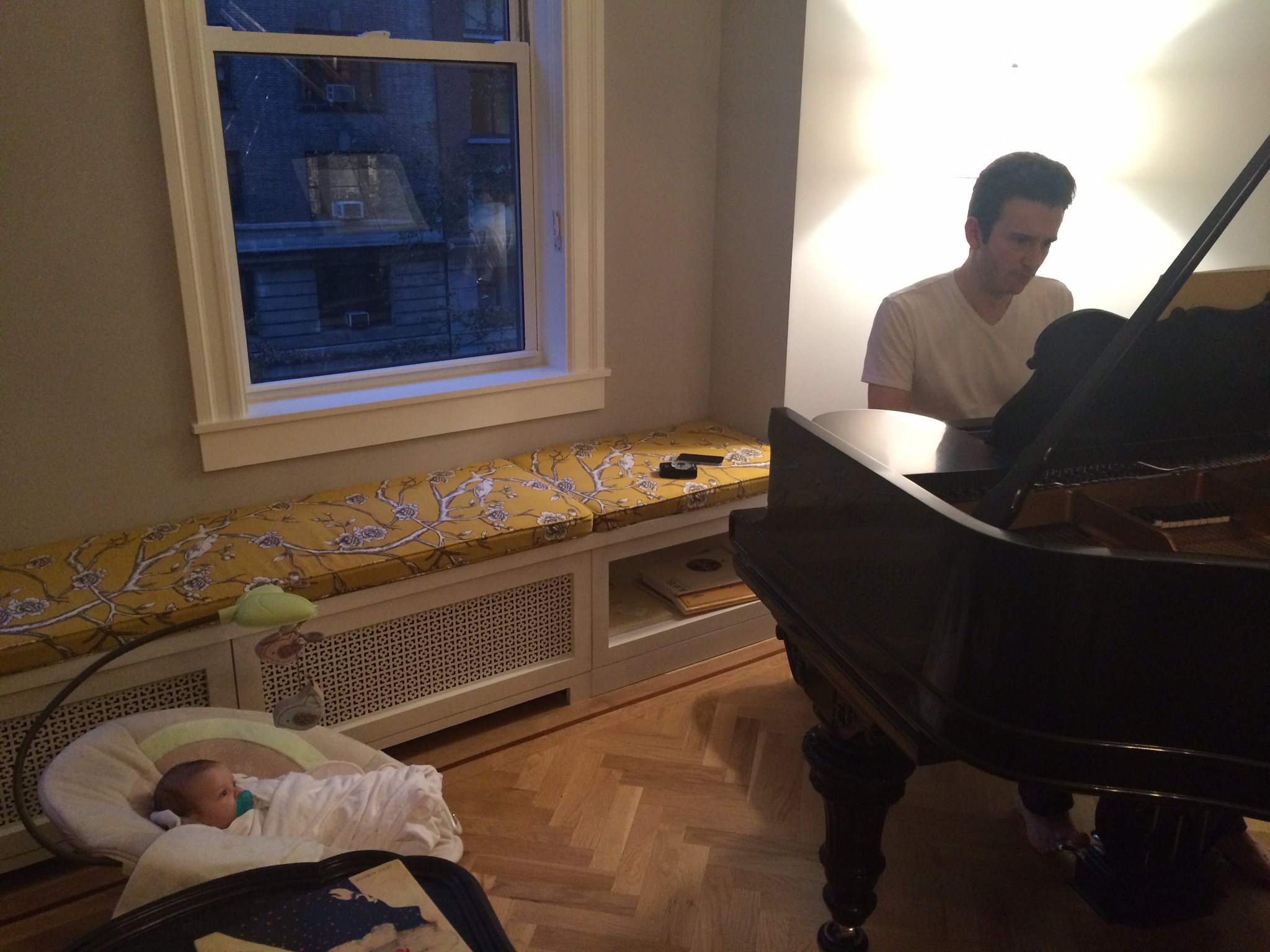
Sonya “listening” to Yan playing piano as an infant. She also might just be enjoying the vibrations that complemented her already vibrating bouncy chair.

When we learned that our baby had a high risk of hearing loss during pregnancy,  the irony was not lost on us. How could this happen to us of all people?

“Actually, it could be great.” Yan told me. “I will be able to practice at night and she won’t even notice!”

Yet, this also was not the case. Despite the fact that Sonya had hearing loss, she could feel the vibrations of the six foot-long instrument just fine. Yan’s interpretation of the Russian Romantics was enough to wake her (and many others in our building) from any sleep.

So the question of whether Sonya will appreciate music has haunted me. It is something I always ask older kids with implants. Trying to understand how they understand music through the prism of their deafness, I ask them simply whether they like to listen to music, and whether they play any instruments? So far, the response has been mixed. Some kids say they love music (typically pop or hip hop) but they would not want to listen to orchestral music. Others say they read the lyrics, but do not remember melodies. It is not something they participate in unless they have to. Disheartening to say the least.

While I have read that the newest devices (Sonya has the Nucleus 6 device by Cochlear) are much more sophisticated when it comes to hearing music than their predecessors, we will never really know what Sonya hears when she listens. We can try to emulate what it is like to hear electronically – as in a recent NPR story, which offers accounts of people who have cochlear implants and what music sounds like to them, but we will never know for sure. Interestingly, in the comments section of this story, even those with cochlear implants do not agree on what they actually hear. One commentator wrote, “Fascinating, but I’m not sure that I agree. I have cochlear implants in both ears. I could hear the differences in all of the clips, and the ones that are supposed to sound like CIs don’t sound like what I hear.”

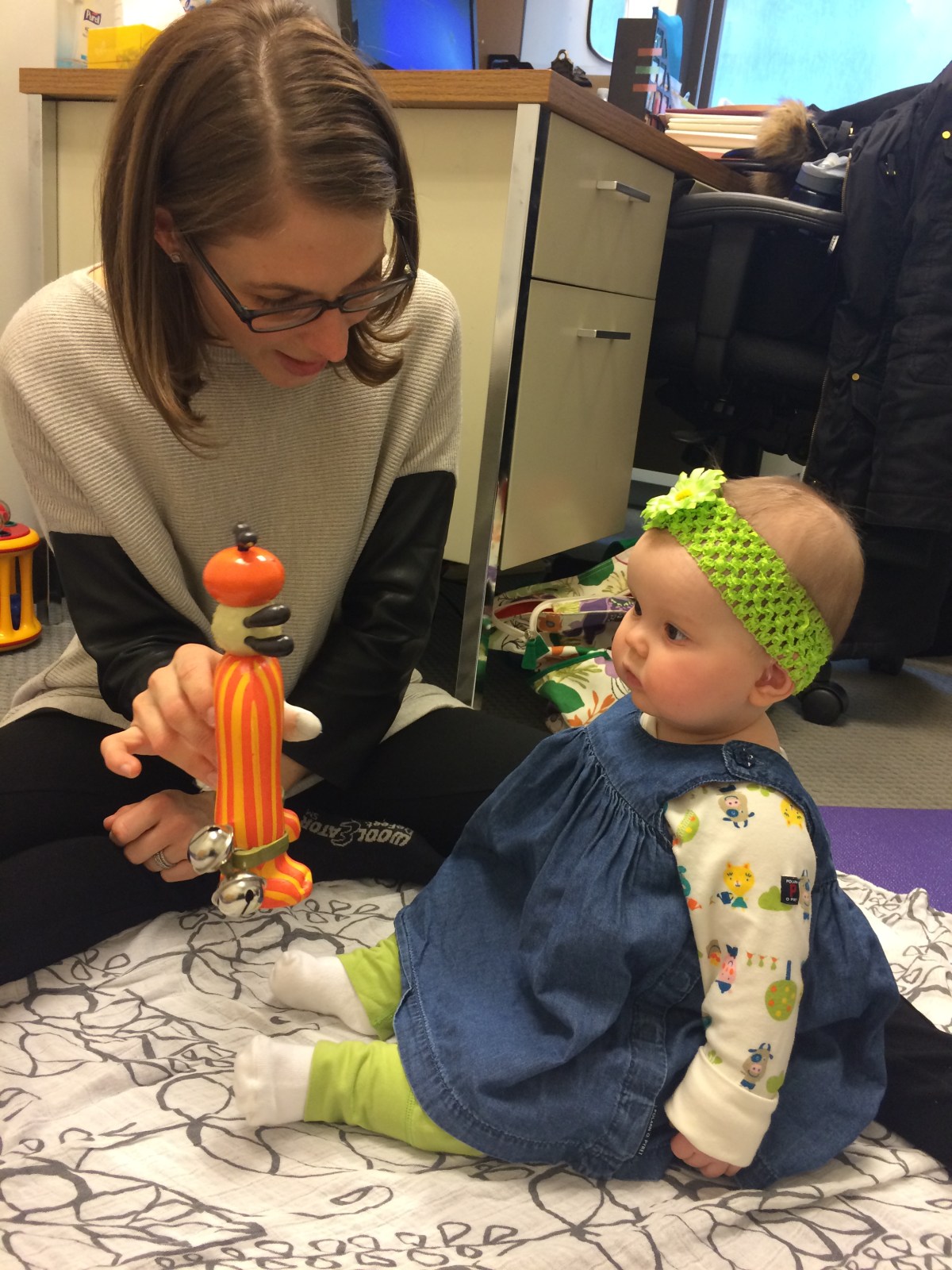
For the time being, I will continue to encourage Sonya to experiment with music. She recently received a glockenspiel – which she seems to enjoy, though she also just loves to hit things with mallets, so I can’t be sure she is actually appreciating the sound she is producing. Ultimately, Yan and I may have to accept that our child will not touch the piano that sits in our living room, and that is okay.

Update: Sonya recently has taken interest in watching Yan play piano. I overheard them playing together recently and quickly caught it on camera. I think it is brilliant. She seems to play the right notes at the right times! Yan, however, says pure coincidence. Haha. In any case, we agreed it is adorable: