Sonya’s Third Year Evaluation

In a month, we will celebrate Sonya’s third birthday! While I can’t believe three years have passed already, I also can’t believe we have only had Sonya for three years in our lives. She has had such a profound impact on who I am.

As Sonya approaches her big day, we are also working on transferring our speech therapy services from Early Intervention (which is state-sponsored) to our local school district. To do so involves a somewhat lengthy process, including:

  1. A referral from Sonya’s EI service coordinator, informing the school district that Sonya was born deaf, has been receiving speech therapy through EI and that she should be considered by the school district for special education services (i.e. speech therapy and in-classroom support);
  2. A psych/ed evaluation, which assesses the child’s physical, mental, behavioral and emotional factors;
  3. A speech and comprehension evaluation, which assesses the child’s current abilities; and
  4. Letters from Sonya’s audiologist and surgeon detailing her hearing loss and the tools she will need to succeed in school (i.e. FM system and receivers).

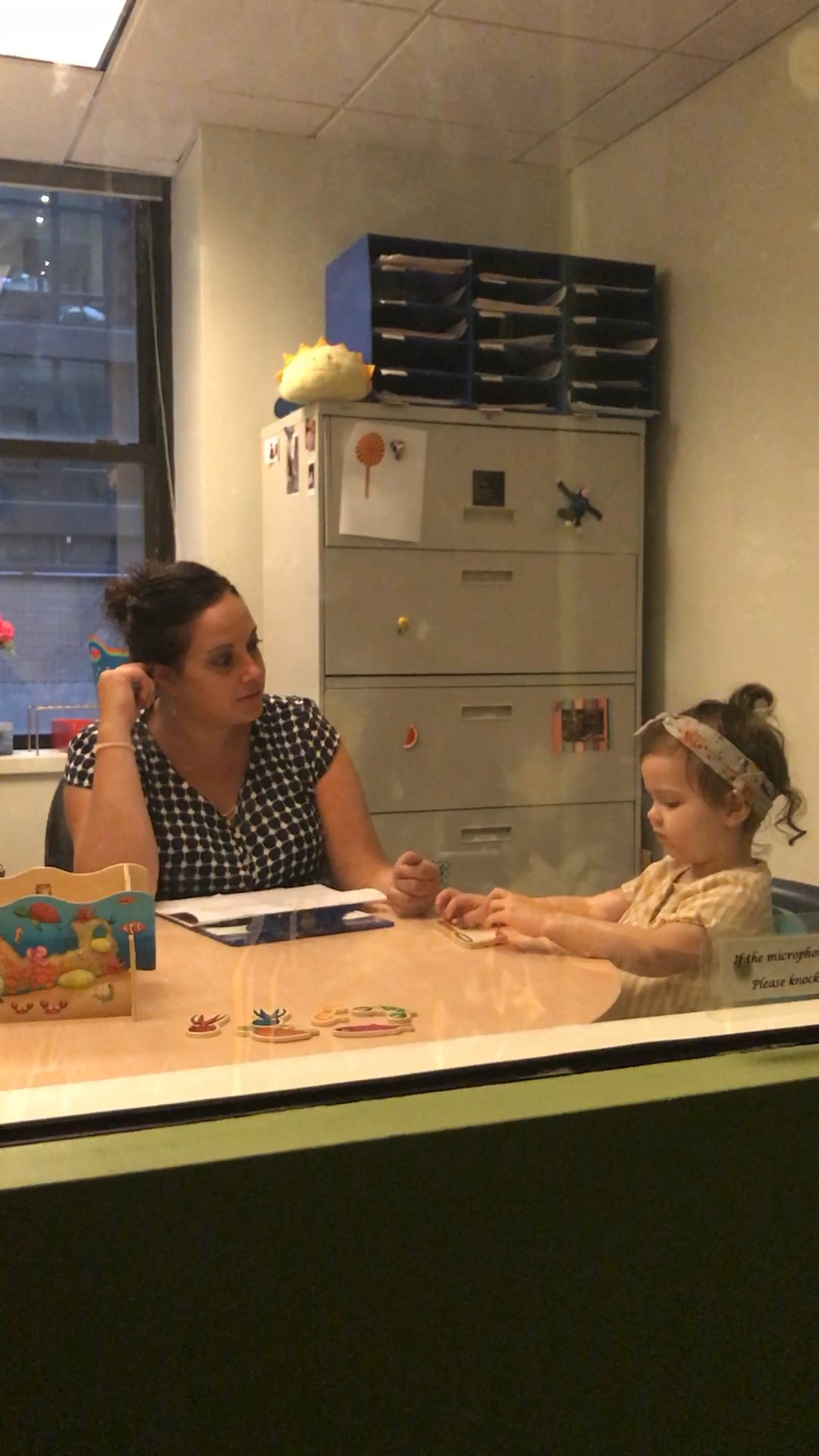
In the below clip, you can watch excerpts from Sonya’s speech and comprehension evaluation. The entire evaluation was nearly two hours, but this gives you an idea. Also, I was observing behind a one sided mirror – so the quality is a bit grainy.

Once the evaluation is complete, we met with a school administrator who discussed Sonya’s progress and whether she would be granting us the accommodations we requested. Since Sonya will be in preschool five mornings a week this year, we requested a hearing education specialist to be in the classroom with her three times a week; for the school to order an FM system (and receivers that fit on Sonya’s processors) that we can use; reading help once a week; group therapy and individual therapy.

The school board meeting was one I dreaded for a long time. I had heard horror stories from other parents, who said they would resort to tears and refuse to leave the room until the administrator granted an accommodation. I heard of another parent who brings a big black binder with her child’s adorable photo on the cover. Looking extremely organized, she runs the meeting! (It’s actually a phenomenal idea). Thankfully our meeting went very smoothly. That said, we will continue to have them annually until Sonya is out of high school. Chances are, we will face such challenges in our future.

In other news, Sonya has grown so much this summer. I have noticed that when Sonya has a developmental leap, she tends to remove her CIs more frequently. Yesterday, she refused to wear them at speech therapy. It took 30 minutes of prodding before she finally agreed to wear them (the game of hot potato finally coaxed her); and this morning, she threw them off just as we entered NYU’s Cochlear Implant Center for her three month mapping. It’s frustrating to say the least. Sonya speaks loudly without her CIs and tends to hurt herself too. Yesterday she was being crazy and hit her head on the corner of a bench and now sports a small red dot right below her hairline 😦

Something tells me that we are only starting to appreciate the true challenges that await us as parents of a ‘threenager’ 🙂
IMG_3409
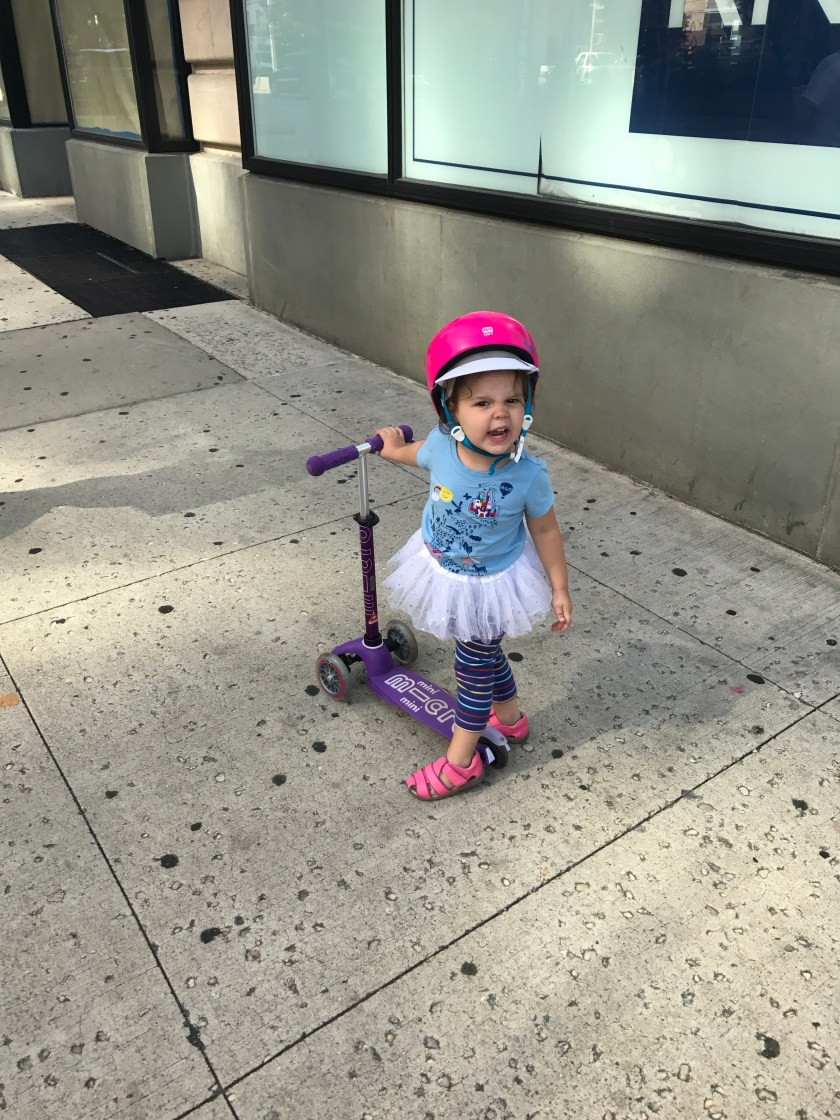
Yep. She’s a threenager.


Our Italy Trip

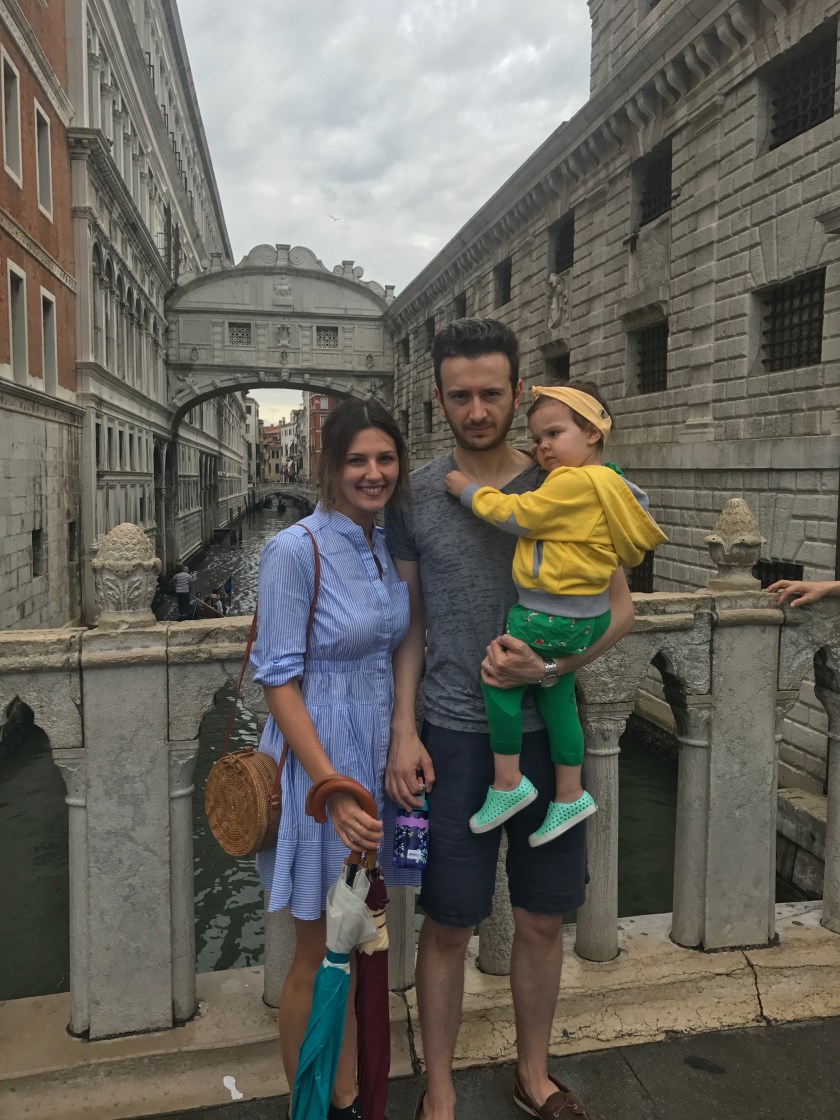
For the past couple weeks we have been in Venice and Lake Como, Italy. Thought I would share our memories and some wisdom after traveling with a “threenager” who has cochlear implants 🙂

IMG_2604

For the past couple of weeks we have been in Italy. This was the third summer we have spent time there (see our Amalfi Coast trip here and our Tuscany trip here), and the country continues to impress us. I thought you might be interested in seeing some photos and a bit of wisdom gained from experience while traveling with a now almost “threenager” who has cochlear implants.

FLYING

IMG_2390

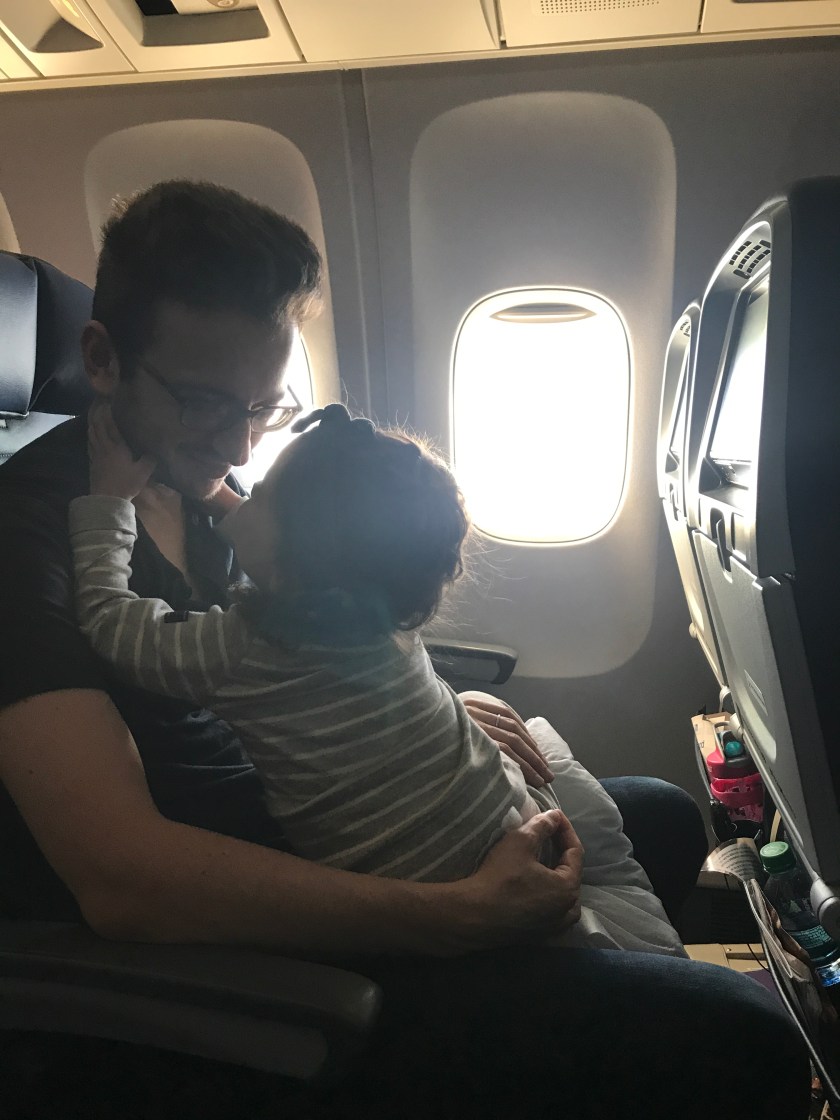
It’s funny, I used to be a nervous flyer. I tried wine, Benadryl, meditation, you name it. Funny enough, traveling with a toddler cured me. When you travel with a toddler, you must be so present it is nearly impossible for anxious thoughts to take over. You are surviving the current moment, be it pulling Sonya down from the arm rest where she is yelling at the people behind us to “wake up guys — it’s morning!” to playing pretend animals with her, to finding her milk that hasn’t expired after sitting for eight hours in your thermos, so that she can go to sleep. On the flight over, Sonya actually did sleep! And then I had wine. And it was a great flight 🙂

Once we arrived to Venice, Sonya rode her JetKids bed box (which serves as a bed for the plane, an airport ride and a toy box) to the boat that took us to our apartment in San Marco.

 VENICE

IMG_5021

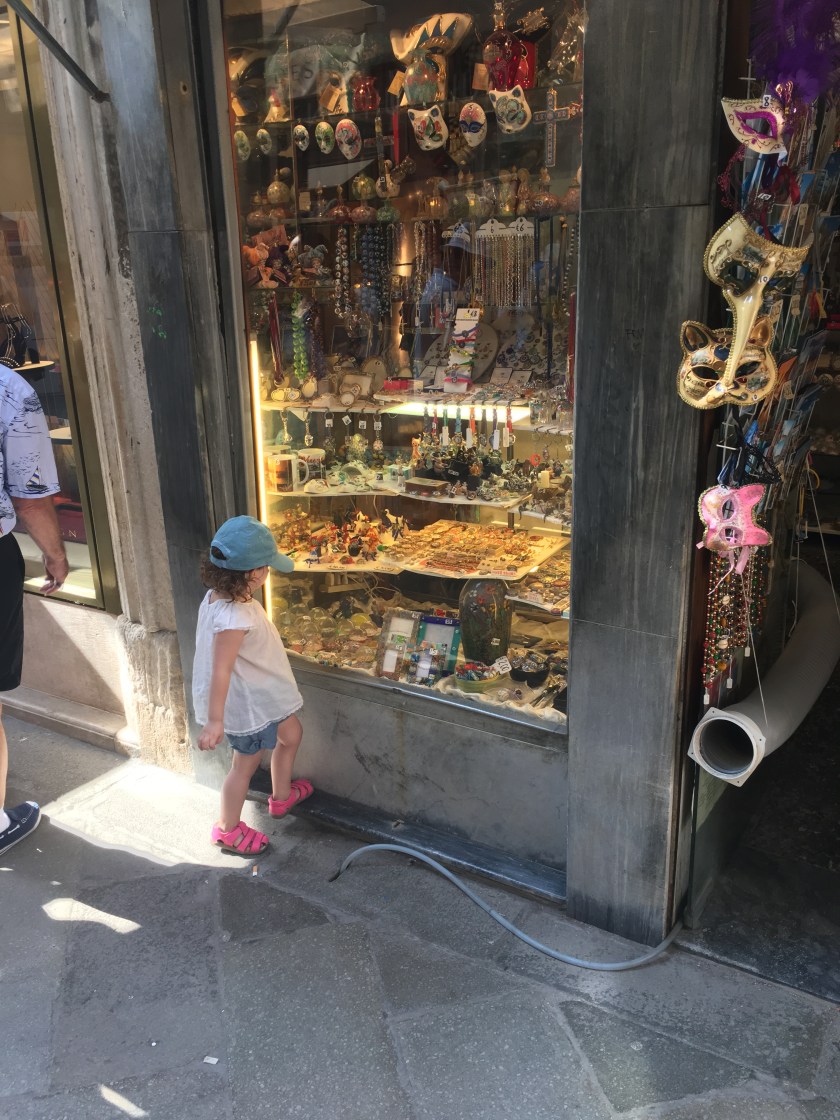
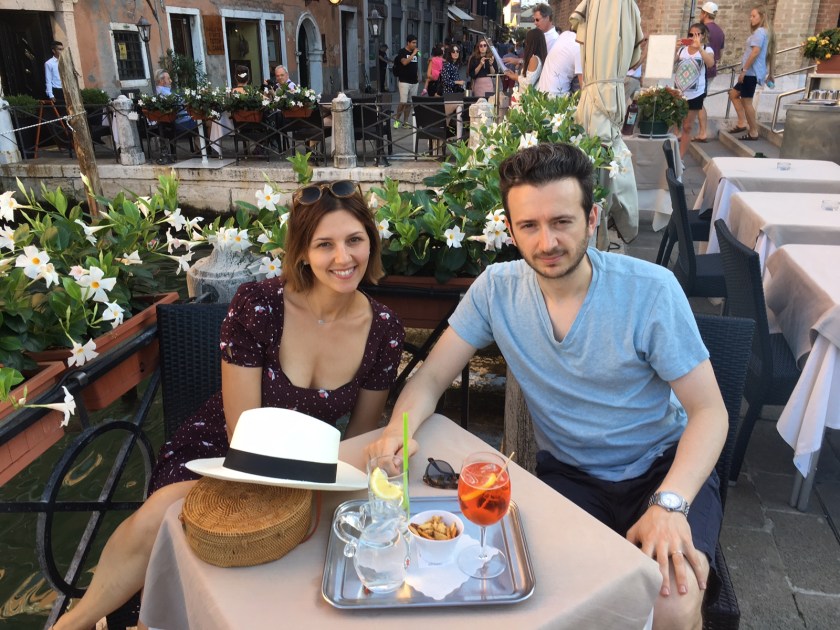
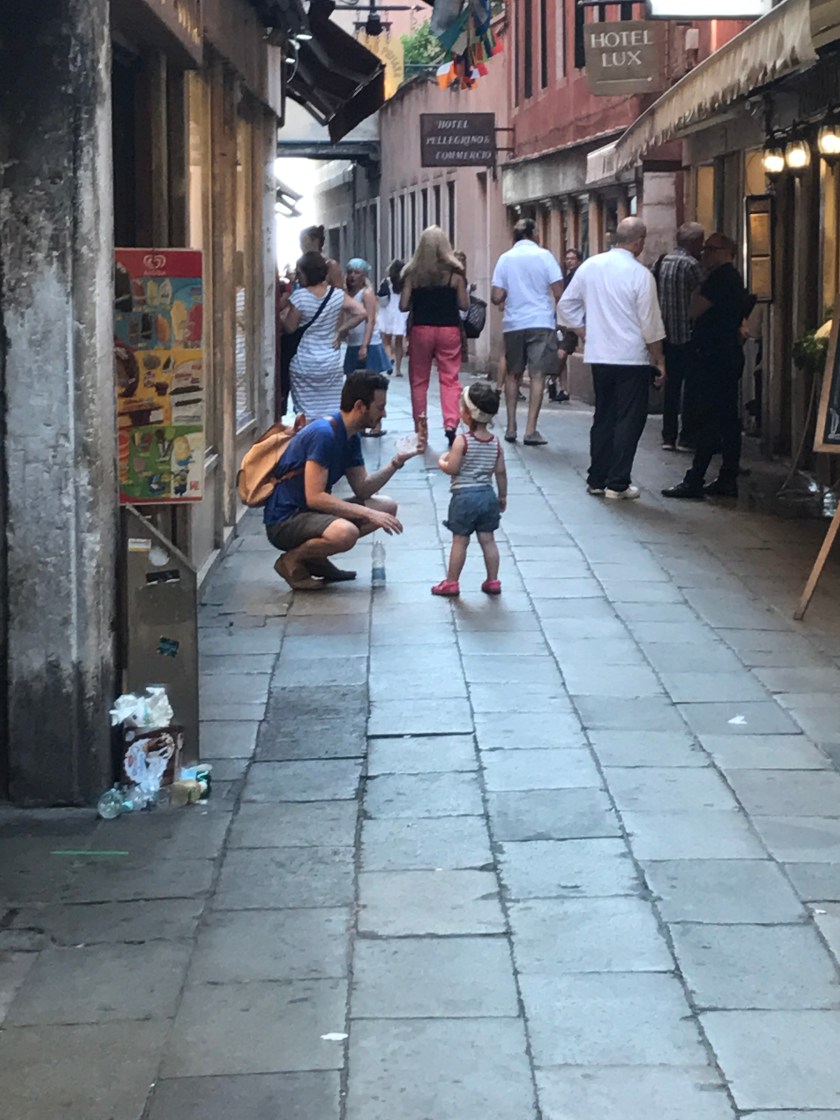
We spent the first part of our trip in Venice. If you are afraid to visit this city with kids, please don’t be. It is wonderful. As in previous summers, we traveled with Yan’s parents, and alternated between days with Sonya and days where we traveled alone. Sonya loved San Marco square. We had talked about visiting it often before our trip. We read Olivia Goes to Venice at leastolivia goes to venice fifty times before our trip.
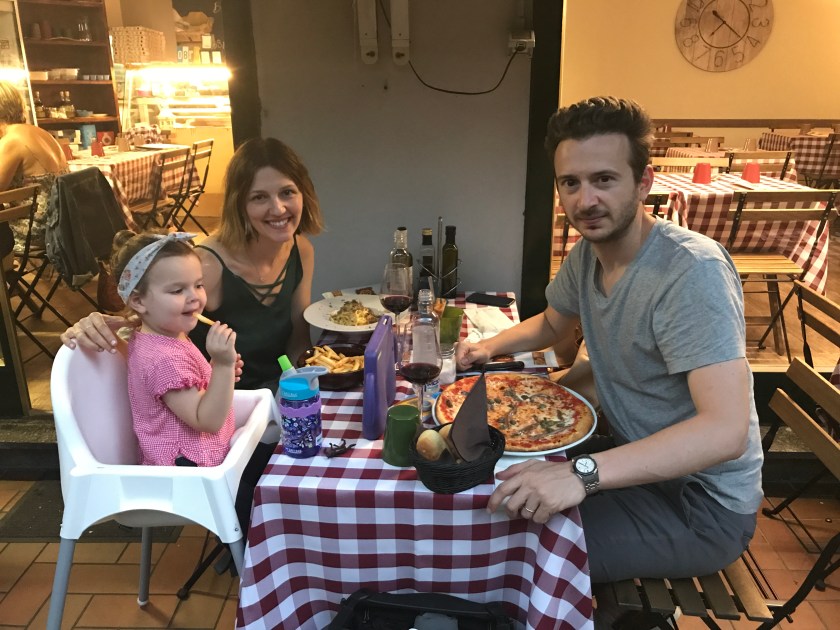
The square didn’t disappoint. Sonya LOVED watching the people, the thousands of pigeons, listening and dancing to the music played by live bands at some of the restaurants, and most of all, eating the gelato every night after dinner. So much so that she had a full on tantrum one night and threw off her cochlear implants. The hook on one of the processors broke off. We spent the next morning trying to find it.

Of course we didn’t find it. We could have contacted Cochlear and ordered new hooks to be overnighted to Italy (they cost about $15 for a set of two not including shipping), but ultimately decided it wasn’t worth the hassle. Sonya wore her Ruby Band headbands for the duration of the trip and it wasn’t a big deal.

IMG_4935

Since we had Yan’s parents Lillian and Eugene with us, we took turns watching Sonya and touring areas of the city. Highlights included seeing the Giotto frescos in Padua; the Scuola San Giorgio Degli Schiavoni (for Carpaccio) and the Scuola Rocco (for Tintoretto), Prosecco tasting in the Venetian countryside and of course, the food 🙂 Above all, Yan and I felt very lucky we had some time alone together. Thank you Baba and Deda so much for everything!!! ❤

IMG_2611


My favorite memories, however, are of buying fresh foods in the Rialto market and making dinners at home for the entire family. It was so special to be together in such a beautiful place.

IMG_2690

LAKE COMO – BELLAGIO

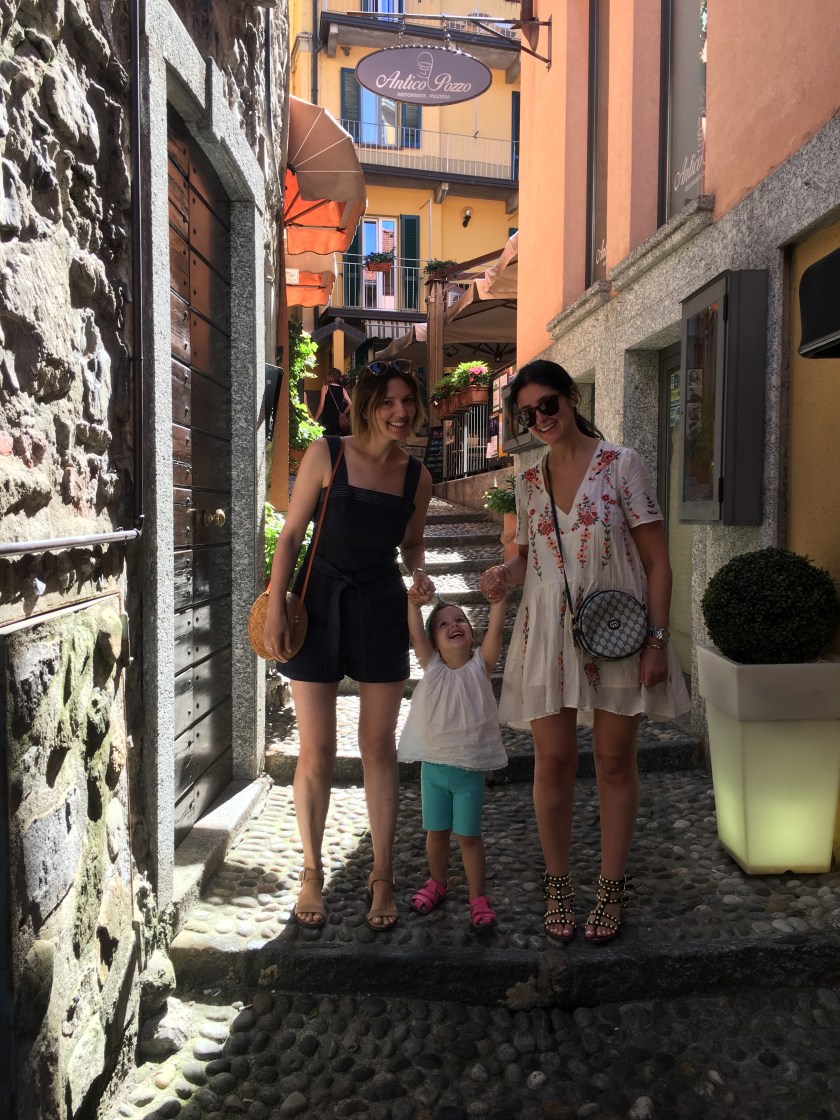
From Venice, we rented a car and drove to Bellagio. The drive begins on a boring highway but after two hours, the road narrows and winds through small hills that eventually merge into the Italian Alps. Lake Como is extraordinary. People say it is impossible to take pictures there – the photos do not do the place justice – and they are right. At least my photos 🙂

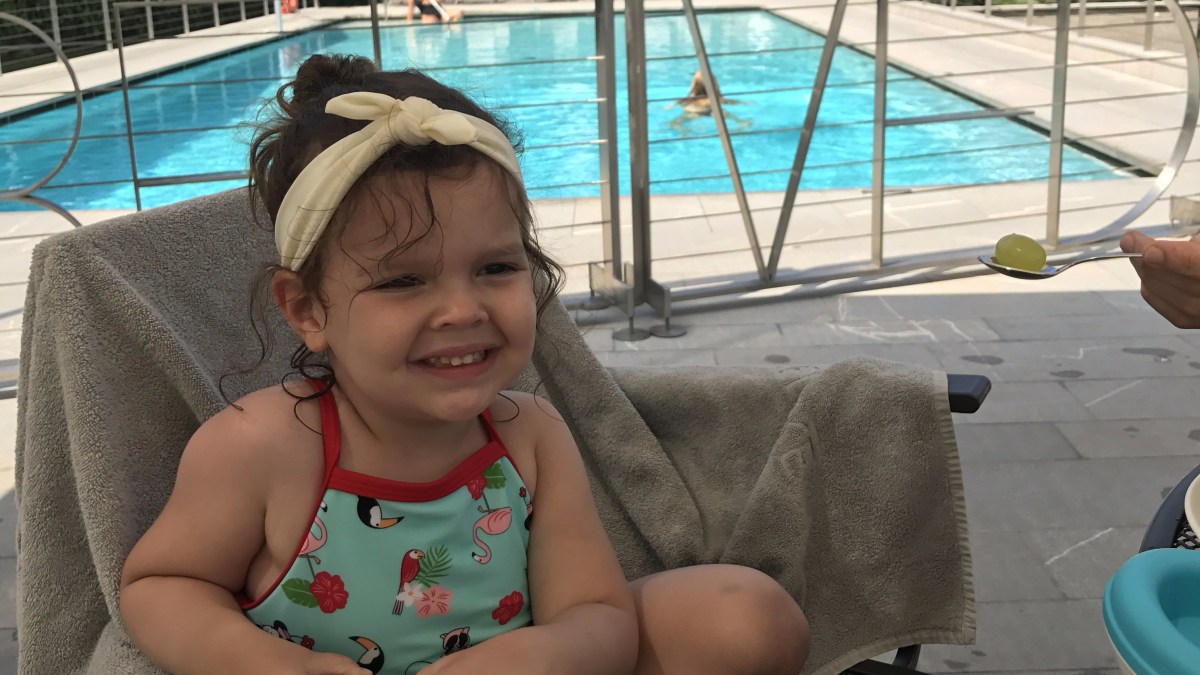
We stayed at the Belvedere Hotel in Bellagio, which overlooks the lake. We didn’t swim in the lake, but the views are incredibly serene and the weather is cooler than Venice this time of year. Our hotel pool was a wonderful respite for the entire family, above all Sonya, who loved to wade in the shallow water and play with her boat. She wore her Ruby Band swim headband and we had no issues with the processors being impacted from water.

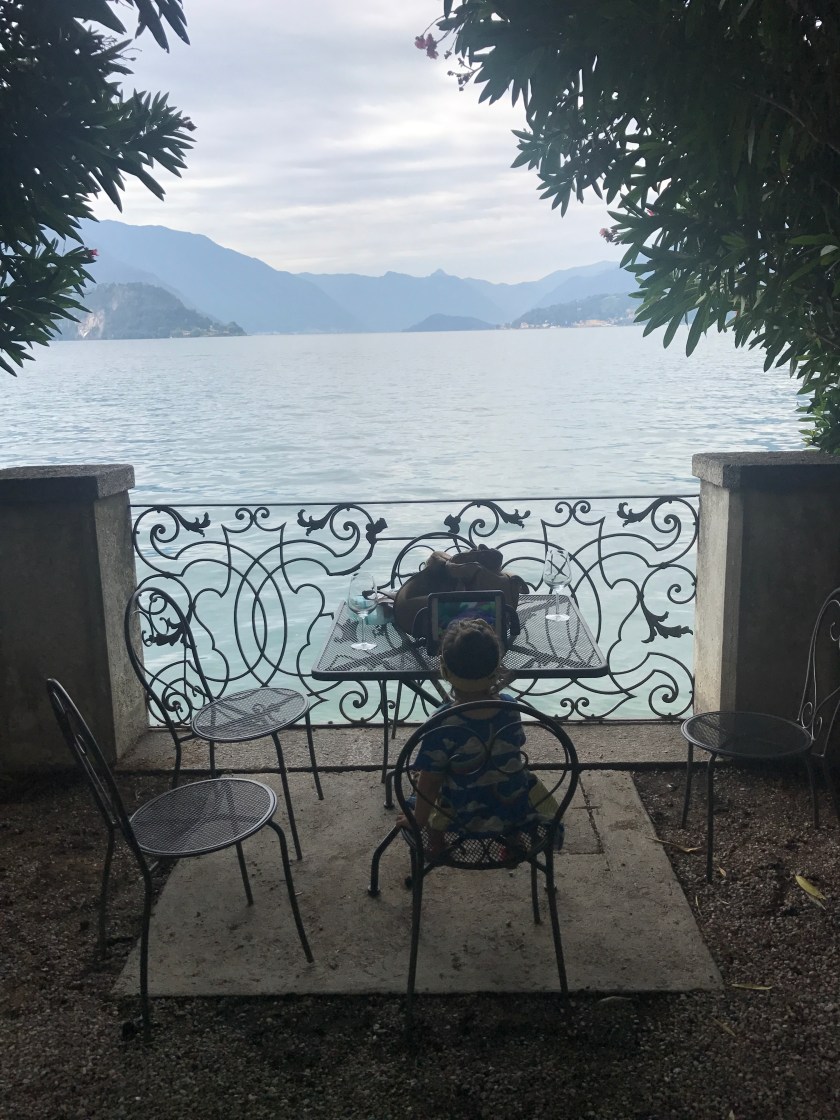
During the day, we took the ferry to see different villages in Lake Como. Varenna was an amazing town with a beautiful villa – Villa Monastero – which had gorgeous gardens and views. Sonya – was a bit tired by this point and luckily we had brought her iPad and Mini Mic. She watched “Mickey the Mouse” while we enjoyed a glass of wine. I felt a bit guilty but only a little bit. We all deserve a break sometimes 🙂

IMG_3047

On days when we stayed in Bellagio, we enjoyed taking long walks down the boardwalk where we would drink espresso, do some shopping, eat gelato (fig was our favorite – but Sonya is partial to “chocolick” (we are still working on word endings in speech therapy).

One day, Yan and I took a drive north to Lugano Switzerland. A beautiful place with amazing pizza! We had the best Napoli pizza since Amalfi at Ristorante l’Argentino.

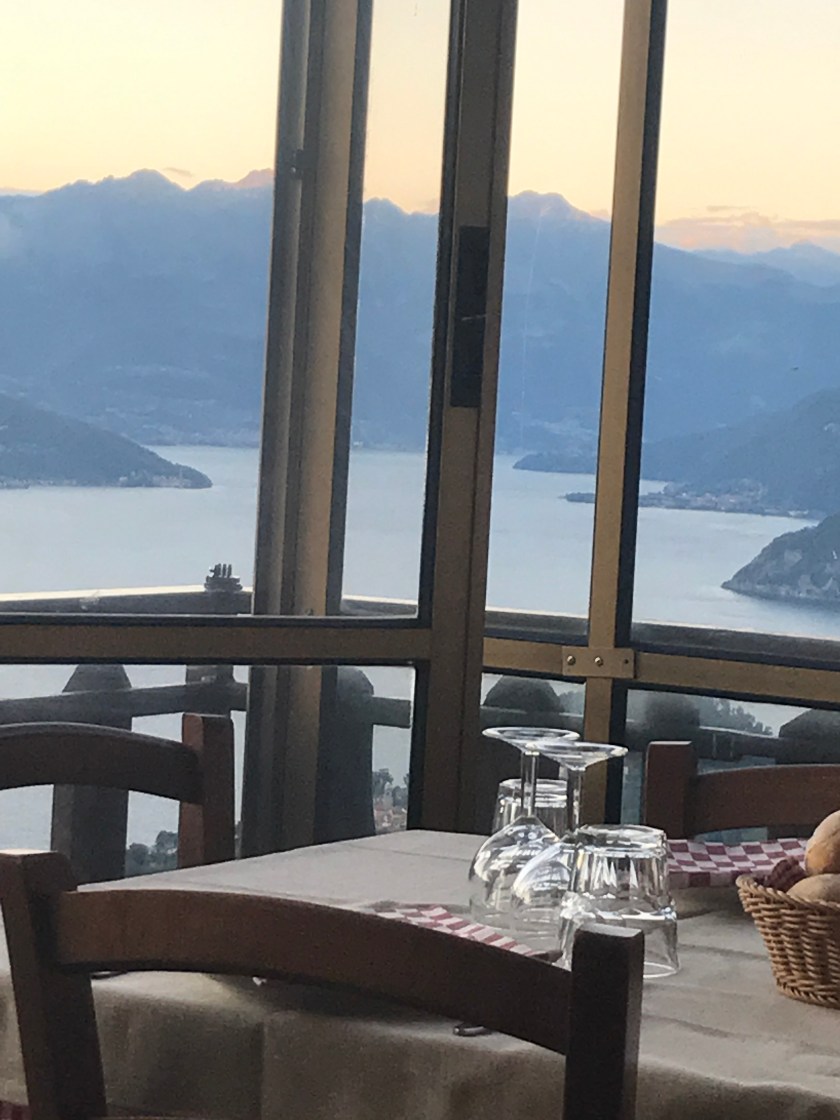
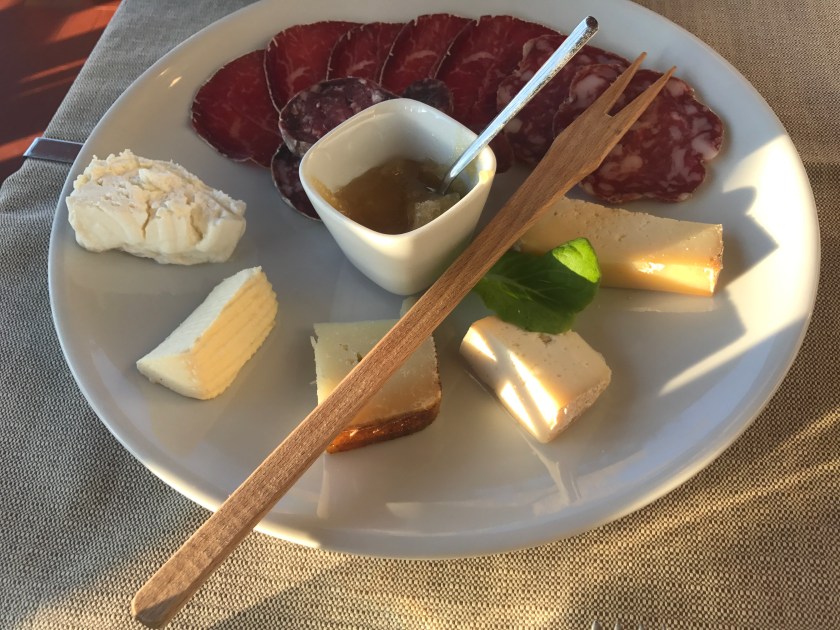
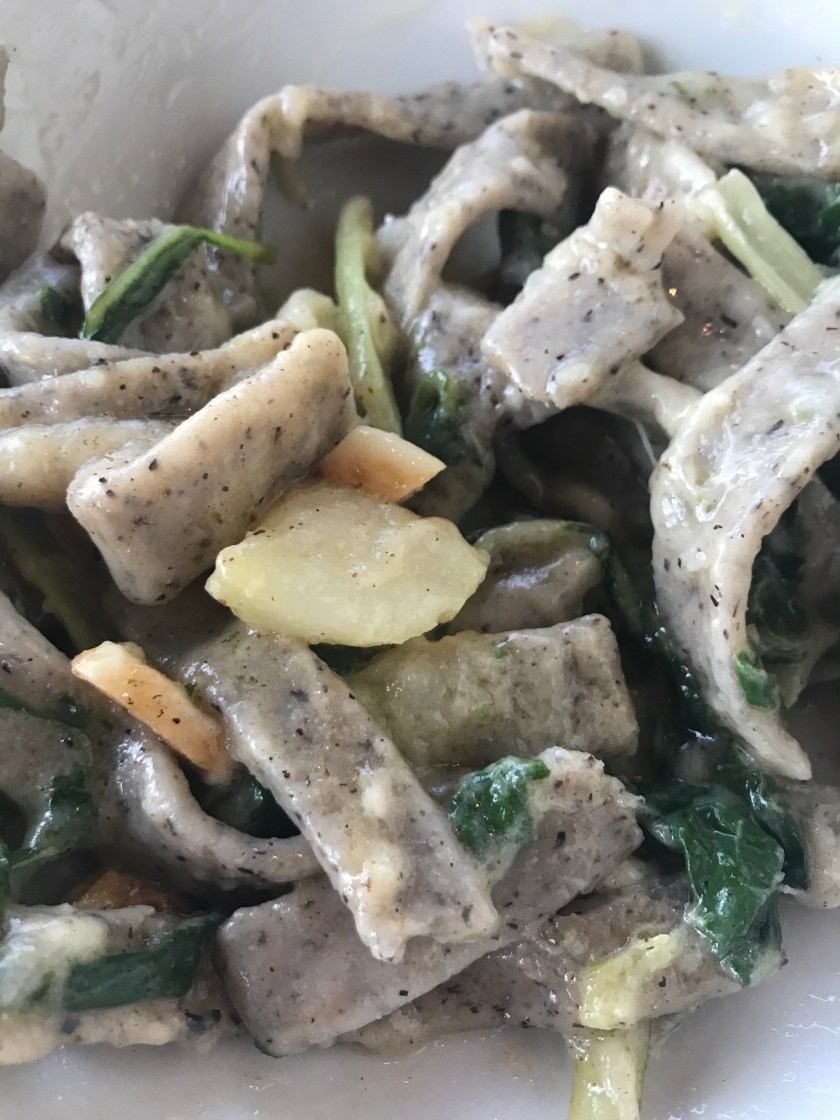
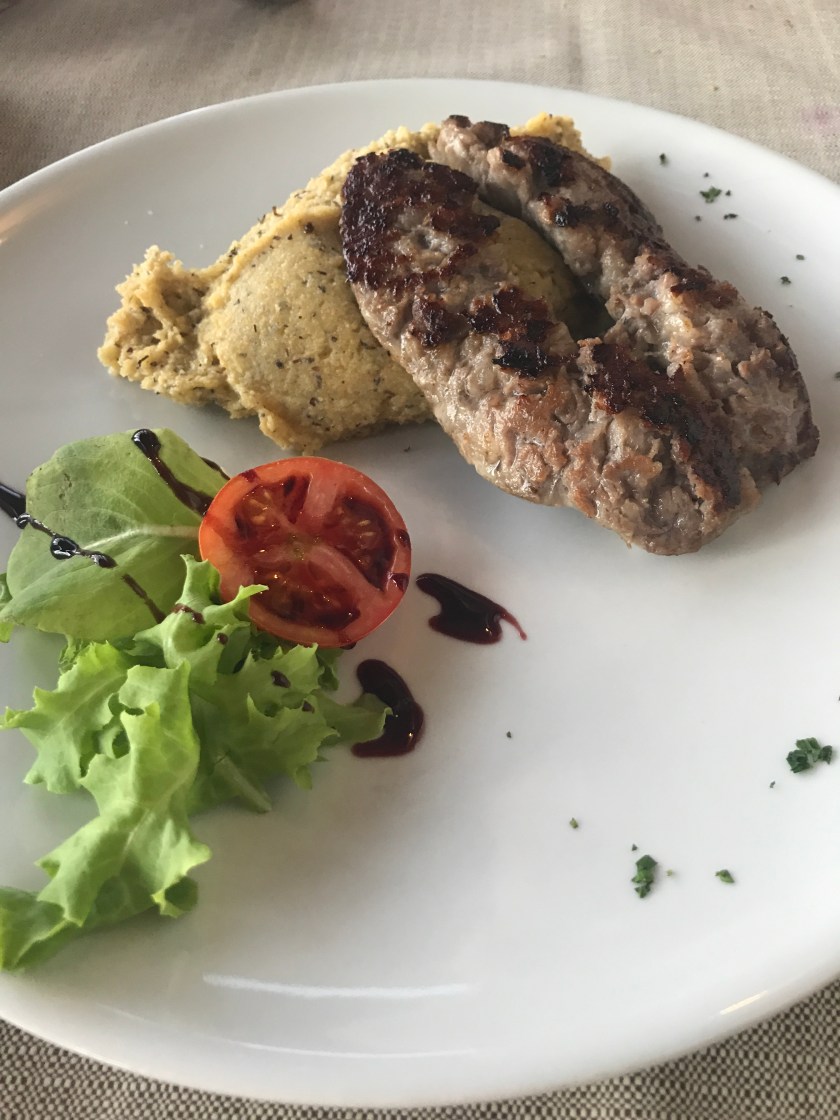
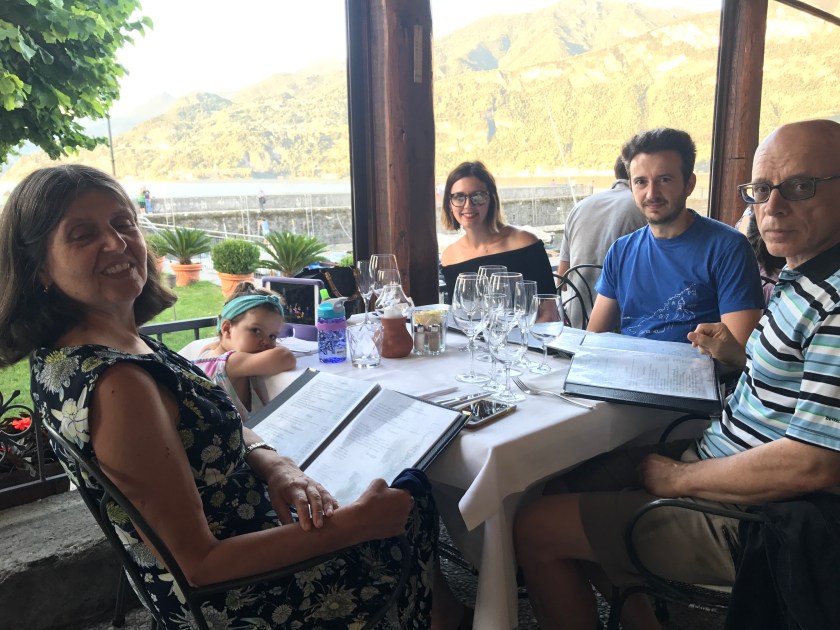
My favorite meal, however, was in the hilltops next to the farm, Trattoria Baita Belvedere. With breathtaking views of Lake Como, this quaint and casual restaurant offered traditional rustic fare sourced from neighboring farms. We ordered way too much and somehow finished everything. I even bought a couple jars of lavender and linden-infused honey that complemented our cheese plate. My mouth is watering as I write this. : )

IMG_3202
View from our table at Trattoria Baita Belvedere in Lake Como

IMG_3197

IMG_3198

IMG_3200

IMG_5257
Sonya got to spend some time with her Aunt Jess who was in Bellagio for a wedding!
IMG_3136
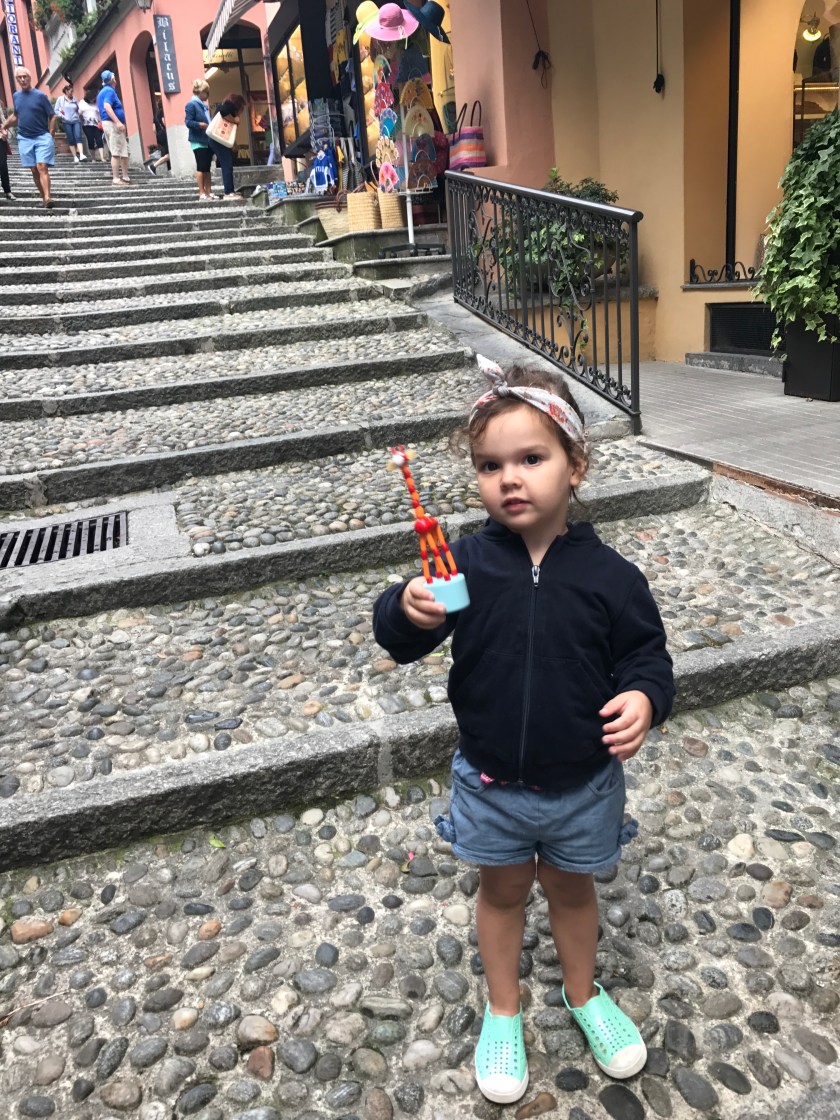
Sometimes your child has a tantrum because they want a giraffe and I say it’s okay to give in 5 percent of the time – especially when on vacation 🙂

IMG_3267

IMG_2976

We had such an incredible trip. Yesterday Sonya told me “I rewy miss Itawy mama! Can we go again soon?”

I hope so!

P.s. Because I was in denial about coming back to the states (especially with everything going on here..) I created a 14 minute movie about our trip. Yes, it’s super cheesy. I think it’s a fun escape though 🙂
Fun Cochlear Implant Accessories for Summer

Sonya wears RubyBands Swim Band

Lately, Sonya has been loving her Ruby Bands cochlear implant swim head band. It has the same design as the other Ruby Band cochlear implant headbands, which we adore, but is made from swim suit fabric and the pockets are slightly larger to accommodate the waterproof sleeves. (Note – if you are going to use the headband with a swim hat, be sure to choose a back tie). Sonya is wearing the front tie option above. We will definitely be using this on our trip to Italy next week!

You might notice that we are no longer using the waterproof sleeves. I talked about our struggles with it here. The sleeves are just too bulky and huge – and they don’t fit when coupled with the compact batteries we use for Sonya. We decided that it was more important that Sonya hear comfortably when doing water activities rather than struggle with heavy equipment that she ultimately refuses to wear and winds up swimming without sound. So far (fingers crossed) we haven’t had any issues without the sleeves. The cochlear implants (Nucleus 6 in our case) is water resistant. Since her water activity is relatively light, we simply place the damp processors in our Zephyr dryer overnight. They are fine the next morning.

In addition to the swim headband, Sonya has worn (and stained) her Polarn O. Pyret baseball cap. It fits snuggly on her head and keeps her processors in place on days when she just doesn’t feel like wearing a headband (and I just don’t feel like freaking out over a lost processor somewhere between our house and Central Park). Plus, she probably thinks she looks as cool as I do in my Yankees cap 🙂

IMG_1096IMG_1086IMG_1506

P.S. Some additional fashionable cochlear implant / hearing aid solutions and travel tips for kids and babies with cochlear implants and hearing aids. Also, check out the wonderful book Sonya is holding in her hand in the top picture above: Harmony Hears a Hoot . It was written by a speech pathologist and is a great resource for kids and parents on how to address hearing loss in a mainstream school setting. We love it!


Camping with Cochlear Implants

Sonya is attending CampedUp, a unique camp where kids with hearing loss can socialize, gain self advocacy skills and have an awesome time!

image5
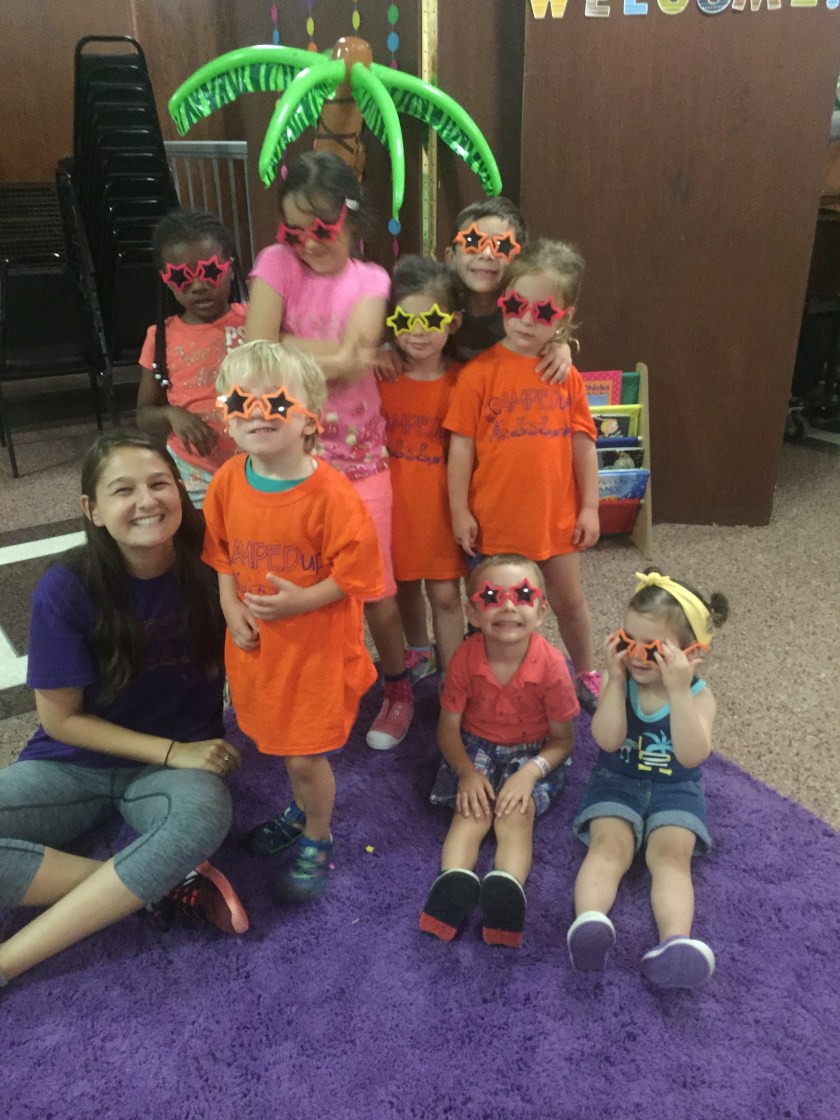
Sonya (bottom right) is with her buddies and counselor Brandi Prell at CampedUp,  a summer camp located in Manhattan for Cochlear Implant and Hearing Aid users.

“Thanks, but we don’t do playdates with other deaf kids.”

These very painful words believe it or not came from a mother who, like me, was raising a baby with profound hearing loss. She explained that she didn’t want her child to be held back by other children who couldn’t hear.

Thankfully, we also had Ketty Baalla in our lives. Ketty has been Sonya’s Early Intervention Service Coordinator for almost three years. More than that, she has been a friend who has personal experience raising a child with hearing loss. This past fall, I asked her about summer activities she would recommend for Sonya. Her response?: CampedUp, a day camp for children with hearing loss.

“But shouldn’t we focus on programs with hearing children?” I asked. My fear that this mom was right had made its way in.

Ketty and I spoke on the topic for an hour. Her experience with CampedUp was not limited to her work as a service coordinator for kids with hearing loss. Her own daughter had attended the camp and it had been life changing for them both. “After CampedUp, my daughter had great interest in her devices,” Ketty told me. “At audiologist appointments, it was my daughter – not me – who asked the majority of the questions. She gained a confidence and interest in her devices she didn’t have before. She had taken ownership of her hearing loss!”

I signed Sonya up that afternoon.

For two weeks, Sonya has attended the camp. I can’t say enough positive things about it. Created and operated by Hearing Loss Specialists, CampedUp provides a unique community in which children like Sonya can socialize with other hearing aid and cochlear implant users of different ages, gain self advocacy skills and above all have a wonderful time.

“We recognized the need for kids to have an opportunity to form relationships with other children with hearing loss, outside of a therapy setting,” says Dana Selznick, co-Founder of CampedUp and a Hearing Education Specialist. “We wanted to create an environment where campers can play, create and build a community among their peers starting at a young age. Brittany Prell [CampedUp’s other Co-Founder and Hearing Education Specialist] and I grew up going to camp and our experience helped shape who we are today. We wanted our camp to have the same impact on their lives as it did ours.”

So far, Sonya has enjoyed projects such as marble painting, creating a color changing chameleon, meeting a “real life” princess and a super hero, decorating paper fans with bubble art and making homemade bouncy balls. The highlight was a reptile show!

image7.JPG
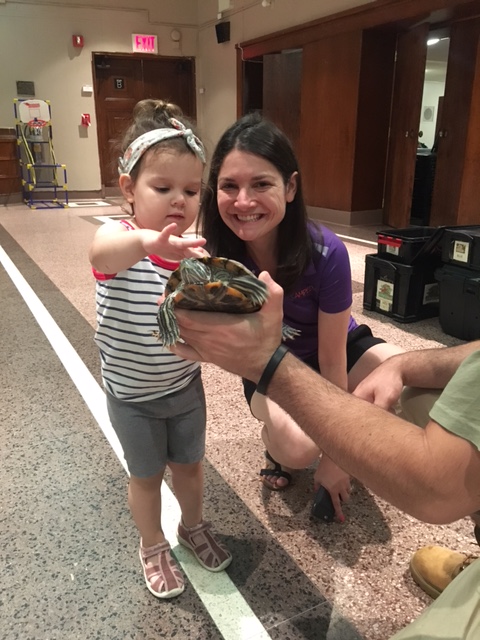
Note that the reptile guy is wearing an FM around his neck which is synced to all the kids’ devices. “All the kids love seeing that they are not the only one wearing an FM,” Dana says.
image1-1
Can’t believe this is my kid. Brave girl!

While Sonya attends half days, the camp goes from 9 a.m. to 3 p.m. each day. Kids enjoy a morning snack and an afternoon “fun with foods” activity (yesterday they churned butter!). A hot meal is provided during lunchtime. Each afternoon kids play water games on the roof of Stephen Wise synagogue and this week (among other activities) will meet children’s book author (and speech pathologist) Fara Augustover, author of Harmony Hears a Hoot, a story about Harmony an owl who has hearing loss.

image4
Sonya, a turtle, and her counselor/Co-Founder of Camped Up Dana Selznick

“As a hearing education service provider during the year, I typically see these campers in a mainstream school setting. It’s great to connect with the campers outside of an academic environment and to see them build friendships with other kids wearing cochlear implants and hearing aids. I love to see that ‘aha’ moment, when they realize that there are other people just like them.” – Brandi Prell, CampedUp counselor.

One of the most valuable lessons CampedUp teaches to its campers is self-advocacy. These skills are interwoven into the activities campers do all day long. “We foster conversations among our older kids about their hearing loss and talk about how they describe their hearing loss to their hearing friends,” explains Dana. “Campers share what they like about their listening devices as well as challenges that they may have experienced, so that the campers can help each other problem solve solutions.”

image2

For CampedUp’s younger kids: “We read stories about characters who, like them, have hearing loss. We also encourage campers to include their listening devices in their art work. Throughout the entire camp day, campers are encouraged to identify when they need a word repeated. We help them figure out how to find the best seats for their listening needs. Campers also learn to take care of their equipment during sprinkler time when we are taking off and switching devices,” she says.

As I put Sonya to bed the other night, she asked me, “Mom, do we have camp tomorrow?”

“Yes,” I responded.

“Okay, good.” she smiled sweetly, “I love to go there.”

Pretty sure I made the right decision here 🙂

For more information on CampedUp, visit http://www.campedup.com or email info@campedup.com


Ideas for Storing Cochlear Implant Equipment

When we came back from Sonya’s cochlear implant activation, we received two large suitcases (one for each processor) filled with equipment. Learning how to use the equipment has been one challenge. Figuring out how best to store it has been another. I thought it would be helpful to walk you through how we have stored her devices and equipment!

As I discussed in the video, storing the various chargers, cords, etc., is challenging. The Grid It is an amazing tool. It is compact and fits tons. We LOVE IT.

Hope this is helpful! Look forward to learning any tips parents might have for storing their equipment. And I should probably start dealing with my “broken equipment” container 😉


Five Takeaways After a Failed IVF Cycle

“Missy, I am calling to discuss the genetic results from your Counsyl test,” my OB said over the phone one February afternoon in 2014. At the time, I was just ten weeks pregnant. Like many Jewish couples, Yan and I underwent genetic screening early in our pregnancy. Prior to this call, my main concern as a newly pregnant working woman in America was how to attend the numerous doctor appointments when my job wasn’t showing much flexibility. This concern soon changed.

The doctor’s voice slowed as she delivered the news. We are both carriers of a hearing loss gene called Connexin 26, she told us. This means a one-in-four chance that the child I was carrying would have profound hearing loss. I remember how the doctor paused after she gave us this information, as if to prepare us for another blow. “You will also need undergo IVF for any future pregnancies, if you want to screen for the hearing loss gene.”

For those who are new to the world of fertility problems, IVF is the process of fertilization by extracting eggs, retrieving a sperm sample and then combining an egg and sperm in a laboratory dish. Since we have a known genetic issue, the embryos are then sent to a lab for preimplantation genetic diagnosis (“PGD”), where a cell is removed for genetic testing. The goal at the end of the process is to have at least one embryo that is tested for chromosomal normalcy and for known genetic mutations, which is then implanted back into the uterus where it will hopefully establish a pregnancy.

Three years later, I found myself at NYU Fertility Center, where I underwent a full physical, a saline infused sonogram (to ensure the fallopian tubes are functional and that the uterus is normal) and what seemed like 20 vials of blood before I was determined a candidate for IVF and PGD testing. Four months after that, I had completed a cycle. We had spent thousands of dollars. My body hurt. My emotions were all over the place.  And unfortunately, we will do it all over again in the coming months.

For parents in our shoes who are confronting the reality of screening future pregnancies for genetic hearing loss, I thought I would share my main takeaways:

  1. The timeline is SLOW especially when you include PGD testing. Once I was cleared for IVF, we started the PGD testing. Yan and I both gave blood. Sonya gave a cheek swab as did our parents (they were able to mail them into the lab). From there, the lab went to work creating a “probe” which is a test they perform on the future embryos. We could not start the IVF process until the probe was complete, which took about eight weeks. We used Natera to create the probe, and they were great to work with.Once the probe was complete, I had to wait until my next period. The IVF cycle started on day two of my period and was complete around 12 days later. Then I had the retrieval, where the eggs are removed from the ovaries. Four weeks later, the results. All-in-all, it took five months from beginning to end. My future cycle will not take as long, however, since the probe has now been created and can be reused in the future.


  2. The injections were the least bad part of IVF. My prior knowledge of IVF was limited to the fact that there were injections. Lots of them. And I would have to do them myself at home. The idea of the injection is much worse than the reality, however. In fact, they weren’t hard to administer at all (especially after childbirth, I mean, come on 🙂 Every morning and/or evening I administered at least two different medications subcutaneously – meaning just under the skin. The needles are short. Having my eyebrows threaded every couple weeks is WAY worse 🙂 My favorite part of this process was forcing Yan to watch. It completely freaked him out and I definitely dramatized the pain. I considered this my revenge for the fact that for women IVF is a bitch of a process. Men have no idea.How the medications affected me, however, was another story. Manic is the best word to describe it. The first week, I felt great. Bloated sure, but great. I was happy. I went shopping and bought way too many clothes. I explained to Yan later that this was due to the increase in estrogen levels (although it also could have been due to the fact that the Summer ’17 collection at Joie was pretty cute this year 🙂

    The next week things quickly went south. My mood tanked. The smallest annoyance or frustration would cause me to break down and cry. While I was completely in love with Yan the week before, this week I wanted to murder him. Poor Yan. Even Sonya noticed the drastic mood shift. To this day, she continuously asks me “Mama are you happy?” I wish I could have hid my emotions better.

  3. The retrieval especially was tough. This was the first time I had gone under full anesthesia, so I didn’t know what to expect. I cried as soon as I woke up from the pain. The nurses administered some kind of narcotic that helped. I was up and walking a few hours later but still incredibly sad. It took about two weeks for the hormone levels to stabilize. Worse still was the fact that I was bloated for a month after retrieval. I looked six months pregnant and felt I had nothing to show for it.
  4. The odds are not in your favor. At my retrieval, I was thrilled to learn I had produced 23 eggs. An excellent number. Of those, 19 were successfully fertilized, nine embryos survived the five day mark, and a month later learned none – not a one – were normal. As you can imagine, we were heartbroken. I blamed myself. I thank God that I had such amazing support from Yan, my family (especially my mom and Yan’s mom who both flew to New York to take care of us during the cycle and after the retrieval), and above all, a beautiful and smart Sonya already in my world. I don’t know how I would have coped without them.
  5. A healthy pregnancy truly is a miracle. The most important takeaway for me was the realization that while healthy babies are born every day, each one is truly a miracle. I don’t think I truly understood that until enduring a failed IVF cycle. I’ll never forget it.


In much happier news – Sonya is now riding her scooter like a pro! Even better, the Bern helmet is awesome. She hears everything with it!


Hearing Loss and Cerebral Palsy: What Parents Need to Know

Sonya’s hearing loss is non-syndromic, meaning it has no other symptoms aside from hearing loss, but for many children this is not the case. Alex Diaz-Granados, an editor at Cerebralpalsyguidance.com (an amazing resource for parents of children with cerebral palsy – by the way) lives with cerebral palsy. He penned the below guest column, which resonated deeply with me, and I hope for you too. Despite a different diagnosis, parent education and connecting with other families has been critical for us – and it’s why I started this blog!

Hearing Loss and Cerebral Palsy: What Parents Need to Know
By Alex Diaz-Granados

Studies have found that the rate of hearing loss in children born with cerebral palsy can be as high as 13 percent. For parents, to find that your child not only has this neurological condition, but also has complications like loss of hearing, is a pretty big blow. Hearing loss is just one of the possible complications of cerebral palsy, but it is a common one. Here are some important steps to take after your child gets this diagnosis:

Learn everything you can about your child’s hearing loss
Knowledge is power and the more you know, the more you can help your child. Children with cerebral palsy who also have hearing loss have one of two types:

  • Conductive hearing loss means that sounds cannot get through the ear canal from the outer to inner ear. There is some kind of blockage or a problem with the ear bones. This is sometimes also called glue ear or otitis media with effusion because it often occurs with fluid buildup.
  • Sensorineural hearing loss occurs when there is a problem with the auditory nerve or the hairs in the inner ear.

Either type of hearing loss may range from mild to severe. Mild cases of conductive hearing loss may clear up, but may also be corrected with surgery. The damage that causes sensorineural hearing loss is permanent, but hearing can be improved with hearing aids and cochlear implants in many cases.

Talk to your pediatrician about treatment options and specialists
Reading up on everything you can about hearing loss is a great first step. Armed with that knowledge, you can then discuss with your pediatrician what your options are. You will likely need to take your child to one or more specialists, so find out what your pediatrician recommends and get started on appointments with audiologists, otolaryngologists, and others. The sooner you find out the kind of treatment your child will benefit from, the sooner you can implement it and help him hear better or learn to live with a hearing deficit.

Reach out and talk to other parents
Talking to other parents of children with hearing loss is so important in coming to terms with your child’s hearing loss and cerebral palsy. Reaching out for information and support from the people who have already been through what you are experiencing is so powerful. A quick search online will turn up support groups for parents and families of children with disabilities, including hearing loss. Join a group and start asking questions. You’ll get plenty of good advice, and more importantly, the sense that you can do this and that your family is not alone in this struggle.

Remember that your child is a child first
When you keep in mind that your kid is just a kid, like any other, you can better teach him not to let his disability define him. He may have hearing loss, but first and foremost he is a kid who will learn, grow, and explore. It’s up to you how you guide him as he grows, and how much emphasis you place on his disability. If you teach him not to be limited by it, he won’t be.

About the author:  Alex was born premature in a Miami hospital in 1963. He suffered irreversible brain damage when a nurse in the hospital’s maternity ward forgot to turn on the oxygen supply. He has overcome many physical and emotional obstacles. He currently serves as editor at cerebralpalsyguidance.com and as a freelance writer for Examiner.com.

Thank you, Alex, for sharing this valuable information!! 

Hearing Loss and Helmets

For young New Yorkers, a scooter is a rite of passage. Walk down West End Avenue, and you will inevitably see a two-year old child (or younger!) careen by in one. Their hands holding the handrails tightly. Their mouths frozen in a smile that borders hysteria; intense fear in their eyes.  Years ago, I swore to Yan that we would never get one for our future child.

Fast forward to this past Spring. Sonya (seated in her stroller) would point at children on scooters on our way to school. “I want that!” she told me. “I want a purple one!”

“Uh huh,” I said. Trying not to encourage it.

“Mom!” Sonya’s eyes lit up. “We can go buy one at the store!” It wasn’t a demand as much as a realization.

A week later, I gave in (yep…I know….judgers gonna judge). We went to West Side Kids toy store, and Sonya picked out the scooter of her dreams. She was so thrilled she rode it out of the store.

Here she is enjoying her first ride:

West Side Kids only had a limited selection of helmets. We went with a Nutcase helmet – mainly because they were cute (again…I know). Sonya picked one out with pink and orange flowers. The sales person removed some of the styrofoam protection on the inside, so that the coils of her CIs would not fall off as soon as we put it on.

Unfortunately, the helmet didn’t work. It either hung too loosely (and would knock of her CIs every time she turned her head) or would be too tight to put on with the CIs comfortably and without sliding her headband down her forehead in front of her eyes. It was also impossible to tell if the CIs were working or not. The helmet blocked me from seeing the front of her processors (which blink green if the CIs are working and yellow if not).

After a couple falls we put the scooter away. Sonya didn’t want to ride it anymore, and I didn’t want her to either – not until we had a solution that didn’t involve her riding without a helmet or without sound.

Per the advice of a friend (who’s son faced a similar dilemma), I took Sonya to Bicycle Renaissance to see if they could fix her helmet. After careful inspection, the salesman told me the Nutcase helmet was just not right for her. She needed something bigger with a flexible inside so that we could adjust it to fit her CIs. He suggested a Bern.

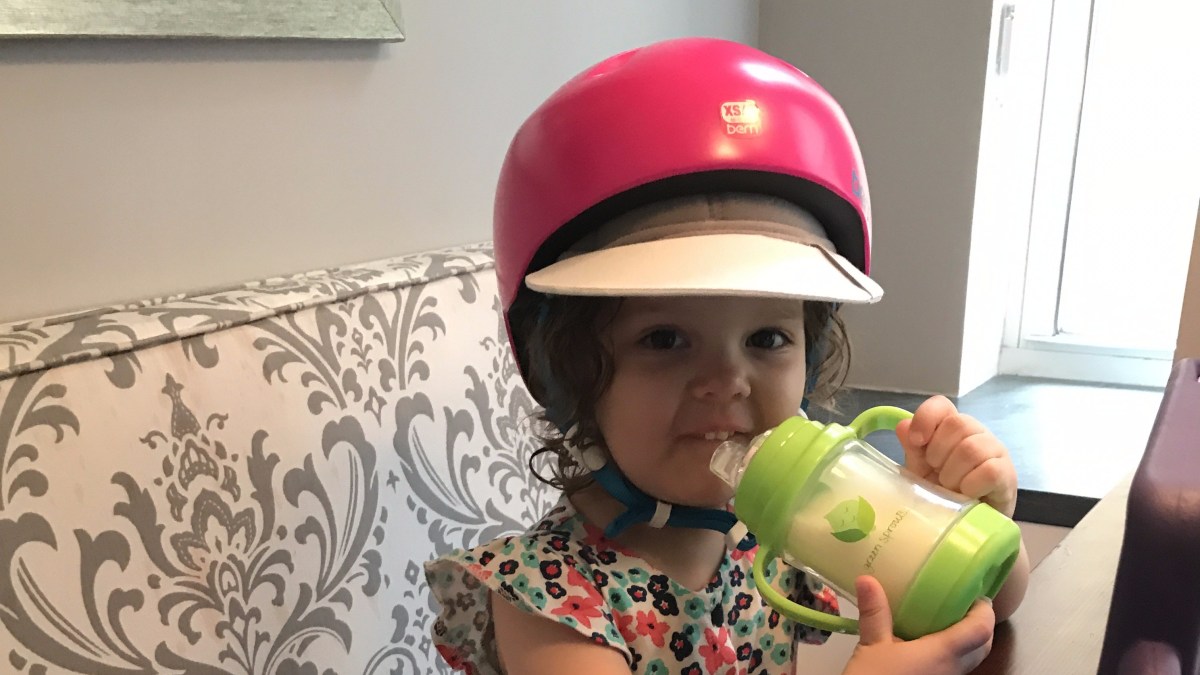
I bought Sonya a Bern Unlimited Jr. helmet from Amazon. I love it so far. The main positive is it has a velcro strap in the back that easily allows us to customize the fit to her head – with the CIs on. I can easily see the CIs blinking on her ears (as the helmet rests a bit further back on her head), and yet the coverage is still very good (with a sun visor no less). Sonya loves the bright pink color and wears it when we are home for fun. Win win!


Today, Sonya talks frequently about her scooter. She points to it proudly and declares “that’s mines!” each time we get out of the elevator to our floor as it sits in our hallway outside of our apartment. Unfortunately, she isn’t yet feeling up to riding it (and we aren’t pushing her to do so). She is a pretty cautious child after all, and a couple of those falls weren’t pretty. That said, I feel better knowing that at least we have a helmet that fits in the event she decides to give it another whirl (that is until she outgrows it…. I guess we have a couple months :).

What to Expect When You’re Expecting A Child With Hearing Loss

Today, more parents are learning that their children have hearing loss earlier than ever before. According to the NIH, about 2 to 3 children of every 1,000  in the United States are born with detectable hearing loss in one or both ears. And more than 90 percent of those cases are born to hearing parents.

For parents like us, who have children born with profound hearing loss, here is what you can expect that first year once they fail their initial hearing screen at the hospital:

Genetic testing: Because Yan and I are both Jewish of Ashkenazi descent, we did a Counysl prenatal screen when I was about 10 weeks pregnant. At the time, it was an annoying inconvenience, but in retrospect, it was the most important test of my life. The test confirmed before Sonya was even born that Yan and I were both carriers of a non-syndromic hearing loss gene (meaning no other symptoms aside from hearing loss) called Connexin 26. It was devastating news to receive while pregnant (I discuss receiving the call from our doctor here), but it gave us the information we needed to move forward quickly once Sonya was born and had failed her hearing screen.

In addition to us taking the Counsyl test, Sonya also received genetic testing when she was 14 days old to confirm the cause of hearing loss. This was not an easy time to say the least, but I am grateful we accomplished it so early.

Auditory Brainstem Response (ABR): A more sophisticated way to diagnose hearing loss conducted by an audiologist. For an infant, this is a long – but painless test – which measures the reaction of your child’s auditory nerves to sound. It is safe and it does not hurt your child. For babies younger than six months, it is done while he or she naps. Sonya did an ABR test twice when she was about two weeks old. 

At this point, Sonya was diagnosed as deaf. We received loner hearing aids immediately from NYU.

Evaluations to determine candidacy for Early Intervention and the Deaf Infant Program: Soon after Sonya failed her ABR, I contacted Early Intervention. The Early Intervention is a state-sponsored program that supports families from birth to three who have disabilities or developmental delays. The first step is for the child to be evaluated. A case worker came to our apartment and asked us basic questions, and at that point determined Sonya would be a candidate for EI services.

The next step took place at the Center for Hearing and Communication in Manhattan. We made the schlep downtown (the first of many) and had her evaluated by speech therapists and audiologists. The process took a few days, but ultimately, it was decided that she was also eligible for the Deaf Infant Program, a privately funded program that provides speech therapy services (and transportation to and from a speech therapy center) for children with profound hearing loss in New York.

Lots and lots of speech therapy: Sonya started speech therapy through Early Intervention and the Deaf Infant Program at three months. This included two to three 60 minute individual speech therapy sessions a week and a group therapy session. She also received her own pair of hearing aids through Early Intervention.

IMG_3122
Speech therapy at approximately six months


Evaluations to determine candidacy for cochlear implants: At four months, we took Sonya to NYU’s Cochlear Implant Center where a team of audiologists and speech pathologists determined after numerous tests and evaluations that Sonya would be a good candidate for cochlear implants. We also met with Dr. Tom Roland, the surgeon, around that time – who gave us a bit more information about what the surgical process.

MRI: While all other evaluations pointed to cochlear implants as having the greatest benefit for Sonya, Dr. Roland required an MRI to be conducted to ensure the anatomy of Sonya’s ears were suitable for the devices. It’s never easy to put your baby under anesthesia, but after two failed attempts at CT Scans, I was game. The MRI gave the doctor a detailed view of Sonya’s ears, and it gave us a glimpse at what the surgery day would be like as it took place at the same hospital and prepped us for what it would be like for Sonya to go under anesthetic.

A few days later, Sonya was cleared for the surgery. We scheduled it for when she was seven months old.

Choosing a device: Many families struggle with the decision as to which device is best for their child. Between Advanced Bionics, Cochlear and MED-EL, the choice is not always clear. We opted for Cochlear because the internal component was the smallest and the newest at the time (2015). That said, I know many families who went with Advanced Bionics and have been very happy with their choice. Ultimately, all of the companies have great reviews and there is no research I am aware of that shows one device has better hearing results than the other.

In addition to the brand, you will also need to choose the color of the processor and coil. Parents usually go by hair color. We went by skin color because Sonya had no hair at the time.

The surgery: See my post on Sonya’s cochlear implant surgery here.

IMG_2395
One day post surgery. Sonya bounced right back! We took off the bandage the next morning.

Activation: Two to three weeks after the surgery, the cochlear implants will be activated. This is the first time your child will hear. Check out my post on Sonya’s activation here – which includes videos of the actual activation of the devices.

As you can see, the timeline is not easy. But then, THEN!! you will have a little one who hears! I am tearing up watching this old video of Sonya who couldn’t yet speak at less than a year, but definitely could hear!

And before you know it, a couple years have passed and she is talking on par or ahead of her hearing peers. Thanks speech therapy!


How to Tell People Your Child Has Hearing Loss (And How to Respond)

We sat around a circle in a colorful nursery school classroom. Our babies in front of us, propped up on pillows. Sonya was only three months old at the time. My breasts throbbed in pain as I had plugged ducts once again – but this was not a breastfeeding support group — as desperately as I wished it were. I can’t help but find the humor in that I just wished I were with a group of strangers talking about my breasts!

No, this was “group therapy” for new parents of babies with various degrees of hearing loss.

“Hi, I’m Missy,” I said, louder than intended. “This is my daughter Sonya. She is three months old. She is profoundly deaf.”

Profoundly deaf. How silly I was. As if the term deaf didn’t already imply profound hearing loss, but I was new to this.

As a new mom to a child with hearing loss, I struggled to describe my child’s condition. While my immediate family knew, Yan and I had yet to tell any friends or distant relatives. My greatest anxiety at the time was how do I tell people Sonya is deaf when I had trouble saying the word “deaf” without falling to pieces?

IMG_1962

We decided to tell people one-by-one, or not at all. This was emotionally very taxing. I didn’t feel it was something I could say by phone, so we just waited until an in-person meeting naturally arose, and then tried to play it casual (which in retrospect, was very very awkward.)

“Yeah, so Sonya is actually deaf.” I told my good friend who had come over for brunch. 

“Oh,” she said. Her face expressionless. 

“Yeah, we were really shocked. But we are looking into her getting cochlear implants, which are really amazing.” My eyes filled with tears but I grinned through it. 

“Yeah – she won’t even be deaf then.” 

The conversation moved on. And I was devastated by how cavalier my friend’s response was to our situation. But the fact was, I had put her on the spot. She had no idea how to react (how could she?) In another instance, we had the opposite reaction.

“Sonya can’t hear.” Yan told his friend. “She has a genetic mutation. It’s pretty interesting actually, she will probably get cochlear implants.”

“I’m so sorry. I just can’t get over the irony,” his friend replied. “Two people who love music so much….”

It was kinda like he had twisted the knife. But we just smiled politely and moved on.

Now, these were just a couple terrible responses. We also received many very kind and warm and empathetic words of support, which I hold dear to this day. I wanted to relay the above experiences because a friend of mine took the opposite approach when informing friends of her child’s hearing loss.

She simply sent a mass email.

Her email was short, optimistic, honest and explicit. She didn’t delve into her heartache or fear, but she she also didn’t pretend all was hunky dory. Rather, she let her friends and family know that while her child is doing very well and is a great joy to their lives, they were born with profound hearing loss.

I think sending an email is wonderful solution. I came up with the below template in case it is helpful for parents out there.

Dear family and friends. 

Sonya is a very special baby, and the birth announcement can’t possibly say it all. We feel so lucky and blessed to be her parents. Sonya was born with profound hearing loss. We want to give you time to adjust to the news so you won’t feel the need to have an immediate response. We would love for you to meet her. She is intelligent, beautiful, bubbly and full of curiosity. We are very optimistic for her future as she is a likely recipient for cochlear implants, which will afford her the ability to hear most everything. We are still gathering information, but will keep you apprised. Please don’t hesitate to reach out.

Love, Missy and Yan

And for those out there receiving the news that your friend’s child has hearing loss, here are some tips on what to say and what not to say:

What Not to Say 

“I’m sorry” Any statement that contains pity was not pleasant to receive and didn’t convey the feelings I had about my child at all. I felt blessed from the moment Sonya was born.

“It could be worse” statements felt like the challenges we were only starting to understand were being minimized.

“I think this happened to you because you can handle it.” or “God gives special children special parents.” Implies that my child’s situation is so awful only I would love and care for her. Also, trying to explain to a parent why God did something is rarely helpful.

What to Say

I think congratulating the new parents is the most important thing you can say – because they deserve to be congratulated.

Offer to help. If you know of someone who has cochlear implants already, offer to connect them. We were taking Sonya to multiple appointments a day for months after her birth – so meals, offering to babysit, etc. are great ways to respond.

“She looks just like you.” I loved it when people complimented Sonya’s looks or behavior. Still do 🙂

Acknowledge the grief the parents are feeling. “I know I can’t take the pain away, but I wish I could.” Or, “There will be challenges but the love and joy will be so intense you will not be able to imagine your life without this little girl!”


Do you have other ideas on how to discuss hearing loss that worked for you? I would love to hear about them!