We are STILL Failing at Sleep Training and Eating is a Disaster

steword

In the age of social media (not to mention the many play dates we attend), it is impossible not to compare yourself to your seemingly perfect peers. A year-and-a-half after Sonya’s cochlear implant surgery, she is doing wonderfully. She speaks in complete sentences. She is a leader in her mainstream twos program. She is learning and speaking Russian.

Yet, I sometimes feel like I am failing her.

For one, I can’t seem to properly sleep train her. I have read the books. I have hired the professionals. I purchased the night lights and lullaby machines. Yet, Sonya still cries for me to lay next to her while she falls asleep – and as hard as I try – I have yet to succeed from weaning her from my presence.

At night, Sonya does not wear her cochlear implant (CIs) processors. She is deaf. This has been the challenge – and I have yet to encounter a sleep training guide, professional or friend who has a good solution for it.
img_2959

When Sonya cries for me, I find the sound unbearable. The sleep training books say she is using tears to manipulate us, but all I hear is her fear. It is dark, silent and she is alone. Who wouldn’t be afraid in that type of situation?

When the books tell me to offer comfort by the sound of my voice, I sigh in frustration. As soon as I give up, I lay back in her bed. Her breath shaking from crying eases and she smiles while closing her eyes. “I love you mama. I love you so much,” she says as she lays her arm around my neck.

Eating is another challenge. Sonya is a “stubborn” eater. She basically subsists on a diet of challah, ricotta and pasta, protein pretzels, berries, cheese and milk. Behavioral methods to improve the diversity of her food intake haven’t worked yet. We were chastised for allowing her to have an iPad at dinner, but the fact is – the iPad worked. It kept her distracted and she would eat a broader array of foods. Without it, she grows frustrated at the sight of foods she doesn’t think she will like and takes her CIs off.

While it is hard to convey these challenges to friends of hearing kids, I try to remember that every child has their challenges – whether deaf or hearing. Every parent probably feels the way I feel to a degree.

In happier news, here is a video of Sonya taken just a few days ago. She is speaking non-stop these days. We couldn’t be prouder of her progress:
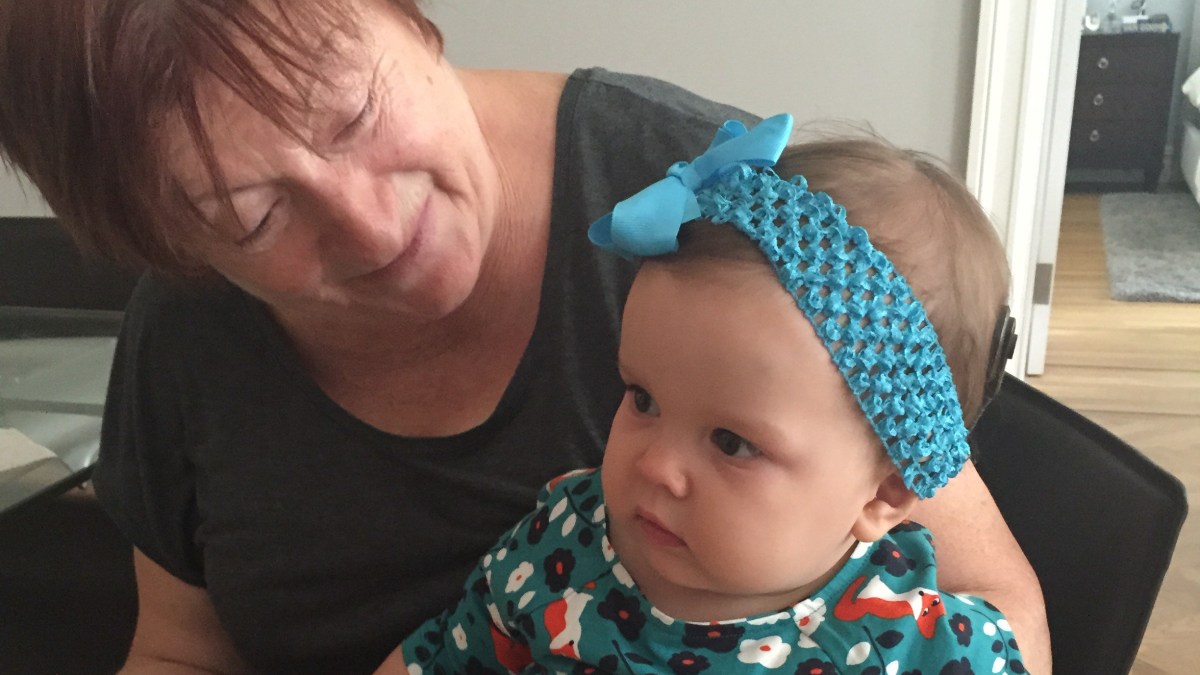
Здравствуйте Sonya!

When Sonya was two weeks old, we hired Nina. We feel extremely lucky to have found her. Nina hails from Ukraine, but has lived in the US for more than fifteen years. She recently became a US citizen! She speaks English, Russian and Ukrainian. In her past life, she was a veterinarian. Nina is a loving nanny and Sonya absolutely adores her (as do we).

Nina speaks to Sonya exclusively in Russian. Sonya understands Russian well, but is just now starting to speak it.

Historically, speech therapists recommended against teaching children with hearing loss more than one language. The fear was that learning a second language could interfere with the mastery of the majority language and further delay speech. Our speech therapists, however, disagree with this concern. They believe that as long as we are consistent in our approach with Sonya, regardless of language, she should be able to learn Russian alongside English.

Nina regularly comes to Sonya’s speech therapy sessions. In the early days, I didn’t bring her, but realized quickly how important it was for Nina to understand the strategies we were using so that she could implement them at home, and that we are consistent in how we speak with Sonya, regardless of language.

When Nina and Sonya play, Nina narrates everything they do. It is something I try to do, but struggle with, as I am naturally an introvert. Nina repeats the same word over and over, “na, na, na!” (take, take, take!”) or “die, die, die!” (give, give, give). “Maladietz” (good girl). Nina also brings Sonya amazing gifts like a Russian cow that sings “ochie chornia” a traditional Russian song.

We also encourage our Russian-speaking relatives to communicate with Sonya in Russian. When Sonya is with a Russian speaker, she is encouraged not to respond in English. For example, when Nina asks her a question in Russian and Sonya responds with a “yep!” Nina says (in Russian of course) “Do not say ‘yep’ say ‘da’.” Sonya now responds to Russian with Russian.

sonya-and-nina-2

sonya-and-nina

I realize it is pretty extraordinary that someone like Sonya, born with profound hearing loss, might someday (hopefully) be bilingual. But, there is also a chance it won’t happen. As Sonya gets older, we will continue to review how Russian is influencing her ability to acquire English. Given that she has been receiving oral/auditory therapy since she was just a couple months old, we hope she will be able to take on the differences in pitch, sound contrasts and intonation necessary to acquire a second language. That said, one never knows. Some people are just better at learning languages than others, and we will have to adjust our expectations accordingly.

In other news:

Every three months, Sonya has a mapping. A mapping is the process by which Sonya’s audiologist determines the amount of electrical stimulation each electrode delivers to the auditory nerve. Here is a link to her first mapping – when the cochlear implants were first activated. Her latest mapping took place last week at NYU’s Cochlear Implant Center . We noticed later that day, however, that she was having difficulty replicating certain sounds – specifically the “mmm” sound and the “ooo” sound.  I took the below video last night of her trying to repeat these sounds. We will be going in for another mapping tomorrow, to readjust the electrodes so that she properly hears these sounds. Never a dull moment!

How to Connect Cochlear Implant Processors (N6) to an iPhone or iPad

Continue reading “How to Connect Cochlear Implant Processors (N6) to an iPhone or iPad”

How to Connect Cochlear Implant Processors to an iPhone or iPad

In a few weeks, we will head to Italy for vacation. We spent some time on the Amalfi Coast last summer, and we have since decided that Italy is a perfect destination. Beautiful culture, delicious food and lovely people. The only downside is that we have to get there. Ten hours on a plane is not easy for anyone, but for a child with cochlear implants, the background noise makes it nearly impossible to hear anything. Thankfully, we learned that Cochlear’s Mini Mic is a wonderful solution.

We wear the Mini Mic while traveling, which allows Sonya to hear our voice over the loud background noises of the airport and airplane. We also connect it to her iPad so that she can hear her videos – similar to wearing headphones. In this post, I’ll walk you through how to connect the Mini Mic to an iPad or iPhone so that your child can listen to a video similar to wearing headphones.

What you need:

Mini Mic

IMG_2490

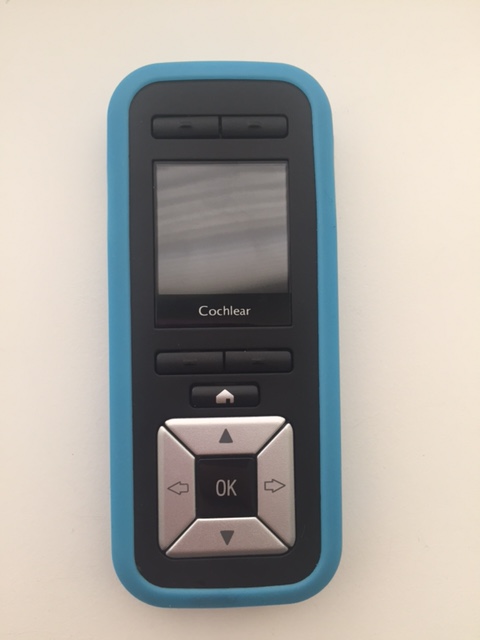
Remote

IMG_2491

Double-sided Headphone Jack Cord (not sure what the official name is but this is what it looks like):

IMG_2489


And your child’s processors and iPad. So here is everything:

IMG_2494

Step 1: Pair your Mini Mic to the Processors and to the Remote. Cochlear has step by step instructions on how to do that here.

Step 2: Turn on the Mini Mic. The switch is on its side. A green light will flash on its top to show it is working.

Step 3: Connect the Mini Mic to the iPad using the double sided headphone jack cord. Just plug it into the bottom of the Mini Mic and to the headphone jack of the iPad or iPhone.

Step 4: Change the Settings on the Remote to “Stream” From the home screen, push the right arrow until you come to the “Stream” screen. You should see Mini Mic as an option if you paired it correctly. Just push the down arrow and select Mini Mic.

It typically takes a moment for the processors to connect. You will see they are connected because when the iPad or iPhone video is playing, blue lights (rather than green) will flicker on the front ends of the processors.

That’s it. So (relatively) easy. And it will get easier with practice. Feel free to let me know if you have any questions!


Big Leaps

IMG_2390

Since my last update, Sonya has made a tremendous leap. Now 21 months, her speech is becoming clearer. She is saying more complex sentences. She is starting to use pronouns. There is still much work to do, but the difference in the past couple of weeks is remarkable.

One of my favorite developments is that Sonya loves to sing! She invents her own “songs,” and loves to sing them:

In addition to singing, Sonya is putting endings on words. For example, “duh” has become “duck,” “hah” is now “hat” and “fee” is “feet.”

Her favorite words are “outside” (which sounds more like “owfide”) and “yuck.” She combines words now and has started to incorporate pronouns into her sentences. While her speech has improved tremendously, her eating habits remain very limited. Any new food I offer usually is looked at with a scowl followed by a very stubborn “yuck!”

Sonya now describes big things as “big” and small things as “baby.” “Big pooper!” she says when she wants to be changed. She refers to herself as “baby” and points to her chest, which I have learned means she wants to do something by herself. When I try to get her shoes on, she resists, points to her chest and shouts “baby!” She hasn’t mastered getting shoes on yet, but her growing independence is both fun and frustrating to watch.

While speech has progressed, Sonya has struggled lately in terms of her sleep and clinginess. Naps are dwindling. I am lucky if she goes down at all these days. She wants me to “si dow!” (sit down) next to her while she falls asleep, and it is very difficult to leave the room (although I do force myself to). I recently noticed that when she wears her CIs outside, she will jump at the sight of strangers (perhaps anticipating a sound she isn’t sure about?) and sounds in the distance including sirens or helicopters. Upon hearing such sounds, she will cling to my legs, look up at me, raise her arms and say, “up mama!”

I have noticed when she does refuse the CIs, her independent nature returns. Rather than cling, Sonya will run ahead of me testing her limits by putting distance between us. I informed our speech therapists and audiologists of this development and we have Sonya scheduled for a mapping adjustment next week. In the following video, Sonya’s new pink sunglasses were a hit, but she wouldn’t wear the CIs. As you can hear, we are dealing with quite a bit of background noise in New York City, which I imagine is a factor.

Last week, while preparing Sonya’s breakfast, she came up to me, hugged my leg and looked up at me sweetly. “I wuv you mama!” she said, unsolicited. At that moment, I thought about all of the people who have helped her say that simple beautiful sentence. From the audiologist who diagnosed her as deaf and encouraged us to get CIs, to her passionate speech therapists at the Center for Hearing and Communication, her incredible surgeon Dr. Tom Roland, and our families who have supported all of us. I am so thankful to all of these people. She couldn’t have said it without them.


The Fear of an Ear Infection

IMG_2095
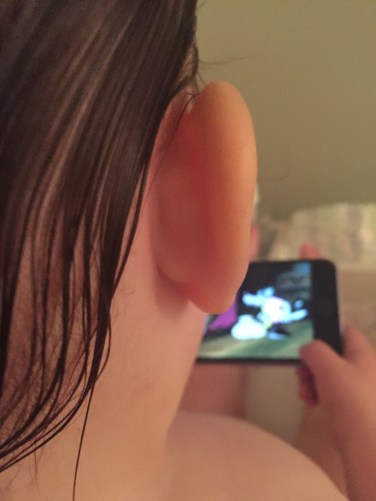
Sonya’s right ear, which had developed an infection at the mastoid

A couple weeks ago, Sonya developed an ear infection. It may have started on the way home from our vacation. As the plane descended, Sonya screamed in pain. “Ee-ya!” she said, pointing to her right ear. She seemed fine once we landed, however. I didn’t think much of it.

A week later, Sonya had developed dark red circles under her eyes. They looked irritated, so I tried to use a warm compress on them a few times a day. It didn’t help. A day later, Sonya developed red dots across her cheeks and neck. She would hold her ear and cry “ee-ya, ee-ya!”

The pediatrician saw redness in her ear, but nothing more. It was only in the ear canal, so he gave us Cefdenir, an antibiotic, and drops. I felt relief knowing that we had caught the infection early.

The next morning, as Sonya played in her room, I noticed her right ear was sticking straight out of her head. The infection had spread. I immediately called her pediatrician’s office. A nurse told me to contact Sonya’s surgeon.

While ear infections are one of the most common ailments among young children, kids with cochlear implants are at higher risk for complications. Major infections may have serious consequences, as infections in the ear can (in rare cases) move to the surgical site. While rare, such infections occur more frequently in pediatric patients according to a recent study.

Sonya’s ear infection had spread to her mastoid, which is the back part of the temporal bone. By the time our surgeon looked at it, gunk was coming out of her ear. Thankfully, the surgeon changed her prescription to Augmentin, which is a more comprehensive blend of antibiotics. Within a week, the ear was back to normal.

IMG_2115
Sonya’s right ear, a few days later. Still sticking out but not red.

Today, Sonya is doing great, and the infection seems to have cleared completely. That said, the experience helped me realize that while Sonya may seem like any other kid, she unfortunately, is more prone to complications arising from infection and if we are not vigilant, things can go south quickly. It was very frightening how quickly what seemed to be a mild ear infection moved to her surgical site.

From this experience, I plan to purchase an otoscope. While I can’t diagnose an ear infection, I can at least see what a healthy ear looks like and it will give me piece of mind to be able to see into Sonya’s ear when needed.

Update: We recently visited Sonya’s surgeon. He suggested that Sonya get her Pneumovax 23 vaccine before our trip to Europe  at the end of the summer. This vaccine is typically given to kids with CIs around their second birthday, but he didn’t see a downside with her getting it a month earlier. Our pediatrician agreed. As for the otoscope, Sonya’s surgeon did not recommend one. He said that we could actually do more damage to Sonya’s ear by probing too far in by accident.

Peppa Pig Saves the Day

IMG_1946

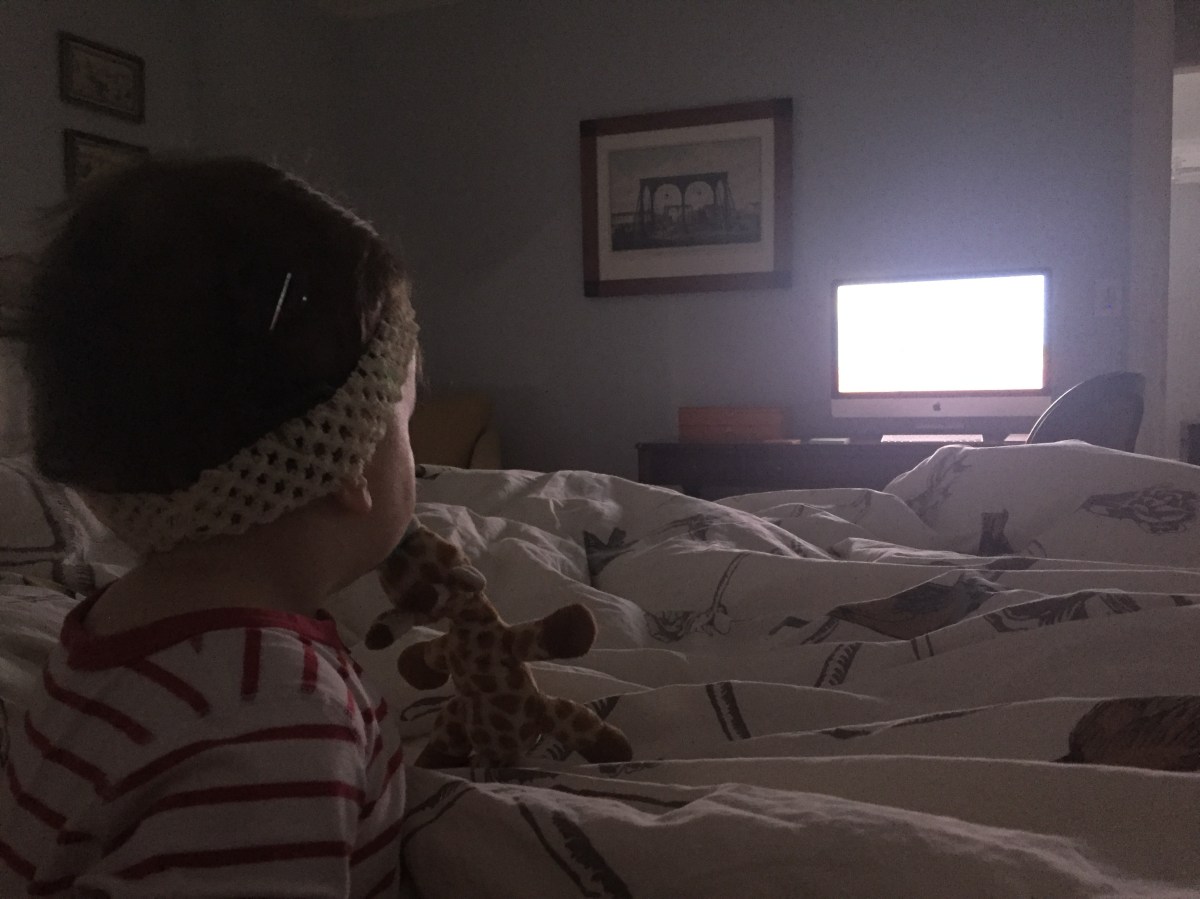
For weeks we struggled with Sonya’s persistent desire to remove her CIs. Nothing seemed to work. Nothing, that is, until in desperation we turned on our computer and let her watch Peppa Pig on YouTube. Sonya was immediately transfixed. Maybe it was the bright colors, the cheeky anthropomorphic animals, or the simple drawings. It might have had to do with the fact that one of Sonya’s first toys was a stuffed Peppa Pig doll. Whatever it was, Sonya wanted to hear this show. She pointed to her ears and sat still so that I could put her processors behind them.

This approach has worked 100 percent of the time. Even better is the fact that she is taking her processors off less often.

Our speech therapists have rallied behind this development. We incorporate Peppa and her family into speech therapy. Using a Melissa & Doug Wooden Doorbell House, we place a member of Peppa’s family inside each of the four doors. From there, Sonya must say “Hi Peppa Pig” or “Hi Mummy Pig,” etc.

Though I am happy we found a solution, I was initially disappointed to find that videos were the key to keeping Sonya’s processors on. I felt like in some way I had failed her. That I was taking the easy way out. I didn’t even want to admit to it on this blog. I worry that I may have opened Pandora’s Box. Perhaps Sonya will realize that I have no Plan B and will simply take her CIs off whenever she is in the mood to just zone out and watch TV.

While we are not a family that has forbidden screen time, we have tried to limit it. We allow Sonya to watch TV for about 15 minutes in the morning before breakfast and when we are driving to therapy and back. I am trying to phase out mindless videos and focus on interactive iPad games such as Daniel Tiger, Peek-a-Boo Barn, Toddler JukeBox, and My Very Hungry Caterpillar instead. I think that most everything in moderation is okay, and that some screen time that serves a purpose is okay.

But I have decided to be less harsh on myself. I’ll cross the above bridge if/when I get to it. For now, the importance of her being connected to the world of sound outweighs the potential negative side-effects. Including the fact that the theme songs to Peppa Pig seems to be burned in my brain.

On the other hand, how adorable would it be if Sonya learned to speak with a British accent?!

The Sound and the Fury

IMG_1162
Now a toddler, Sonya has her own opinions on whether or not she wants to hear the world.

I remember when I first took Sonya to group therapy at the Center of Hearing and Communication. All of the parents seemed to share one concern: how to keep their child’s hearing aids on their heads. It was a problem we faced as well. At the time, Sonya was only a few months old. As long as we came up with a solution, be it double sided tape, headbands or hats, Sonya would wear her hearing aids and later, CIs without complaint. I remember the frustration I felt at that time. That it would never be this hard. I was so naive then….

These days, keeping Sonya’s CIs on her head is a constant battle. Now in toddlerhood at 17 months, Sonya realizes she holds tremendous power. If she doesn’t like carrots, she can make it clear by throwing them off of her high chair, along with her CIs. If she wants milk from a bottle instead of a cup (another battle we are simultaneously fighting) she can remove her CIs until she gets her way.

This change seemed to happen overnight. A month ago, she would point to her CIs anytime the coil came off her head (leaving her without sound), to ensure that I corrected the issue promptly. She was connected to the hearing world, and she seemed to prefer it to the quiet.

Last week, however, during our gym class, Sonya decided she didn’t want to hear the world around her anymore, and she threw her CIs to the ground and had a full-on tantrum. It was (I hate to say) embarrassing, worrisome and scary for me to watch. Embarrassing because I felt like other moms may have been judging. I worry about the fact that perhaps some day, Sonya will prefer this world. And that thought is frightening. In the clip below, I am observing Sonya playing with bubbles at the end of her gym class. While I sound happy, I am feeling very discouraged. Sonya, now calm – but without sound – looks so into her own world here…

As Sonya becomes more aware of the world around her, I imagine it can be quite overwhelming at times. Perhaps the sounds of the world can feel to be too much, and since she has the ability to simply turn it off, she may choose to do so. When this happens, I feel there is little I can do. If she turns her back to me, I can’t communicate with her (Sonya reads lips, and knows a few simple baby signs). It is a powerless feeling.

I have surveyed other moms in this predicament, and their responses have been mixed. They include:

Completely ignore the behavior. When Sonya takes her CIs off, I try not to react. She seeks a reaction. However, ignoring her behavior does not get her to put them back on. Further, Sonya is inclined to try to get into mischief when not wearing the CIs. Frankly, it is impossible/dangerous to ignore a 17 month old…Perhaps it would work if she were older.

Engage the child in a way so that she wants to wear her CIs again. For example, read a book, or do an interactive game on the iPad. This sometimes works for us. If I give Sonya my iPhone and put on Masha and the Bear (her favorite show) – she will sometimes allow me to put the CIs back on. It’s not an ideal solution, since I can see this getting out of control pretty quickly.

Prevent the child from participating in an activity they enjoy until they put the CIs back on. For example, if the child doesn’t want to wear the CIs in the pool, keep her out of the pool and make her watch the other children until she agrees to put them back on. I have heard from several moms that this technique is effective. However, it is too strict for me. I don’t want to force Sonya to feel left out because she has CIs.

Praise the child when she allows you to put them back on, and do so throughout the day. It is hard to say whether this strategy is effective, but it makes me feel good – and hopefully makes Sonya feel good too. I can tell that she loves to please us. As soon as we put the CIs back on her head, we give her a hug and kiss and tell her she is doing a great job.

Within this strategy, some suggestions include:

  • Give the child a sticker or a treat every time they allow you to put the CIs back on. For us, praise itself seems to be the strongest motivator – although I realize that could change soon.
  • Praise the child indirectly, by letting them overhear you talking about them positively. I try to compliment Sonya indirectly by telling my husband what a great job Sonya is doing by wearing her CIs, while she is in the room. I can tell Sonya knows when we are talking about her.

I realize this list is short. Unfortunately, I don’t have a solution, yet. If I come across a foolproof technique, I’ll be sure to let you know.


Sonya Gets Stitches

img_1058.jpg

Sonya recently discovered a new game. It’s one she tends to play when frustrated or tired. She will look at me mischievously, then will pull off her CIs and (while smiling) drop or throw them on the floor. As soon as she sees me get up to put them back on her head, that’s her cue to take off running and laughing hysterically.

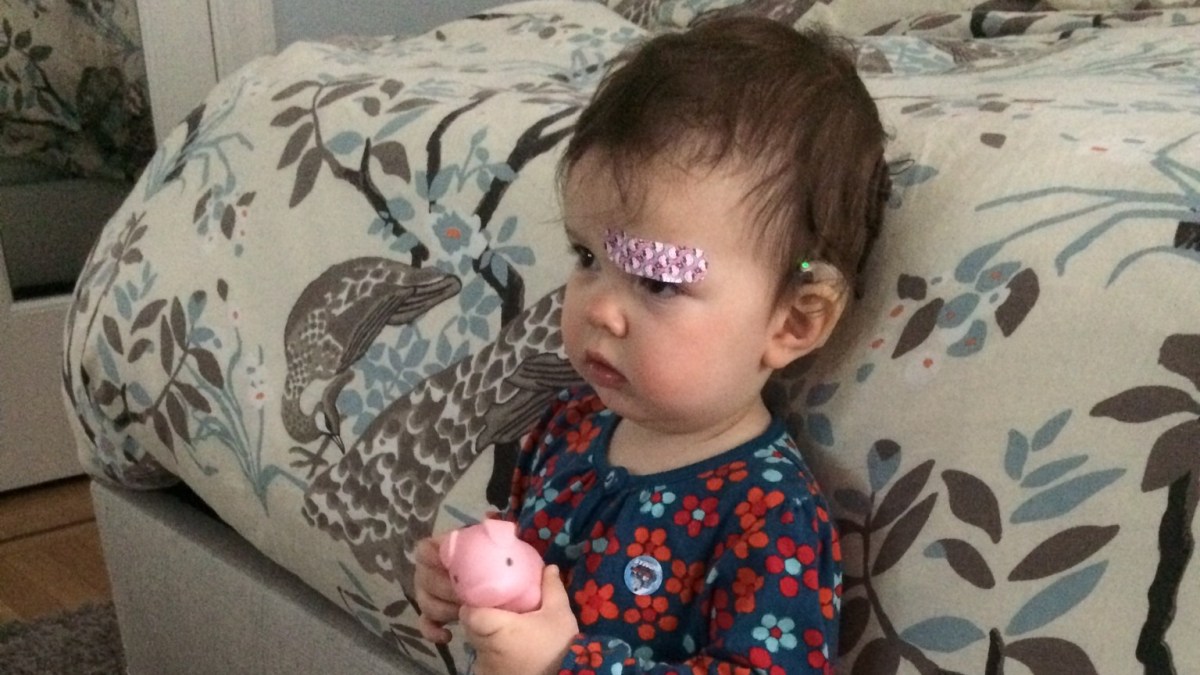
Unfortunately, on Tuesday, Sonya ran full speed into our radiator, face first. I don’t think I will ever be able to erase the sound of her little head hitting the wooden radiator cover from my memory, nor the guilt I feel that I could have prevented it.

I wasn’t sure how severe the wound was. She was crying like crazy, but calmed after a few minutes. I didn’t see much blood either. Just a cut that ran an inch length-wise above her eye, crossing her eyebrow diagonally.

I immediately FaceTimed my dad, a physician, who told me to call our pediatrician’s office. They told me to come by right away so that Sonya’s doctor could take a look, and we were there 10 minutes later.

By the time we got there, the bleeding had picked up speed. It was now running down her little cheek. Gotta love our pediatrician who, when entering the examination room to see me in shock and Sonya bleeding, asked calmly, “So, how has your day been?”

“Horrible!” I cried.

After cleaning and examining the wound, he referred us to a plastic surgeon on the Upper East Side – who he said would be able to stitch the wound without impacting the shape of her eyebrow.

I had no idea what was in store. Watching Sonya get stitches was one of the top three (if not the) worst moment of my life so far. Since she is so little, they decided not to sedate her, rather give her local anesthetic – which needed to be injected by needle to the affected site. Sonya screamed in pain. Once the pain relievers went into effect, Sonya still felt the tension of the surgery, so she continued to scream and cry “Mama!” and “Dada!” I meanwhile, tried to hold her down with the help of another nurse to make sure the doctor was able to do his job. Several internal stitches and seven external stitches later, we were done. Sonya got her Thomas the Tank Engine stickers and we went home.

Sonya fell asleep in the Uber back to our apartment, and stayed asleep for a couple hours that afternoon. It wasn’t until she was in her crib asleep that the events of the day hit me, and I am still recovering. Sonya meanwhile, seems to be doing okay with her wound. She points at it from time to time, and says something that sounds like “bobo.” Today, I put a band-aid on her baby doll’s head, and told her that in one week, it would be all better – which is when we will go back to the surgeon to remove the stitches.

So it seems, that Sonya will need to go back to wearing headbands. Hopefully, they prevent her from removing her CIs and taking off like a mad person. I am also further baby-proofing our apartment…Would love to hear any other ideas on how parents kept baby’s CIs on during this toddler phase.


Suffering from Music Loss

This post follows an earlier post On Music in which I discuss how we are approaching music education for Sonya.

IMG_1378
Sonya points to her ears when she hears Yan practice piano. “Ee!” she says, meaning “I hear it!”

This afternoon as Sonya napped, I did something I hadn’t done in a long while, I listened to music for fun. As Radiohead’s Separator played, I concentrated on the first dense and complicated beat, which in its second half drops into a gorgeous guitar melody. It’s impossible to describe. I want you to listen to it. It suddenly hit me that Sonya may never love it as I do.* It might not be something I can share with her when she is older and it pains me to think that.

Music used to play an enormous role in my life. My dad plays the piano and guitar. To avoid having to clean up after dinner as a kid, I would sit in the rocking chair in our living room and listen to him play. I wanted to be like him so I took up the instrument too, and then, in high school, the guitar. In college, I continued to study classical piano, folk music, pop, alternative rock and (a bit embarrassed as I write this) underground/old school hip hop.

When I want to reminisce about the time I spent in France, I listen to Liszt’s Sonata in B Minor and De La Soul’s Three Feet High and Rising album. Scenes of my early days in New York City are forever coupled with the music of Bob Dylan, Rakim and Horowitz – playing Scriabin. For most of my life, I fell asleep and woke up to music.

This changed once I knew Sonya was deaf. When we incorporate music into our playtimes, we do so purposefully in order to help Sonya understand how to listen. For example, rather than just enjoy a song in the background, we play the song, dance to it, and then stop the music to help Sonya understand to listen for sound. Months ago, (to my naive delight) Sonya would dance to what I believe was music in her head. Now she knows that she must hear music aloud to dance. She will now point at the computer when she wants to hear it.

We also refrain from having music on in the background, as background noise can make it more difficult for people with hearing loss to perceive speech sounds.

I miss music but I also must remember that I don’t have a crystal ball. We don’t know whether Sonya will appreciate it when she is older. We don’t even know what she is hearing. She may hear the overall theme or rhythm, but she might miss the oftentimes subtle moments that make music so pleasurable.

For now, Sonya certainly appears to love it. Whenever Yan has a moment to practice piano, Sonya runs to living room pointing to her ears and shouting “EE!” her sign for “I hear it!”

*I do realize this might be the case regardless of Sonya’s hearing loss. Yan also hates Radiohead 🙂