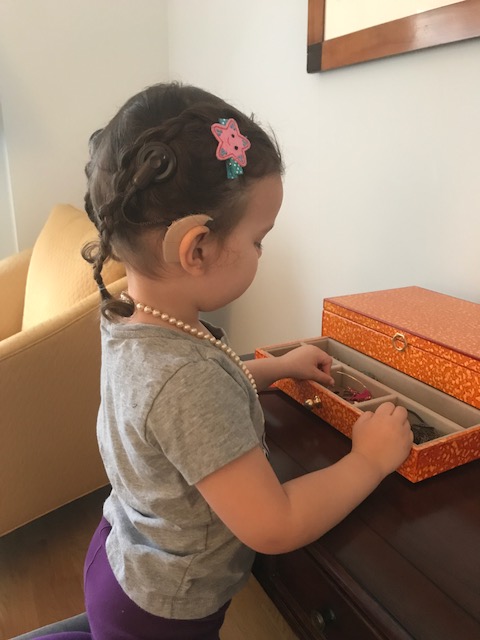
What It’s Like to be 13 and Have Cochlear Implants

13 year old

As a parent of a toddler with profound hearing loss, I often think about what Sonya’s life will be like in ten or twenty years. I recently had the pleasure of connecting with 13-year-old Davis James, who wears a hearing aid and cochlear implant. She was very generous to share her story and experience with me and the world. As a parent of a young child who was also born deaf, her honest responses and wise (beyond her years) perspective brings me so much insight and hope.

Can you discuss your hearing loss? When did you lose your hearing and when did you get implanted?
I was born deaf and I was implanted with a cochlear implant in one ear just before my third birthday. My hearing loss was a big blessing. There are so many new things that cochlear implant users have access to, whereas the hearing world does not.

Really? Like what?
For example, I’m able to listen to music secretly in class and not get in trouble for it. Another hilarious moment was when me and my friends didn’t do our homework for our language arts class. We had to be sent out in the hallway to finish it up and while we did, the teacher forgot to mute the FM unit and I could hear her go through the answers with the rest of the class. Of course, I shared the answers with my friends (although I did confess to the teacher afterward. Honesty is important!)

Another moment (a gross one) was when my teacher went to the bathroom with the FM unit…you definitely don’t wanna learn more about that!!

Haha! That’s so funny and gross!! Do you think you hear differently from your family or friends?
I have no idea how I hear differently. I do listen to music differently. I use a Phonak ComPilot and connect it to my phone with Bluetooth so I can listen to music wirelessly. My friends get so jealous (in a funny way) when I explain it. I was very happy that when I explained it to people, they really listened and understand how it works, really because we’re living in the age of technology.
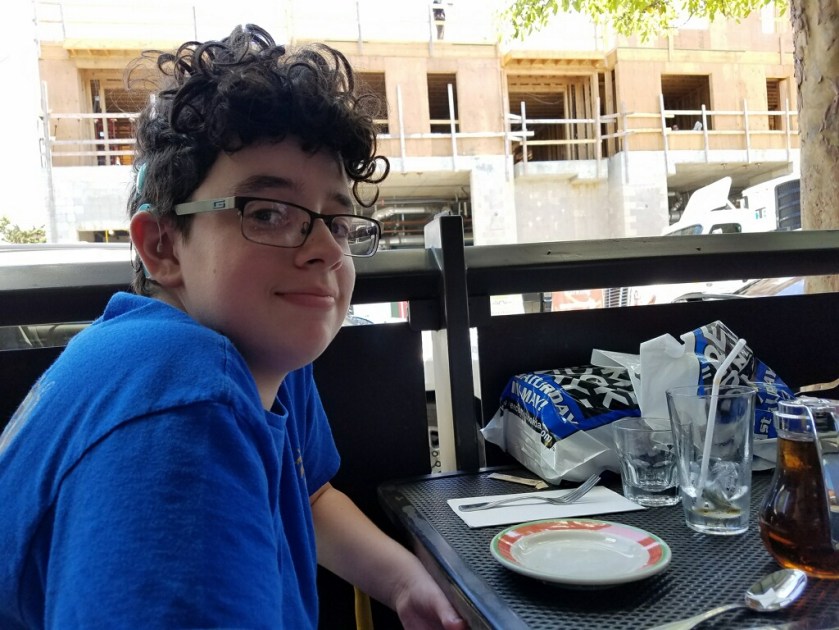
Davis James

What challenges have you faced socially because of the implants (if any)?
I started school in a deaf/hard of hearing school. There I made lots of friends who were just like me. My best friend and I played soccer together (my dad was the coach).

When I was in second grade I transferred to a hearing school. At the mainstream school, I had to learn how to be friends with hearing people, and they had to learn what it’s like to be deaf and what I needed. Not being able to hear without the cochlear implants was equally epic and sometimes saddening (inability to understand, etc.) Socially I have faced problems as a result. A lot of times, I can’t comprehend what other people say in daily conversations. It tires me to have to turn up my hearing aid’s volume because whenever I turn it up, everything is louder. Restaurants and crowded places are the worst places to socialize. I can barely hear what other people say in conversations.

For real, I absolutely despise it when I can’t understand people unless they look at me (it’s easier when I can read their lips and listen at the same time). The bigger part of that was when I have to remind them. It is tiring! When people say things like “never mind” I feel ashamed for not being able to understand.

There are other challenging aspects, but the thing is, everyone has challenges. We learn to get through it despite our disabilities.

Do people treat you differently because of your CI and hearing aid?
I haven’t noticed so. It took me a long time to learn how to advocate for myself, though. I finally learned the day my hearing aid stopped working with the other Phonak products (like the FM system) and I had difficulty learning. I knew advocating for myself was the right path and as I progressed, I became a better advocate for myself and others.

How do you advocate for yourself?
I position myself in the classroom to optimize my hearing. I speak up when I don’t follow the discussion.

Do you do sign?
Before I was implanted I knew some sign and I learned a bit as I got older. Since the second grade, I haven’t done much signing as I have learned to communicate with hearing people.

“There are other challenging aspects, but the thing is, everyone has challenges. We learn to get through it despite our disabilities.” – Davis James, 13 

What is your favorite activity outside of school?
I played soccer for eight years, but quit when I started sixth grade because I wanted to focus on other interests. Right now, my favorite thing to do outside of school is definitely to play video games like Overwatch or Fortnite Battle Royale.

What’s your favorite subject?
Science and art.

Can you describe how you care for your CIs and hearing aid?
I care for my CIs as if they were an extension of myself. It’s pretty hilarious, I sometimes forget I am deaf because my CI is almost unnoticeable to myself. It was easy to get into the habit of taking it off, plugging in the batteries when I go to bed and taking them off for the shower. I also see an audiologist annually. I graduated from speech therapy in fourth grade since I was progressing very well.

Thank you, Davis so very much for sharing your story!! You inspire me and you are such a wonderful role model for our children!!  

P.s. if you are interested in how a CI sounds to someone who lost their hearing later in life, check out our prior post: How Does a Cochlear Implant Sound vs Normal Hearing? Barb Cole Shares Her Perspective
Cute Hairstyles for Cochlear Implants

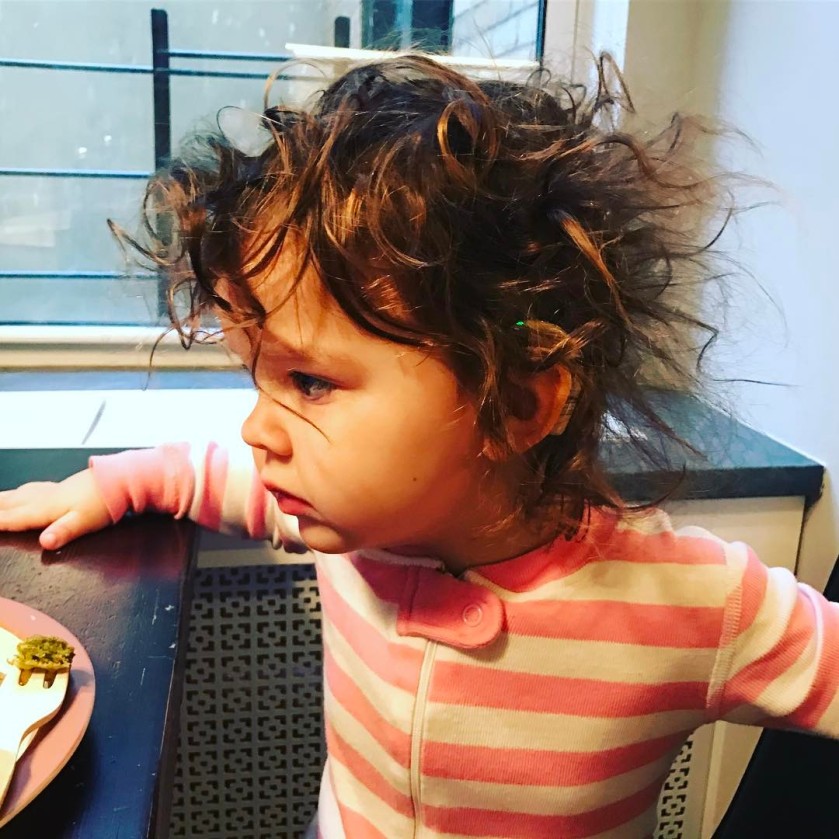
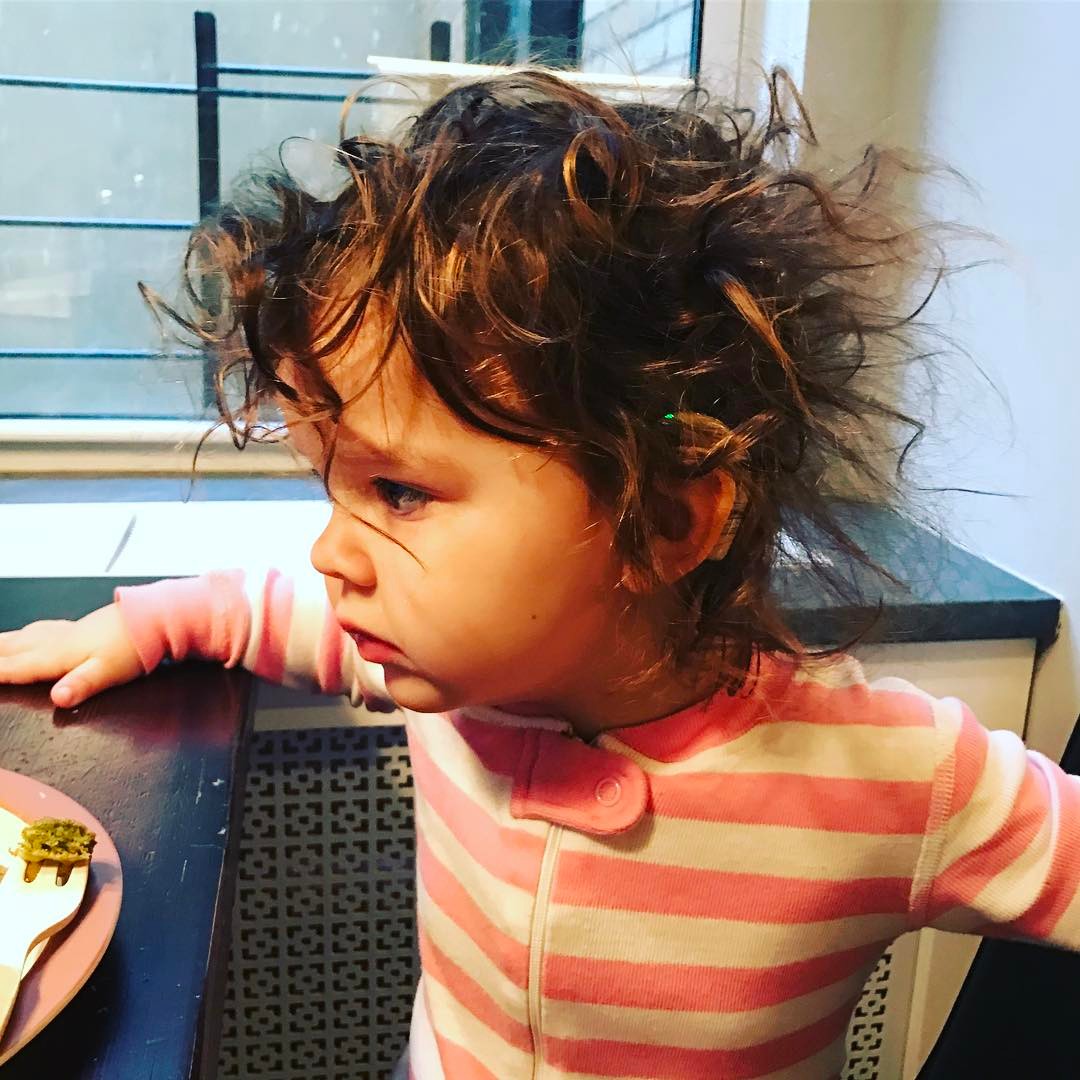
When Sonya was born, my mother-in-law jokingly told me that we should shave her hair at some point to ensure it grew back thick. It’s a Russian tradition, apparently. We didn’t follow her advice, but at three, Sonya’s hair is curly and a bit wild (just like her).

14504736_745434845609300_3083371229550215168_n(1)

As you can probably imagine, I struggle to tame her locks every morning and given time constraints we usually go one of two routes: A top knot or pig tails:

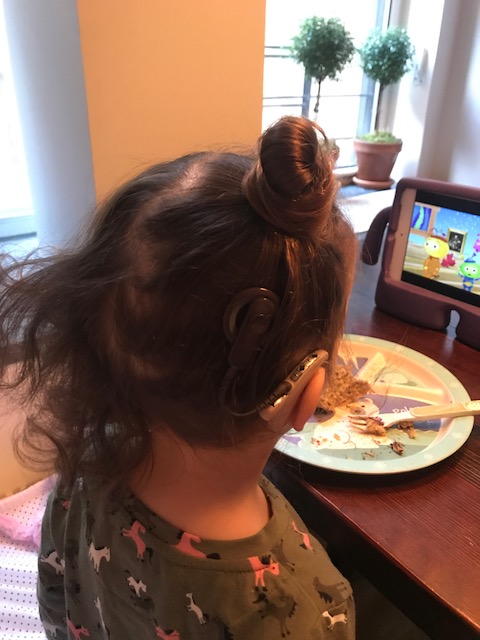
I am especially fond of the pig tails because they enable me to do her hair while she wears at least one processor. Top of head placement (and wrapping the hair around into a little bun) seems to work best as her hair doesn’t interfere with the placement of her coils about two inches above her ears.

IMG_4254
We succumb to bribing Sonya with her favorite TV show Creative Galaxy, so that she allows me to comb through her tangled curls in a somewhat timely manner.

I would love to try new hairstyles for Sonya, however. Here are some ideas I love, which I think could work with her cochlear implants.

a) BANGS. I would love her to sport bangs, but her hair might not be straight or thick enough. Plus, I recently did this to myself only for her to ask me “Mom, why did you do that to your hair!?”

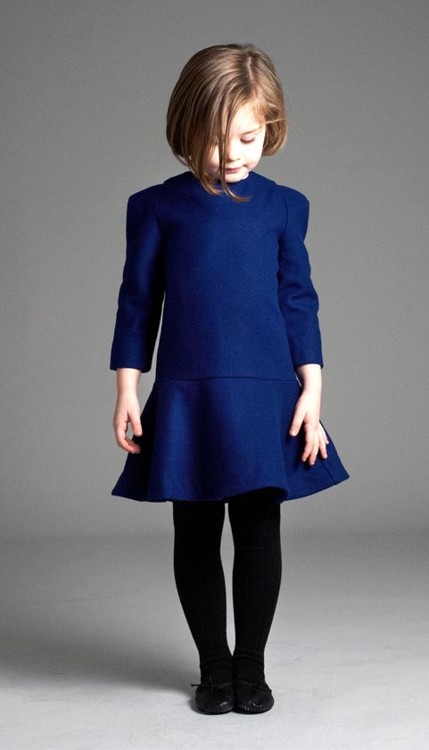
b) BOB. Again, not sure Sonya’s hair would lend itself to this style, but a baby with a bob is just so sweet.

bob

c) BANGS IN ELASTIC + PIG TAILS. This is so cute and easy looking, and I think would work!

cute.jpg

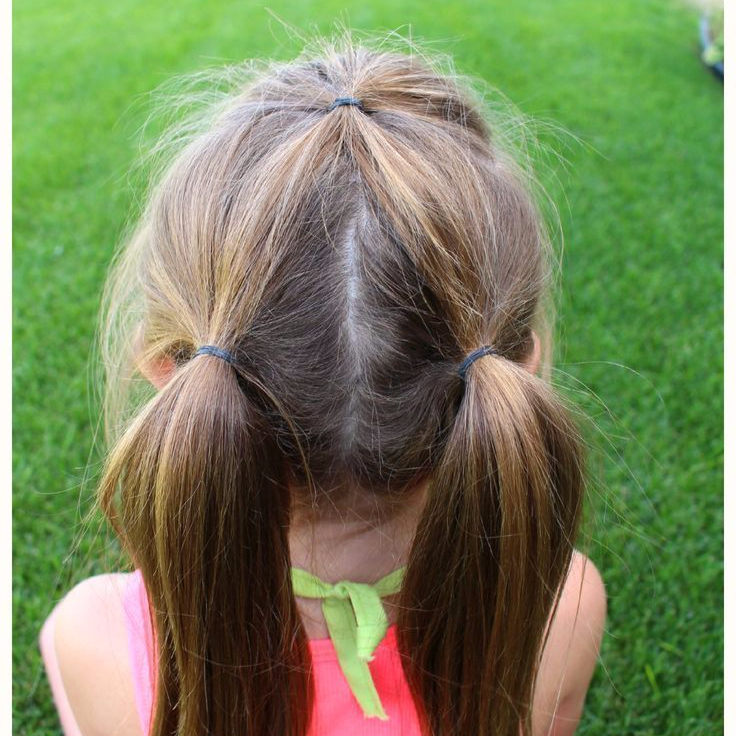
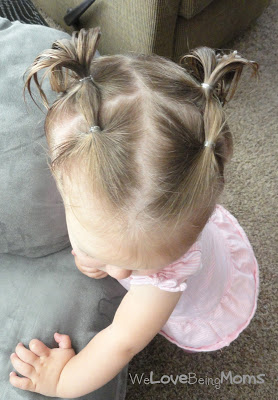
d) BANDED PIGTAILS.

banded pigtails

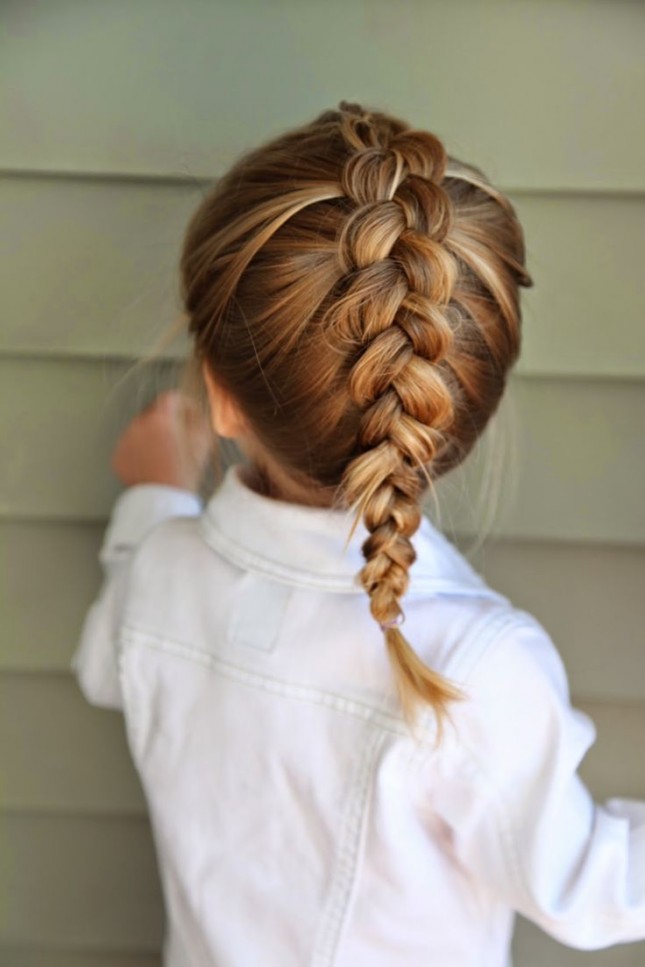
e) FRENCH BRAID. There is no way Sonya would have the patience to sit through this (and I am probably not skilled enough) but I do love it.

French braid

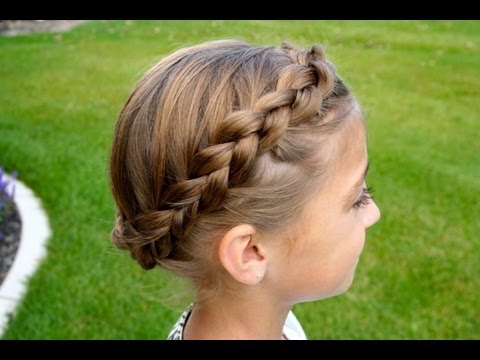
f) CROWN BRAID. Again, probably not enough hair and questionable whether the implant coils would work. But maybe I could motivate her to sit still enough to try by bribing her with Moana…..

crown braid

In other news, I have recently discovered HeadbandsforSophia on Etsy, which sells adorable headbands that are narrower and elastic and might lend themselves to additional hairstyles. I just ordered these to try.

Would love to hear your input! Vote on your favorite style and I will try it on Sonya and post the result! Do you have another option I should consider? Please leave it in the comments section below!

P.s. We also love Rubybands and wear them constantly and I wrote about hats and other accessories here and here.

UPDATE:

IMG_4328.JPG
Sonya opted for two french braid pigtails with barettes and to my surprise she actually let me do this! Sometimes I need to give her a little more credit.


Pumpkin-Spice Speech Therapy!

Is your family obsessed with Halloween? I have always loved dressing up and the spirit around this holiday, but having a toddler during Halloween elevates the fun and cuteness to a new level! Yes, I bought Sonya’s Halloween costume in July (it was on sale then!) and as soon as Oct. 1 came, the apartment was decorated with spider webs, pumpkins and ghosts.

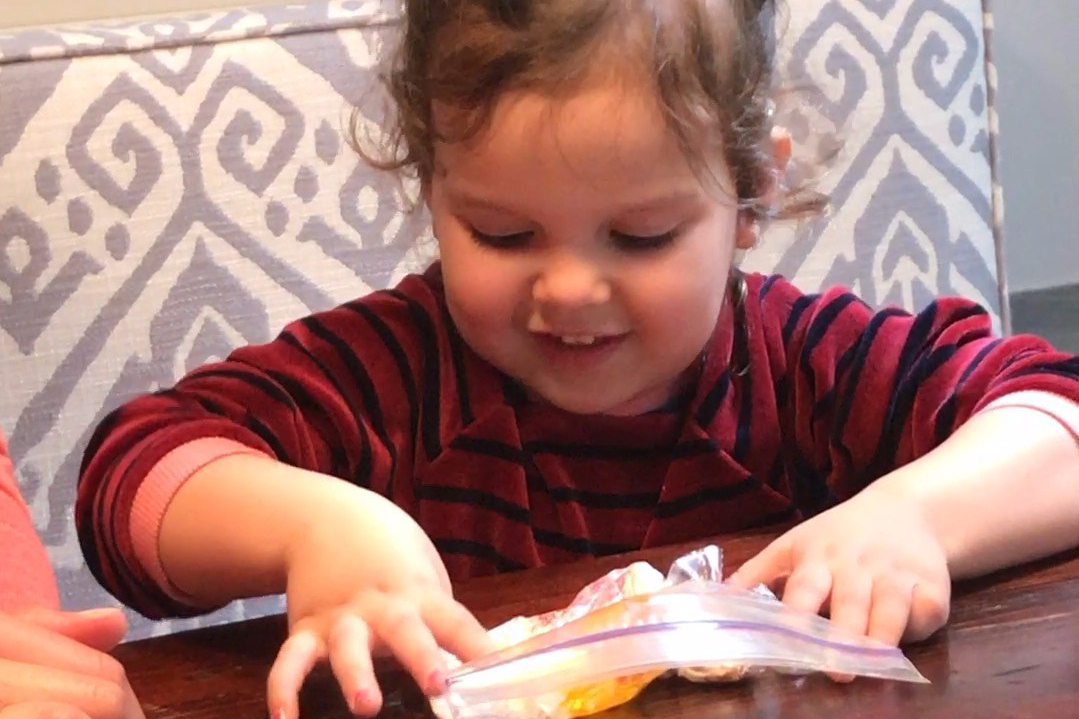
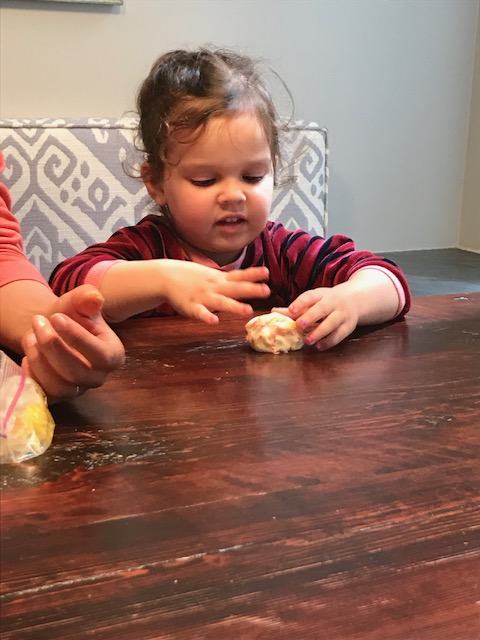
Recently, Sonya’s speech therapists have started incorporating the holiday into their sessions, and I thought you might enjoy learning about some of the wonderfully creative ideas they have had! This week, we made pumpkin cloud dough and it was just the cutest:

Pumpkin Cloud Dough

IMG_4207

Not only was it a great sensory activity, it incorporated new vocabulary and story sequencing as well. I have included Sonya’s speech therapist Jen’s recipe for pumpkin cloud dough, followed with some of the speech-related activities around it!

Pumpkin Cloud Recipe:
1 cup hair conditioner
2 cups corn starch
red and yellow food coloring
a dash of cinnamon

Simply pour the hair conditioner and corn starch in a glass bowl and use your hands to mix. Add a few drops of red and yellow food coloring and a few shakes of cinnamon and voila!: pumpkin cloud dough! Jen smartly divided up her colorless/scentless dough into small plastic bags for each child, and then let Sonya handle coloring and scenting the dough before we played with it. If your child is hesitant to get their hands dirty, they can also just mix the dough in the plastic bag.

Once the dough was complete, Jen asked Sonya to walk us through how we made it, step by step. She used an iPad with pictures of each step in the recipe process. This was definitely a challenging game for a three year old.

What Fall-inspired speech therapy activities do your kids love? I’ll definitely share more as I come across them 🙂


8 Great iPad Apps for Kids with Hearing Loss

IMG_4169.JPG

When Sonya was just a few months old, her speech therapist pulled out an iPad during one of our sessions and opened the game “Peekaboo Barn” I was immediately concerned. I had always been told that screen time was bad for kids. It seemed almost like a cop-out and it wasn’t until after the session when I brought up these concerns that I began to understand the benefit that this amazing device can have for kids with hearing loss.

Today, Sonya’s iPad has become one of our most important speech therapy tools. At the same time, we must use it responsibly. Our philosophy is that it is okay in small doses and in specific contexts. Sonya can use her iPad in the car or airplane, and at restaurants. We try to focus on active entertainment (i.e. games) as opposed to passive entertainment (TV shows or movies). It’s also a great way to motivate Sonya to put her CIs back on, as I wrote about here.

Here are some of our favorite games for hearing loss. I’d love to hear your recommendations, too…

Continue reading “8 Great iPad Apps for Kids with Hearing Loss”

Love in the Time of the Roger Phonak Touchscreen Mic

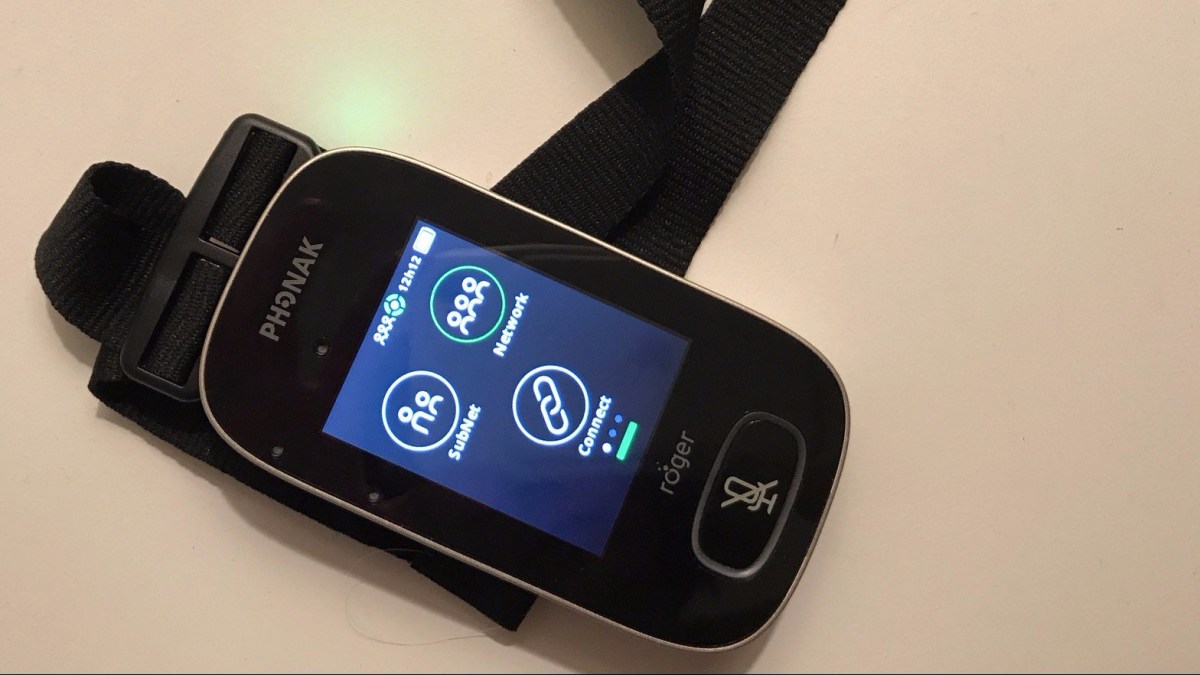
When Sonya was approved for Early Intervention, we immediately put in a request for an FM system. She was only eight months or so at the time, but we knew having a device would be useful. We were approved to receive a Phonak Roger. Here I am wearing it while visiting Sonya at school last year.  Continue reading “Love in the Time of the Roger Phonak Touchscreen Mic”

Are You Happy?

Back in June, while undergoing IVF, I became depressed. It happened suddenly (and most likely due to the hormone treatments I was injecting twice daily into my belly). My mind would obsess and worry about inconsequential things. I didn’t sleep much. I had bad dreams that would cause me to wake up with a pit of anxiety in my stomach. Then sadness. A deep sadness that didn’t go away immediately after the egg retrieval, but one that lingered for weeks. It wasn’t good.  Continue reading “Are You Happy?”

Sonya Plays Piano

I love telling people about how Yan and I met. It took place in New York City circa late 2007 at a loud bar in the East Village. Upon being introduced by a mutual friend, I soon learned that Yan was a pianist and I was immediately entranced. On our second date, Yan invited me over to his apartment where he made me a mushroom omelette sandwich and then serenaded me by playing Chopin’s Etude no. 3 on his upright piano. I knew at that moment I would marry him! Here is a video of Yan playing:

Fast forward ten years. We are married. We have a grand piano that literally takes up 34 percent of our living room, and we have a three-year-old daughter who  is ready for piano lessons (well, according to Yan – but perhaps this is debatable). The only issue is our daughter is was born deaf and wears bilateral cochlear implants. That said, she has always loved music. And we have decided to move forward with piano lessons!

However, Yan’s very Russian mantra “chain her to the piano!” may not yet apply. At least for now. Instead, we devote just five minutes a day to the piano and only if she is up for it. We don’t put her in front of the piano when she is tired or not feeling great. The key is for her to associate the piano with something fun. Not for it to be a drag or chore.

The next few weeks, we are working on accomplishing a few small goals:

  • For Sonya to be excited to play piano
  • For Sonya to identify the C key throughout the keyboard
  • For Sonya to have a general understanding of the keyboard

For now, Sonya is to identify two black keys on the keyboard, press them with her two fingers, then skip to the next three black keys and say “skip”. She then must find the next two black keys. We do this up and down the piano using her left and right hands.

Once she has mastered this, we will work on finding the two black keys, and then finding C.

Since the keys of our grand piano are still a bit heavy for Sonya’s tiny fingers, we purchased the MunkikiM Roll Up Rainbow Piano, which Sonya received on her birthday. The piano rolls up so is easy to store in our small apartment, and the colorful keys are perfect for visual learners like Sonya. She also received My First Keyboard Book, which has a small keyboard and simple songs with visual cues that Sonya can learn to play.

20170915_175210

We have a wonderful piano teacher (who is incredibly talented – we aren’t kidding around here:). He visits us periodically to gage Sonya’s progress. Piano isn’t for everyone. It may not be for Sonya, ultimately. She is, after all, genetically predisposed both to love it (given who her parents are) and at the same time for it to be a great challenge for her.

P.s. Check out some of my earlier posts on music:

Sonya Sings All the Time

The Sweetest Dance

Suffering from Music Loss

On Music


Tackling Hearing Loss-Related Literacy Challenges Early

We are tackling hearing loss-related literacy issues head on by having Sonya learn to read early! Check out what we are doing and tips from hearing loss professionals on how to foster strong literacy skills at home and at school.

This past week, Sonya started to learn to read! Well, actually, she started learning her letters, but once a week moving forward she will work with Dana Selznick, education specialist at the Center for Hearing and Communication, to work on literacy skills.

Like other children with hearing loss, Sonya is susceptible to having difficulties in all areas of academic achievement, especially reading and mathematical concepts. According to Reading Rockets, a national literacy initiative, the effect of hearing loss on academic achievement is distressing:

  • Children with mild to moderate hearing losses, on average, achieve one to four grade levels lower than their peers with normal hearing, unless appropriate management occurs.
  • Children with severe to profound hearing loss usually achieve skills no higher than the third- or fourth-grade level, unless appropriate educational intervention occurs early.
  • The gap in academic achievement between children with normal hearing and those with hearing loss usually widens as they progress through school.

Thankfully, extra support for children with hearing loss can significantly improve these effects. Under Dana’s guidance, we will work to help Sonya learn to read hopefully before entering kindergarten.

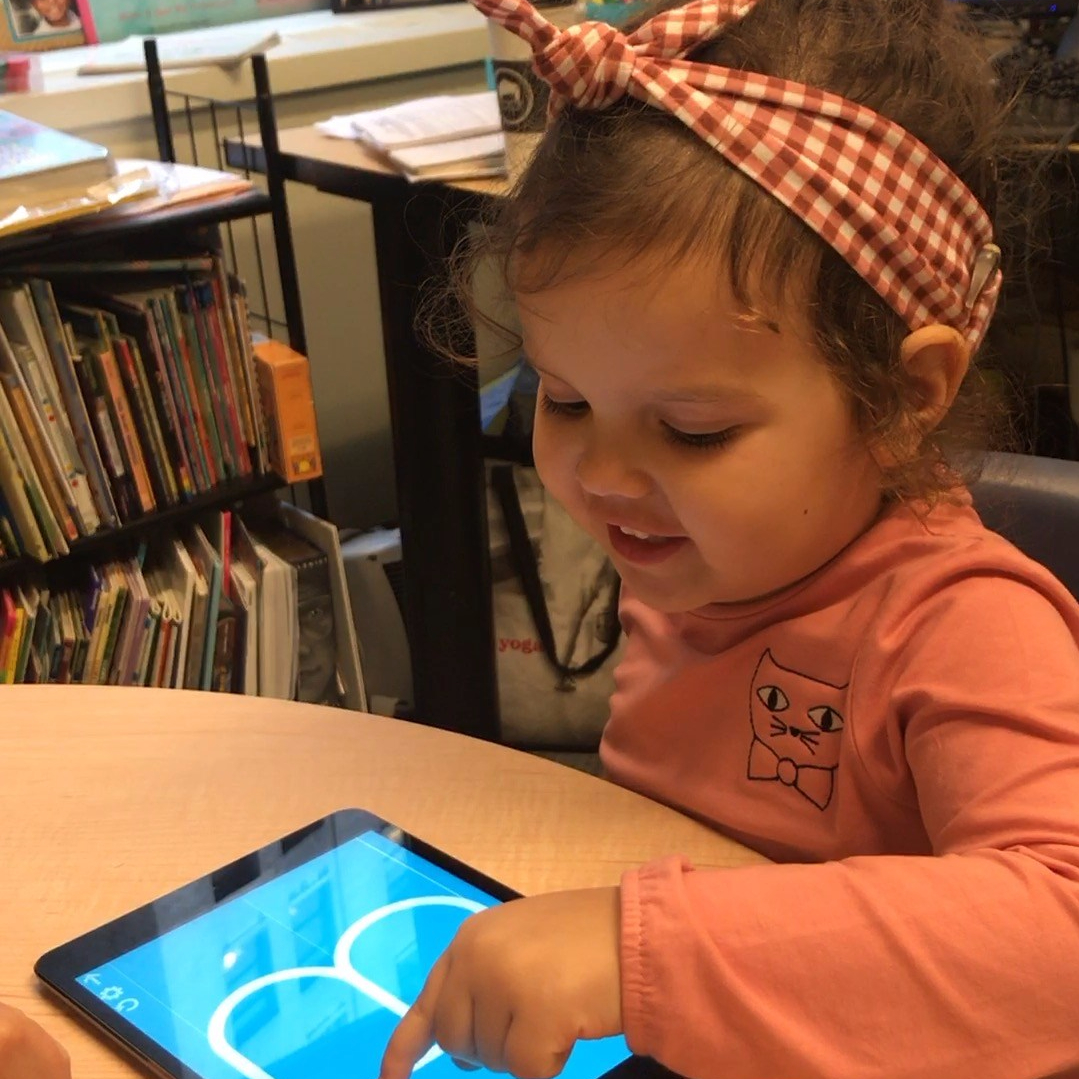
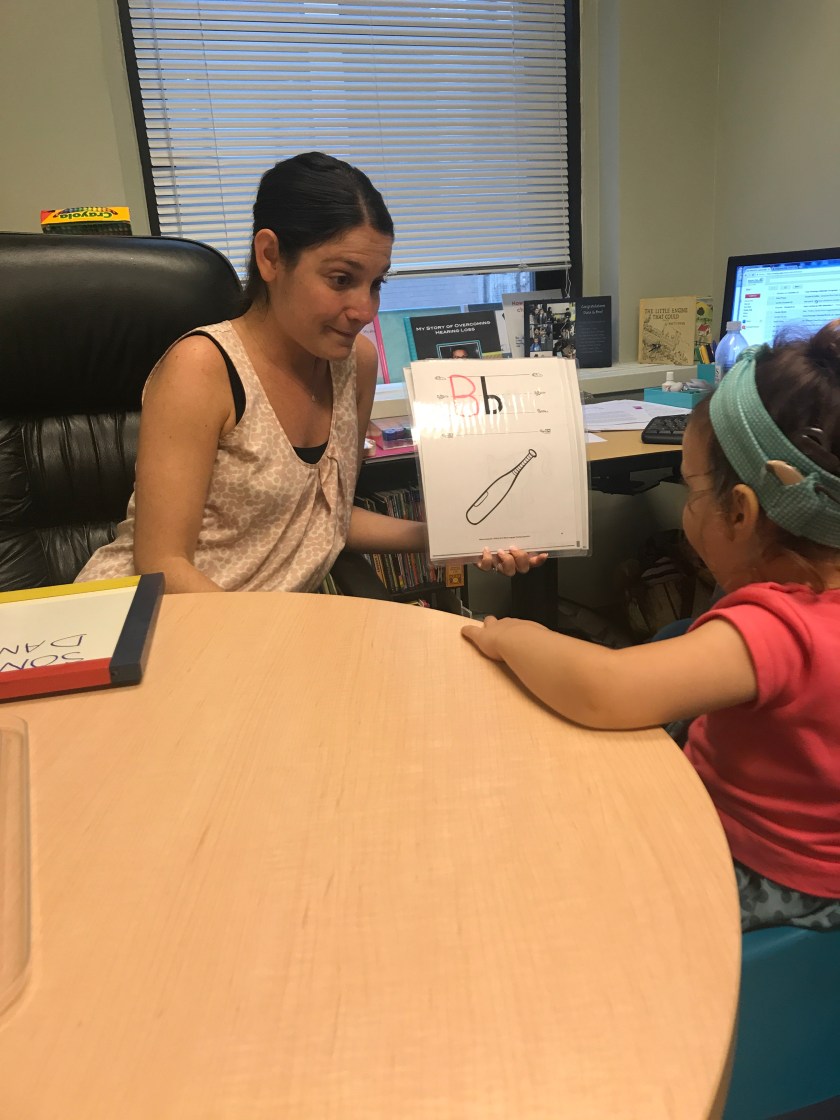
Our first reading lesson involved identifying the letters of the alphabet, placing those letters on an “alphabet train,” and coordinating images and sounds with letters.

IMG_3568
Here is Dana teaching Sonya about the letter “B”. When asked what was pictured, Sonya responded confidently, “wine!” haha
In addition to learning letters and the alphabet, we spent a portion of the hour reading Elephant and Piggie books together. To Sonya’s delight, Dana has the plush Gerald the Elephant and Piggie set. Sonya held Piggie and I held Gerald as we acted out the story. It was a great way to integrate play, listening, speech and language along with reading. (I just bought the plush set for Sonya’s upcoming birthday, so we can reenact this at home too!)

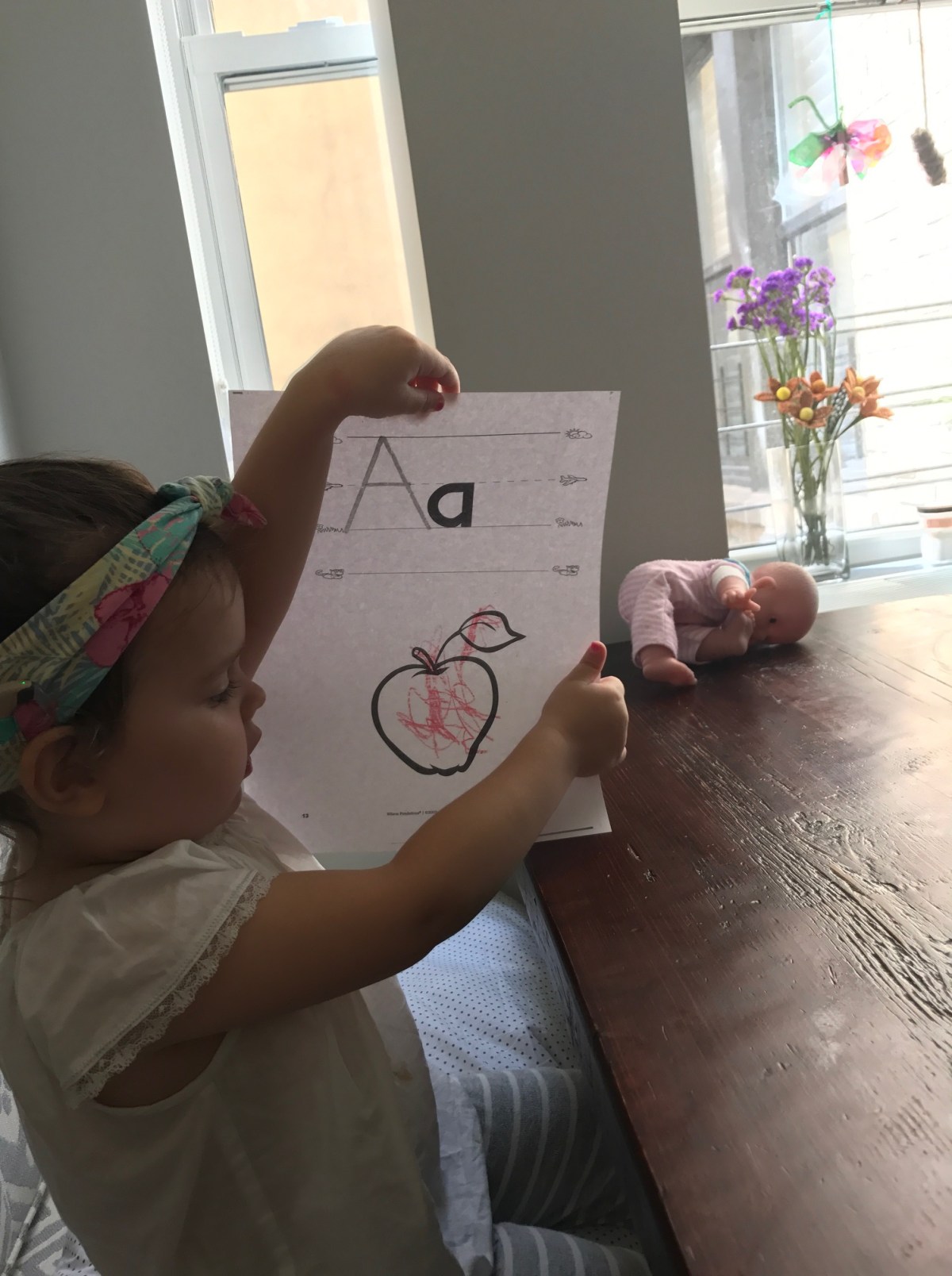
We have been instructed to work on our letters and sounds every day at home. After our lesson, Dana gave us print outs of the letters we worked on. On Thursday, Sonya spent time coloring each letter. The next day, we played a game using the letters from the Melissa & Doug Magnetic Chalkboard. I presented Sonya with five letters and asked her which one makes the “b” sound, “a” sound, etc. Doing something different every day to keep it interesting is critical. I am perusing Pinterest for other ideas and will share them if helpful.

IMG_3591

Dana recently wrote a blog post for CHC’s “Back to School Buzz” on this topic, and suggested parents follow the below tips to foster strong literacy skills at home and at school:

Literacy learning tips for children with hearing loss according to Dana:

  • Nightly Reading – Encourage nightly reading at all age levels by establishing a reading routine and sticking to it. You’ll promote language skills while creating a special nightly experience. Be sure to discuss the book you’re reading to aid comprehension and point out words and images as you go along. Reading charts can keep track of your progress and help instill a love of reading.
  • New Vocabulary – Be sure to regularly introduce new stories so that your child encounters new sounds and vocabulary. Exposure to story lines encourages the use of new vocabulary that children may not encounter in their everyday language.
  • Book Recommendations – Dana recommends visiting the Scholastic website and searching titles by age group. For preschool and elementary students, She really likes the “If You Give” series by Laura Numeroff and the “Little Old Lady” series by Catharina Ingelman-Sundberg. You can chose titles that focus on a letter sound that your child’s therapist is working on, such as “If You Give a Pig a Pancake” for the letter sound “p”. Having your child repeat back sentences and dialogue from the story fosters sequential memory.
  • Technology Considerations – It’s vitally important to make sure your child has maximum access to sound at home and in school. CHC’s Back-to-School Audiology Tips by pediatric audiologist Anita Stein-Meyers will help you and your child’s teacher identify and fix common problems that can occur with hearing technology.
  • Advocate at School – Reach out to teachers at the start of the school year to make sure they understand your child’s listening challenges in the classroom and take appropriate action.

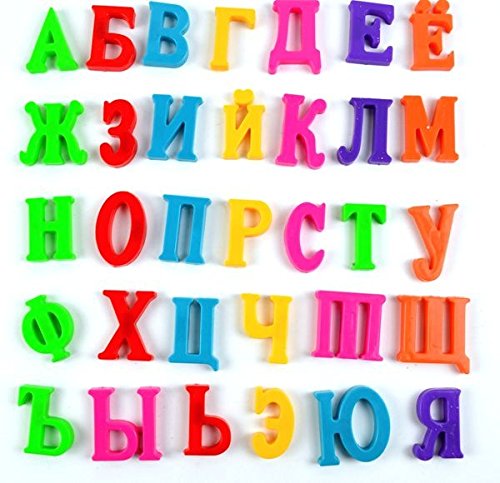
We are so excited to begin this journey! We even bought Russian letters so that Sonya can do Russian reading work with her Russian-speaking nanny Nina!

51MP6of+YtL


La La La Look!

This past Labor Day weekend, Sonya had a big leap in her speech. She can now make the “L” sound! I saw it emerge during speech therapy last week, but this weekend it became more and more consistent. This is a sound we have been working on for…I don’t know, years? Even before she was speaking, we would say to her “la la la look!” and would show her how we place our tongue at the top of our mouths to make the “L” sound.

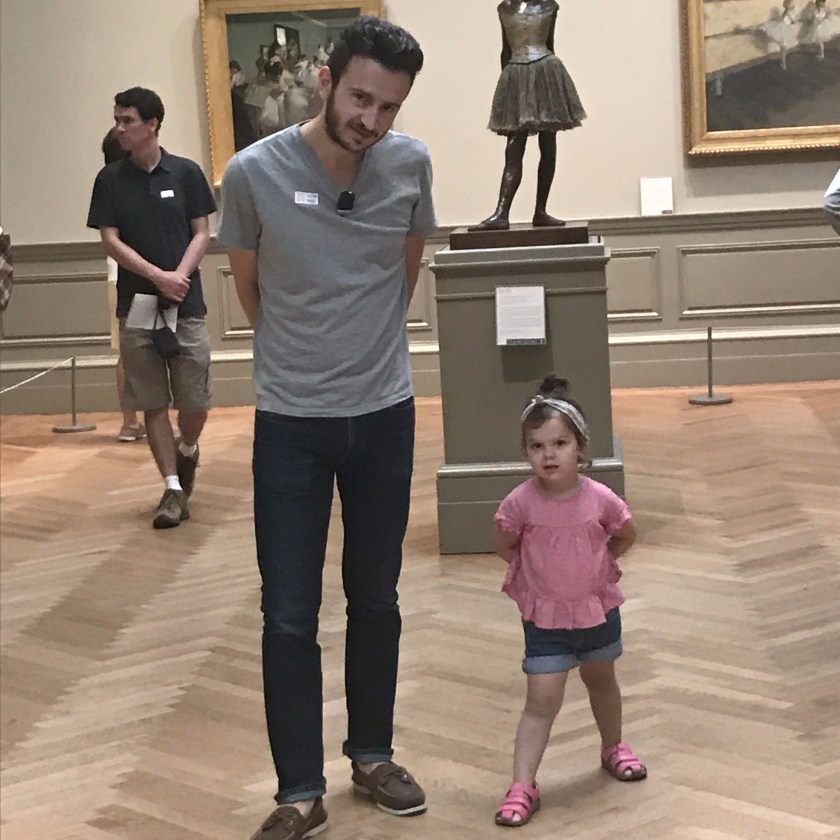
On rainy weekends like this past one, we love to take Sonya to the Met and “la la look” at the paintings.

IMG_3458IMG_3461

Lately, Sonya asks TONS of questions constantly, and we try to get her to talk about what she is seeing in the artwork and how the figures in the painting or sculptures might be feeling and why. Her favorite sculpture of late is Adam by Tullio Lombardo, which is hidden in a room on the first floor away from the crowds. We showed Sonya how Adam had once broken into many thousands of pieces but the people at the museum put him back together like a puzzle! She also loves the story of Adam and Eve and the snake – though she might decide to just start pretending to be a puppy at any given moment. That’s three! 🙂


Sonya’s favorite activity at the Met, however, is sitting in the American Wing Cafe and enjoying some popcorn, while admiring the sculptures that surround us. We love living in New York City!

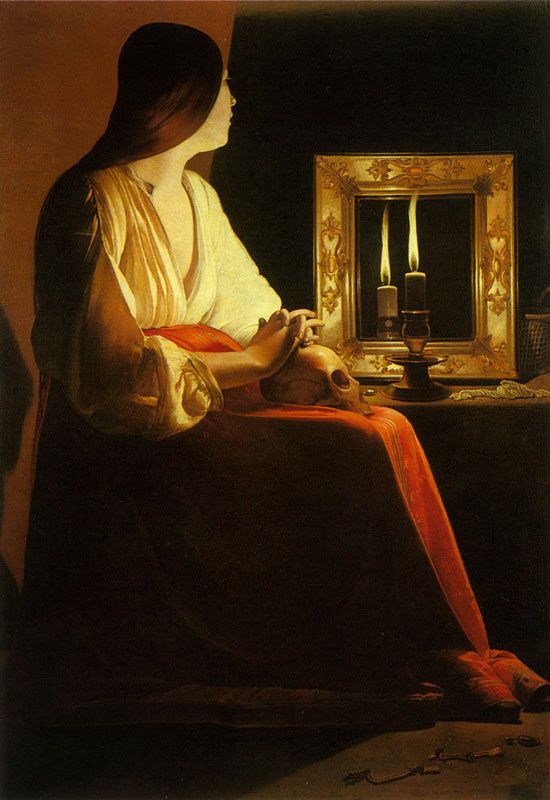
P.S. When I see painting “The Penitent Magdalene” by George de la Tour, I can’t help but want to reach out and grab the items that lay on the ground near her feet. They look just like Sonya’s CIs! Obviously, I need help at this point…

Met painting and CIs


Sonya Curses (But Clearly!)

After a long day of speech therapy, the playground, and an annual checkup at Sonya’s pediatrician, Sonya threw off her CIs. They landed in the middle of a very busy West End Avenue. “Dammit!” I shouted as I strapped Sonya into her stroller, locked the brakes and proceeded to run into the street before a car nearly ran over her thirty thousand dollar equipment.

As I returned to the sidewalk, a nanny watching nearby with her own stroller, shook her head at me. At first I thought it was a sympathetic shake as in, “I can’t believe that just happened to you! Toddlers!” shake. But when we crossed paths as we walked back uptown, she shook her head again at me. Yep. It was a judgment shake. I had “exposed” my daughter and her own to blasphemous language.

Little does she know…

At home, it is often the case that…well… my speech is not exactly angelic. I find myself on swearing rampages when Sonya takes her CIs off. The frustration of dealing with a toddler, coupled with the frustration of ensuring that she wear her cochlear implants at all waking hours gets to me. I used to feel relieved that she couldn’t hear when the headband was off. That was, until I took the below video. Sonya is in her bed. She doesn’t want to nap and is crying. And then 15 seconds in…she says….

Apparently, her lip reading skills are not terrible.

A part of me feels very ashamed by this. Obviously, I have failed Sonya for her to use that word. I am sure many people will agree.

And yet, a part of me feels incredibly proud. The “f” and “k” sounds are not easy to produce. She is obviously hearing them well with her cochlear implants, and is producing them, which is actually incredible given that she was born deaf. Her speech has come a long way.

I wonder how many other parents out there can relate to this? When the CIs come off, do you find yourself blowing off steam by way of swearing? Is this really truly horrible? Or, is it actually good for you? A recent study points out that swearing is a “creative, emotional release that can make you feel stronger.” As a mom to a toddler who also is deaf, we have a lot on our plate and i.m.h.o swearing isn’t the worse way to release it.

That said, I do hope that I can teach Sonya alternate ways of expressing herself…this is not that flattering, really.